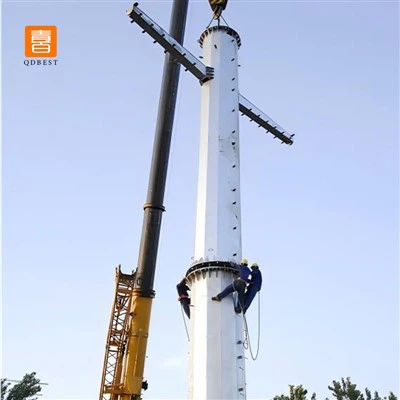
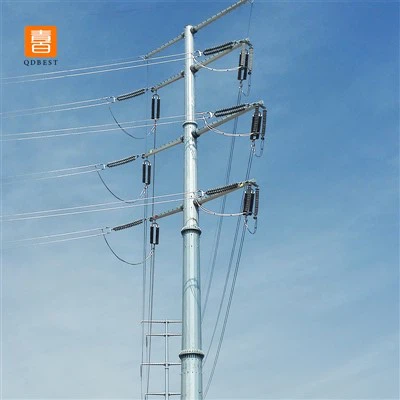
As critical communication infrastructure, communication towers (signal transmission towers) are subject to strict regulations and policies at the national and local levels throughout their construction and maintenance, adhering to the principles of integrated planning, rational layout, shared construction and utilization, and safety assurance. For example, in January 2026, the "Regulations on the Construction and Protection of Communication Facilities in the Tibet Autonomous Region" were passed and promulgated, taking effect on May 1, 2026. These regulations explicitly require that the construction of communication facilities be incorporated into the national land spatial planning and coordinated with other relevant plans.
When constructing, renovating, or expanding projects for government agencies, public institutions, public places, transportation facilities, residential communities, and commercial buildings, communication facilities should be planned and constructed simultaneously, strictly adhering to relevant engineering construction standards, and planned, designed, constructed, and accepted concurrently with the main project. The construction of communication facilities should be coordinated with the local natural environment and urban and rural architectural style, and environmental impact assessments should be conducted in accordance with the law, meeting national electromagnetic radiation environmental control limits. Basic telecommunications service operators must notify the building owner or user in advance and pay usage fees as stipulated when attaching communication lines or setting up public communication facilities such as mobile communication base stations on civilian buildings.
Owners and managers of communication facilities must fulfill their primary responsibility for protecting the safety of these facilities, improve protection measures, define the scope of safety protection, and install warning signs and other safety protection facilities. No organization or individual may engage in any act that endangers the safety of communication facilities, including but not limited to: occupying, stealing, or damaging communication facilities; launching drones or other low-altitude floating objects or installing jamming equipment within the safety protection area; digging sand, extracting soil, piling soil, drilling, or digging trenches; dumping corrosive waste liquids or slag; burning, blasting, or piling flammable and explosive materials; or connecting to the communication power supply system without approval or arbitrarily cutting off the power supply to communication facilities.