Comprehensive Engineering & Procurement Guide
Engineered lattice steel towers are critical structural systems designed to support overhead conductors, earth wires, insulators, and associated line hardware along high-voltage power transmission routes.
For international utilities, EPC contractors, and power infrastructure developers, successful tower selection, procurement, and risk management depend on far more than nominal height. Tower geometry, conductor arrangements, design loads, environmental conditions, steel grades, connection details, corrosion protection, and rigorous export logistics dictate the integrity, safety, and longevity of the final structure.
-
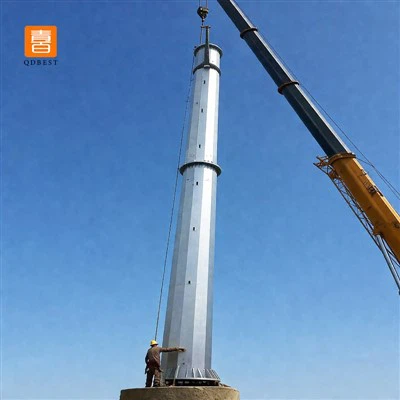
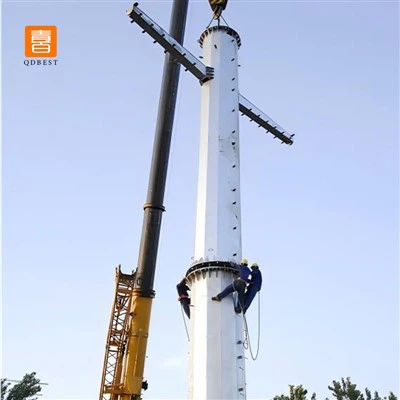
![Hot Dip Galvanized Single Tube Steel Pipe Tower]() Hot Dip Galvanized Single Tube Steel Pipe Tower
Hot Dip Galvanized Single Tube Steel Pipe TowerTower Type: Hot Dip Galvanized Single Tube Steel Pipe Tower
Country of origin: China
Manufacturer: Qingdao BEST Steel Structure Co., Ltd.
Material: carbon steel Q235 Q355 Q420... -
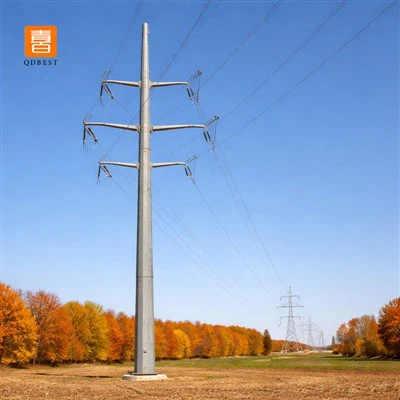
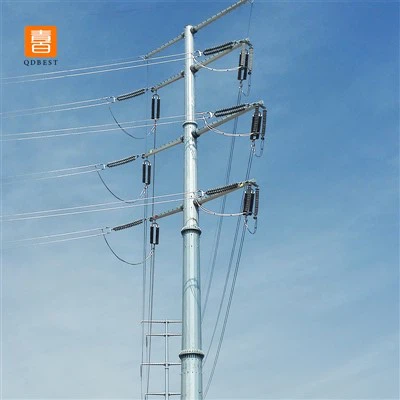
![Transmission Tower Pole Outdoor Monopole Tower]() Transmission Tower Pole Outdoor Monopole Tower
Transmission Tower Pole Outdoor Monopole TowerTower Type: Transmission Tower Pole Outdoor Monopole Tower
Country of origin: China
Manufacturer: Qingdao BEST Steel Structure Co., Ltd.
Material: carbon steel Q235 Q355 Q420... -
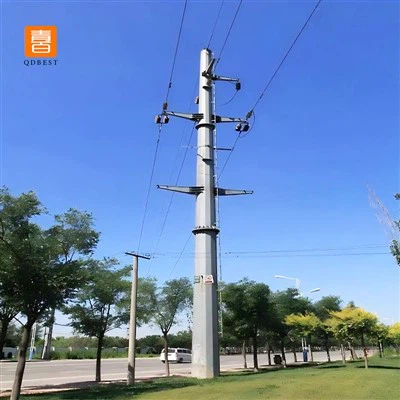
![33kV Galvanized Iron Steel Monopole Tower]() 33kV Galvanized Iron Steel Monopole Tower
33kV Galvanized Iron Steel Monopole TowerTower Type: 33kV Galvanized Iron Steel Monopole Tower
Country of origin: China
Manufacturer: Qingdao BEST Steel Structure Co., Ltd.
Material: carbon steel Q235 Q355 Q420... -
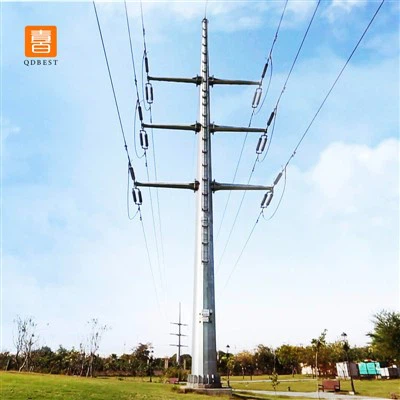
![Galvanized Steel Monopole Towers For Transmission Lines]() Galvanized Steel Monopole Towers For Transmission Lines
Galvanized Steel Monopole Towers For Transmission LinesTower Type: Galvanized Steel Monopole Towers for Transmission Lines
Country of origin: China
Manufacturer: Qingdao BEST Steel Structure Co., Ltd.
Material: carbon steel Q235... -
![Monopole Tower For Transmission Line]() Monopole Tower For Transmission Line
Monopole Tower For Transmission LineTower Type: Monopole Tower for Transmission Line
Country of origin: China
Manufacturer: Qingdao BEST Steel Structure Co., Ltd.
Material: carbon steel Q235 Q355 Q420... -
![Monopole Galvanized Steel Power Transmission Tower]() Monopole Galvanized Steel Power Transmission Tower
Monopole Galvanized Steel Power Transmission TowerTower Type: Monopole Galvanized Steel Power Transmission Tower
Country of origin: China
Manufacturer: Qingdao BEST Steel Structure Co., Ltd.
Material: carbon steel Q235 Q355... -
![4-Legged Angular Electric Transposition Lines Steel Tower]() 4-Legged Angular Electric Transposition Lines Steel Tower
4-Legged Angular Electric Transposition Lines Steel TowerTower Type: 4-Legged Angular Electric Transposition Lines Steel Tower
Country of origin: China
Manufacturer: Qingdao BEST Steel Structure Co., Ltd.
Material: carbon steel Q235... -
![Electric Transmission Line Tower]() Electric Transmission Line Tower
Electric Transmission Line TowerTower Type: Electric Transmission Line Tower
Country of origin: China
Manufacturer: Qingdao BEST Steel Structure Co., Ltd.
Material: carbon steel Q235 Q355 Q420
Surface... -
![110kV - 750kV Transmission Line Tower]() 110kV - 750kV Transmission Line Tower
110kV - 750kV Transmission Line TowerTower Type: 110kV - 750kV Transmission Line Tower
Country of origin: China
Manufacturer: Qingdao BEST Steel Structure Co., Ltd.
Material: carbon steel Q235 Q355... -
![330kV Electric Transmission Line Tower]() 330kV Electric Transmission Line Tower
330kV Electric Transmission Line TowerTower Type: 330kV Electric Transmission Line Tower
Country of origin: China
Manufacturer: Qingdao BEST Steel Structure Co., Ltd.
Material: carbon steel Q235 Q355... -
![Angle Electric Transmission Line Towers]() Angle Electric Transmission Line Towers
Angle Electric Transmission Line TowersTower Type: Angle electric transmission line tower
Country of origin: China
Manufacturer: Qingdao BEST Steel Structure Co., Ltd.
Material: carbon steel Q235 Q355... -
![Double Circuit Transmission Line Tower]() Double Circuit Transmission Line Tower
Double Circuit Transmission Line TowerTower Type: Double Circuit Transmission Line Tower
Country of origin: China
Manufacturer: Qingdao BEST Steel Structure Co., Ltd.
Material: carbon steel Q235 Q355...


Transmission Tower Structural Classifications
The appropriate configuration of an electrical transmission tower depends primarily on its structural function and mechanical position within the transmission line route:
Suspension / Tangent Tower
Application: Installed along relatively straight sections of a transmission line where route direction changes remain within specified project tolerances.
Key Characteristics: Lower longitudinal loading compared to angle or terminal structures; utilizes suspension insulator arrangements; features standardized body and cross-arm geometries for high-efficiency span runs.
Angle / Tension Tower
Application: Deployed where transmission routes change direction or where higher longitudinal and transverse conductor tensions must be resisted.
Key Characteristics: Engineered with higher structural strength to withstand combined transverse and torsional forces created by line geometry deviations, angle locations, and tension sections.


Dead-End / Terminal Tower
Application: Installed at substation approaches, line termination points, major route transitions, and sections requiring full, unbalanced conductor tension support.
Key Characteristics: Designed to absorb maximum longitudinal loads and unbalanced tension forces from terminating spans.
Special Transmission Towers
Application: Engineered for complex terrain or demanding clearance requirements, including long-span river crossings, highway crossings, railway crossings, and line transposition zones.
Key Characteristics: Subject to rigorous project-specific structural analysis, non-standard geometry configurations, and custom fabrication drawings.
Key Factors in Tower Selection
Transmission tower selection must be driven by comprehensive line engineering rather than a generic catalog model:
Tower Function: Defines primary load cases and basic structural geometry.
Voltage Level: Dictates minimum electrical clearances and phase conductor spacing.
Circuit Configuration: Determines single-circuit, double-circuit, or multi-circuit cross-arm arrangements.
Conductor & Earth Wire Types: Governs mechanical weight, wind-span loading, and OPGW/shield wire attachment details.
Environmental & Wind Loading: Integrates design wind speeds, terrain categories, ice loading, and extreme temperature ranges.
Span & Line Geometry: Accounts for horizontal/vertical span lengths and route deviation angles.
Corrosion Environment: Dictates surface protection specifications and steel grade selection.
Foundation Interface: Determines base reaction forces, stub angles, and anchor bolt configurations.
Essential Technical Parameters for Procurement
To eliminate technical ambiguity and streamline procurement, technical packages should define the following parameters:
Structural Configuration:
Tower type, structure classes, overall height, number of circuits, phase conductor arrangement, earth-wire/OPGW peak configuration, cross-arm geometry, tower body dimensions, and base stub details.
Design & Environmental Conditions:
Design wind speed, terrain exposure category, ice thickness, combined wind-ice loading cases, operating temperature ranges, span lengths, maximum line deviation angles, and conductor tension limits.
Material & Fabrication Standards:
Structural steel grade requirements (matching international standards like ASTM, EN, or equivalent), section specifications (angle steels, plates, gussets), fastener specifications (bolt grade, nut/washer requirements, corrosion resistance), hole diameter, punching tolerances, and connection patterns.
Corrosion Protection (Hot-Dip Galvanizing - HDG):
Standard surface treatment for outdoor transmission infrastructure. Procurement Note: Specifications must define minimum coating thickness, mass per unit area, surface preparation standards (e.g., abrasive blasting), inspection methods, and clear acceptance criteria rather than relying on appearance alone.
Manufacturing Process Control
Precision in manufacturing directly dictates field erection efficiency and structural safety in lattice steel tower projects. A controlled production workflow typically follows these phases:
Engineering Review: Thorough verification of approved design drawings, bill of materials (BOM), member sizes, steel grades, hole locations, and connection details before steel processing.
Steel Material Preparation: Inspection of raw structural steel (angles, plates) against Material Test Certificates (MTC) to ensure full batch traceability.
Cutting, Punching, and Drilling: High-precision cutting to specified lengths followed by CNC punching or drilling of connection holes to guarantee absolute alignment during site assembly.
Forming and Bending: Cold or warm forming of members requiring special angles or bends according to approved shop drawings.
Trial Assembly (Prototype Testing): Pre-galvanizing test assembly of select tower sections to verify dimensional accuracy, fit-up, and hole alignment, eliminating field modification risks.
Hot-Dip Galvanizing: Immersion in molten zinc baths in strict accordance with project-specified coating standards.
Final Quality Inspection: Comprehensive checks covering dimensional tolerances, member identification marks, hole positions, material compliance, accessory completeness, and coating integrity.
Packing, Bundling & Export Logistics: Systematic sorting and color-coding or stamping of members by tower type and section. Members are securely bundled, protected against white rust during maritime transport, and packed with complete hardware kits for international shipping.
Site Quality Control Checkpoints
Create a comprehensive solution for efficient human theft manag
Hole Position Accuracy:
Ensuring zero drift in hole patterns to prevent bolt-binding or reaming on site.
Clear Member Identification:
Legible stamping or tagging on every steel member corresponding to the assembly drawings to minimize sorting time.
Hardware Completeness:
Complete packaging checklists for bolts, nuts, washers, and small connection components to avoid project delays.
Galvanizing Integrity:
Verification that coatings are free from dross, bare spots, or excessive thickness that could interfere with bolted connections.
FAQ
Qingdao BEST Steel Structure Co., Ltd. is one of the most professional electrical transmission tower manufacturers and suppliers in China. We warmly welcome you to buy customized electrical transmission tower made in China here from our factory. If you have any enquiry about OEM service, please feel free to email us.