Product Overview
Lattice towers are open-frame steel structures assembled from main legs, bracing members, connection plates, and fasteners. Their open-frame configuration provides high structural capacity while maintaining a relatively low material weight, allowing antennas, microwave equipment, and other loads to be mounted at various elevations.
For project procurement, tower selection cannot be based on height alone. Wind conditions, equipment loading, tower geometry, deflection requirements, foundation conditions, corrosion environments, and applicable structural design standards all dictate the final configuration. We supply project-specific lattice tower structures based on approved engineering requirements, drawings, and loading data.
-
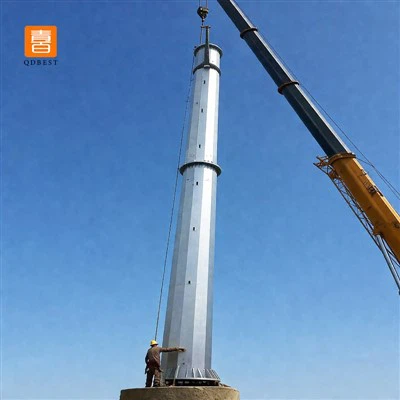
![4-Legged Angular Electric Transposition Lines Steel Tower]() 4-Legged Angular Electric Transposition Lines Steel Tower
4-Legged Angular Electric Transposition Lines Steel TowerTower Type: 4-Legged Angular Electric Transposition Lines Steel Tower
Country of origin: China
Manufacturer: Qingdao BEST Steel Structure Co., Ltd.
Material: carbon steel Q235... -
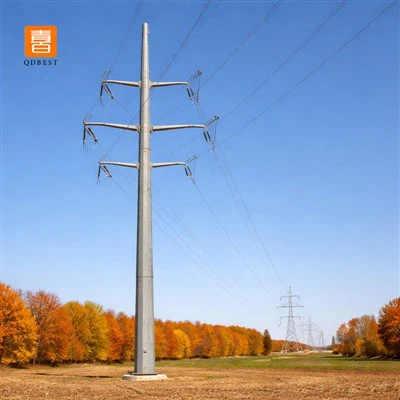
![Electric Transmission Line Tower]() Electric Transmission Line Tower
Electric Transmission Line TowerTower Type: Electric Transmission Line Tower
Country of origin: China
Manufacturer: Qingdao BEST Steel Structure Co., Ltd.
Material: carbon steel Q235 Q355 Q420
Surface... -
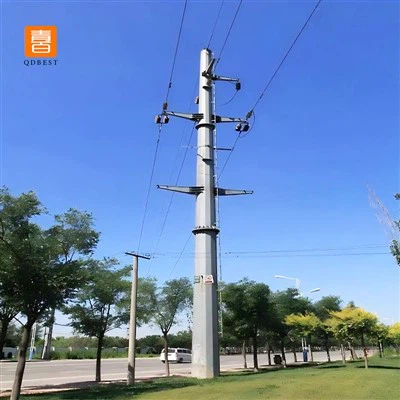
![110kV - 750kV Transmission Line Tower]() 110kV - 750kV Transmission Line Tower
110kV - 750kV Transmission Line TowerTower Type: 110kV - 750kV Transmission Line Tower
Country of origin: China
Manufacturer: Qingdao BEST Steel Structure Co., Ltd.
Material: carbon steel Q235 Q355... -
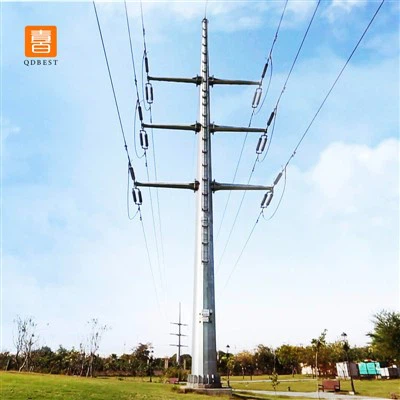
![330kV Electric Transmission Line Tower]() 330kV Electric Transmission Line Tower
330kV Electric Transmission Line TowerTower Type: 330kV Electric Transmission Line Tower
Country of origin: China
Manufacturer: Qingdao BEST Steel Structure Co., Ltd.
Material: carbon steel Q235 Q355... -
![Angle Electric Transmission Line Towers]() Angle Electric Transmission Line Towers
Angle Electric Transmission Line TowersTower Type: Angle electric transmission line tower
Country of origin: China
Manufacturer: Qingdao BEST Steel Structure Co., Ltd.
Material: carbon steel Q235 Q355... -
![Double Circuit Transmission Line Tower]() Double Circuit Transmission Line Tower
Double Circuit Transmission Line TowerTower Type: Double Circuit Transmission Line Tower
Country of origin: China
Manufacturer: Qingdao BEST Steel Structure Co., Ltd.
Material: carbon steel Q235 Q355... -
![Electric Power Transmission And Distribution Tower]() Electric Power Transmission And Distribution Tower
Electric Power Transmission And Distribution TowerTower Type: electric power transmission and distribution tower
Country of origin: China
Manufacturer: Qingdao BEST Steel Structure Co., Ltd.
Material: carbon steel Q235 Q355... -
![High Voltage Tower]() High Voltage Tower
High Voltage TowerTower Type: high voltage tower
Country of origin: China
Manufacturer: Qingdao BEST Steel Structure Co., Ltd.
Material: carbon steel Q235 Q355 Q420
Surface Treatment: Hot... -
![Fabricated Transmission Towers]() Fabricated Transmission Towers
Fabricated Transmission TowersTower Type: fabricated transmission towers
Country of origin: China
Manufacturer: Qingdao BEST Steel Structure Co., Ltd.
Material: carbon steel Q235 Q355 Q420
Surface... -
![High Tension Wire Tower]() High Tension Wire Tower
High Tension Wire TowerTower Type: high tension wire tower
Country of origin: China
Manufacturer: Qingdao BEST Steel Structure Co., Ltd.
Material: carbon steel Q235 Q355 Q420
Surface Treatment:... -
![M Type Transmission Line Tower]() M Type Transmission Line Tower
M Type Transmission Line TowerTower Type: M Type Transmission Line Tower
Country of origin: China
Manufacturer: Qingdao BEST Steel Structure Co., Ltd.
Material: carbon steel Q235 Q355 Q420
Surface... -
![Steel Towers M Type]() Steel Towers M Type
Steel Towers M TypeTower Type: Steel Towers M type
Country of origin: China
Manufacturer: Qingdao BEST Steel Structure Co., Ltd.
Material: carbon steel Q235 Q355 Q420
Surface Treatment: Hot...


Main Lattice Tower Types
Self-Supporting Lattice Tower
Self-supporting lattice towers transfer vertical and lateral loads through their own structural frames and foundation systems without relying on guy wires. They are ideal for projects requiring rigid freestanding structures with sufficient ground area for foundations, commonly utilized in cellular communication, wireless broadband, microwave systems, and industrial surveillance networks.
Three-Leg Lattice Tower
Utilizing a triangular plan configuration, three-leg towers provide high structural efficiency while preserving an open frame for equipment mounting and climber access. Member sizes, bracing patterns, and base dimensions are established according to project design loads.
Four-Leg Lattice Tower
Utilizing a square or rectangular plan configuration, four-leg structures offer distinct load distribution and equipment mounting layouts compared to triangular configurations. They are typically selected for projects involving heavier equipment loads, larger working platforms, or specific site and foundation constraints.

Lattice Tower Technical Specifications Overview
|
Parameter |
Typical Configuration |
|
Structure Type |
Open-frame steel lattice structure |
|
Tower Type |
Self-supporting lattice tower |
|
Main Members |
Steel angles or other specified structural sections complying with international standards (such as ASTM / EN standards) |
|
Bracing Members |
Horizontal and diagonal bracing members |
|
Connection Type |
Bolted structural connections using high-strength fasteners |
|
Surface Protection |
Hot-dip galvanizing (compliant with ASTM A123 / ISO 1461 standards) or specified corrosion protection systems |
|
Site Installation |
On-site assembly utilizing bolted components |
|
Design Basis |
Strictly conforming to international structural design codes (such as TIA-222 specifications) and project-specific loading requirements |
|
Primary Applications |
Telecommunications, wireless communication, microwave transmission, broadcasting, and infrastructure projects |
Key Selection Factors
When specifying a lattice tower, project loading conditions should take precedence over physical dimensions:
Tower Height
Overall height directly influences wind exposure area, structural member internal forces, antenna mounting elevations, foundation reactions, and transportation/erection requirements.
Wind Load
Wind loading serves as a primary design input, factoring in basic wind speed, exposure categories, terrain conditions, height coefficients, projected areas of the tower and antennas, drag characteristics, and gust response factors.
Antenna and Equipment Loading
Structural capacity depends on comprehensive loading schedules, including antenna dimensions, weights, mounting orientations, microwave dishes, remote radio units (RRUs), cable arrangements, working platforms, and future capacity allowances.
Deflection and Twist Limits
Structural strength must be paired with strict movement limitations to protect communication performance. Project specifications often mandate strict limits on lateral deflection, rotation, and twist for directional and microwave antennas.
Steel Grade and Member Sections
Procurement documentation must clearly identify steel material grades, applicable manufacturing standards, member sections, plate thicknesses, bolt/nut grades, and welding or material traceability requirements.
Corrosion Protection
Outdoor structures require robust defenses against atmospheric moisture and pollutants. Hot-dip galvanizing is standard, with customized protection systems applied for coastal, industrial, or aggressive environments.
Quality Control Points
Dimensional Inspection
Verify member lengths, section dimensions, hole diameters, and hole spacing to ensure smooth on-site assembly.
Connection Inspection
Check bolted connections against approved drawings to ensure proper fastener grades, matching bolts, nuts, and washers.
Galvanization Inspection
Inspect the galvanized coating for visual quality, thickness compliance, and proper repair procedures for any handling damage.
Quantity Reconciliation
Reconcile all components against packing lists and drawings prior to shipment to prevent project delays caused by missing small parts.
FAQ
Qingdao BEST Steel Structure Co., Ltd. is one of the most professional lattice tower manufacturers and suppliers in China. We warmly welcome you to buy customized lattice tower made in China here from our factory. If you have any enquiry about OEM service, please feel free to email us.