Self-Supporting Tubular Steel Towers for Telecommunication Infrastructure: Technical Guide
Tubular towers are self-supporting steel structures engineered from hollow structural steel members, designed specifically to support antennas, microwave equipment, radio systems, and other elevated telecommunication assets. Compared to conventional angle-steel lattice towers, tubular configurations utilize hollow structural sections to optimize wind-load performance and structural efficiency. Depending on project design loads and site geometry, these towers can be configured as three-legged or four-legged space frames.
Selecting the correct tubular tower requires evaluating actual project design criteria rather than relying on tower height alone. Wind loading, antenna projected areas, equipment weight, tower geometry, serviceability limits, environmental corrosiveness, and foundation constraints dictate the final structural engineering.
-
![3 Leg Steel Tube Pipe Tower]() 3 Leg Steel Tube Pipe Tower
3 Leg Steel Tube Pipe Tower● Tower Type: 3 Leg Steel Tube Pipe Tower
● Country of origin: China
● Manufacturer: Qingdao BEST Steel Structure Co., Ltd.
● Material: carbon steel Q235B Q355B Q420B... -
![GSM Communication Monopole Tower]() GSM Communication Monopole Tower
GSM Communication Monopole Tower● Tower Type: GSM Communication Monopole Tower
● Country of origin: China
● Manufacturer: Qingdao BEST Steel Structure Co., Ltd.
● Material: carbon steel Q355B Q420B... -
![5G Wifi Signal Monopole Tower]() 5G Wifi Signal Monopole Tower
5G Wifi Signal Monopole Tower● Tower Type: 5G Wifi Signal Monopole Tower
● Country of origin: China
● Manufacturer: Qingdao BEST Steel Structure Co., Ltd.
● Material: carbon steel Q355B Q420B
●... -
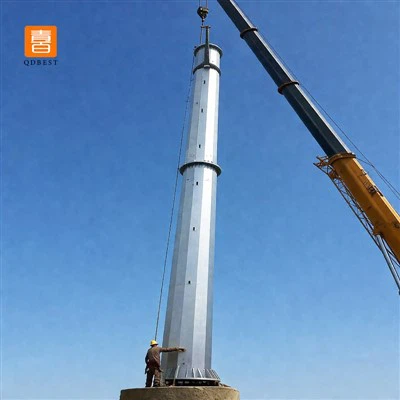
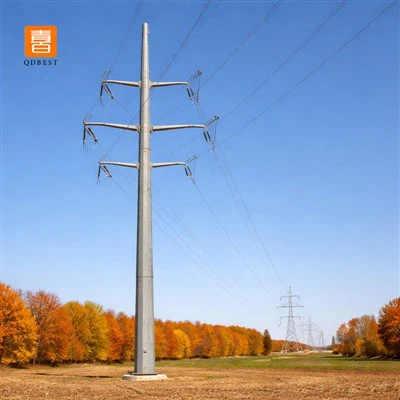
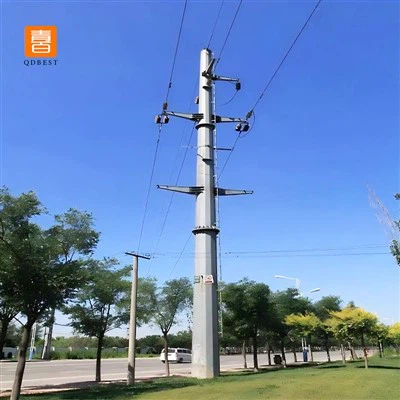
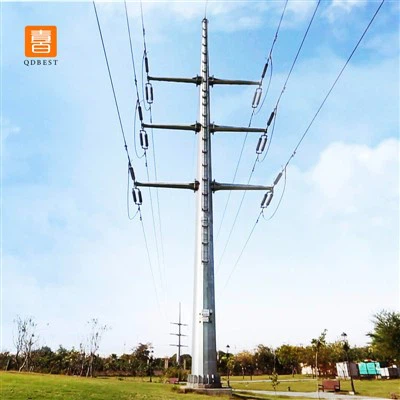
![Monopole Steel Pipe Tower]() Monopole Steel Pipe Tower
Monopole Steel Pipe Tower● Tower Type: Monopole Steel Pipe Tower
● Country of origin: China
● Manufacturer: Qingdao BEST Steel Structure Co., Ltd.
● Material: carbon steel Q235B Q355B Q420B
●... -
![Triangular Self Supporting Communication Steel Tubular Tower]() Triangular Self Supporting Communication Steel Tubular Tower
Triangular Self Supporting Communication Steel Tubular Tower● Tower Type: Triangular Self Supporting Communication Steel Tubular Tower
● Country of origin: China
● Manufacturer: Qingdao BEST Steel Structure Co., Ltd.
● Material:... -
![Tubular Telecommunication Tower]() Tubular Telecommunication Tower
Tubular Telecommunication Tower● Tower Type: tubular telecommunication tower
● Country of origin: China
● Manufacturer: Qingdao BEST Steel Structure Co., Ltd.
● Material: carbon steel Q235B Q355B Q420B... -
![Galvanized Outdoor Steel Wifi Tower]() Galvanized Outdoor Steel Wifi Tower
Galvanized Outdoor Steel Wifi Tower● Tower Type: Galvanized Outdoor Steel Wifi Tower
● Country of origin: China
● Manufacturer: Qingdao BEST Steel Structure Co., Ltd.
● Material: carbon steel Q235B Q355B... -
![4-Legged Tubular Lattice Cell Steel Tower]() 4-Legged Tubular Lattice Cell Steel Tower
4-Legged Tubular Lattice Cell Steel Tower● Tower Type: 4-Legged Tubular Lattice Cell Steel Tower
● Country of origin: China
● Manufacturer: Qingdao BEST Steel Structure Co., Ltd.
● Material: carbon steel Q235B Q355B... -
![Steel Tubular Communication Tower]() Steel Tubular Communication Tower
Steel Tubular Communication Tower● Tower Type: Steel Tubular Communication Tower
● Country of origin: China
● Manufacturer: Qingdao BEST Steel Structure Co., Ltd.
● Material: carbon steel Q235B Q355B...


Tubular Tower Configurations
3-Legged Tubular Tower
Utilizes three tubular main legs interconnected via horizontal and diagonal bracing members to create a rigid self-supporting space frame. Suitable for communication sites where equipment load, tower height, and footprint match three-leg structural dynamics.
4-Legged Tubular Tower
Provides an alternative structural arrangement engineered for higher equipment loading capacity, complex tower geometries, or stringent project specifications. The final geometry is validated through structural finite element analysis based on site inputs.

Key Technical Parameters for Procurement
Before initiating engineering design or procurement, the following parameters should be established:
|
Parameter |
Technical Focus & Engineering Description |
|
Tower Height & Elevations |
Determines overall structural geometry, foundation overturning moments, wind exposure profiles, and exact antenna centerline heights. |
|
Structural Leg Configuration |
Defines whether a 3-legged, 4-legged, or specific custom space-frame configuration is required based on load and footprint constraints. |
|
Steel Material Specification |
Specifies required structural steel grades in accordance with international standards (e.g., ASTM, EN), supported by full Mill Test Certificates (MTCs). |
|
Wind & Environmental Criteria |
Accounts for local design wind speeds, recurrence intervals, ice loading, and exposure categories to verify structural adequacy. |
|
Equipment Loading Schedule |
Details panel antennas, microwave dish configurations, RRUs, working platforms, internal/external ladders, and future expansion allowances. |
|
Serviceability & Deflection Limits |
Controls maximum allowable twist and sway rotations to prevent signal degradation, especially for high-frequency microwave backhaul links. |
|
Corrosion Protection System |
Specifies hot-dip galvanizing (HDG) requirements, coating thickness standards, and optional paint systems for long-term outdoor durability. |
Manufacturing Process & Quality Control
Tower performance relies heavily on dimensional precision, fabrication consistency, and strict quality assurance. A controlled manufacturing workflow typically follows these phases:
Engineering & Drawing Review: Comprehensive verification of tower geometry, member sizes, joint details, bolt specifications, and foundation interfaces prior to production.
Raw Material Inspection: Verification of incoming structural steel against specified material grades and mill test certificates.
Cutting & Forming: CNC laser, plasma cutting, or sawing of tubular members and gusset plates to eliminate accumulated assembly errors.
Welding & Fabrication: Execution of welding processes by certified welders in accordance with approved welding procedure specifications (WPS). Inspection covers joint preparation and weld integrity.
Component & Connection Machining: Precision fabrication of base flanges, connection plates, and brackets to guarantee complete component interchangeability during field installation.
Factory Trial Assembly: Pre-assembly of critical or custom tower sections in the factory environment to verify member dimensions, bolt-hole alignment, and overall geometric fit—significantly reducing costly delays on the job site.
Hot-Dip Galvanizing (HDG): Immersion of fabricated steel components in molten zinc following approved galvanizing standards to secure long-term outdoor corrosion resistance.
Final Inspection & Protective Packing: Post-galvanizing inspection, sorting, and bundled packing with weather-resistant component marking to ensure seamless matching with installation drawings.
Remote & Space-Constrained Sites:
Compact self-supporting footprint solutions ideal for rural, mountainous, or urban environments where guy-wire space is unavailable.
Utility & Industrial Infrastructure:
Specialized tubular steel structures designed for power grid communication, surveillance, and industrial monitoring (engineered with distinct electrical clearances and structural codes).
Cellular & Wireless Networks:
Robust self-supporting structures for 4G and 5G cellular infrastructure rollouts.
Microwave Communication:
Rigid tower design capable of maintaining tight alignment tolerances for line-of-sight microwave backhaul links.
Broadband & Radio Networks:
Fixed wireless access, public safety radio systems, and emergency dispatch communications.
FAQ
Qingdao BEST Steel Structure Co., Ltd. is one of the most professional tubular tower manufacturers and suppliers in China. We warmly welcome you to buy customized tubular tower made in China here from our factory. If you have any enquiry about OEM service, please feel free to email us.
Galvanized Outdoor Steel Wifi Tower, Tubular Telecommunication Tower, Steel Tubular Communication Tower