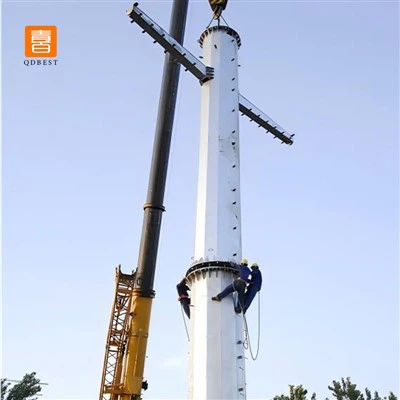
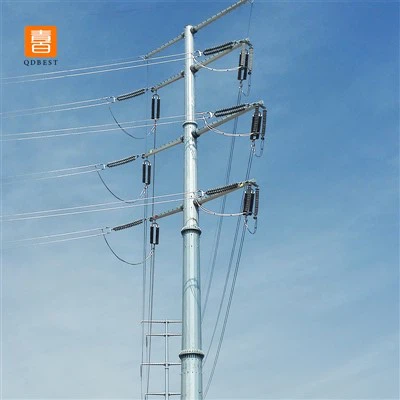
Transmission towers are critical infrastructure in power transmission networks, playing a vital role in supporting high-voltage conductors and maintaining stable line operation.
Structural Design and Material Selection:
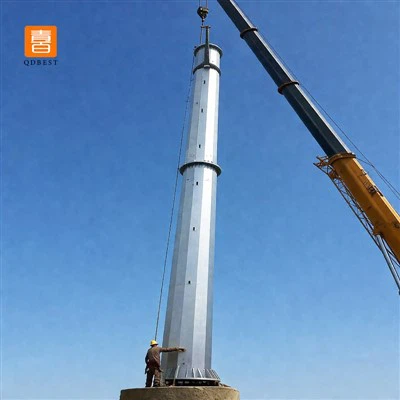
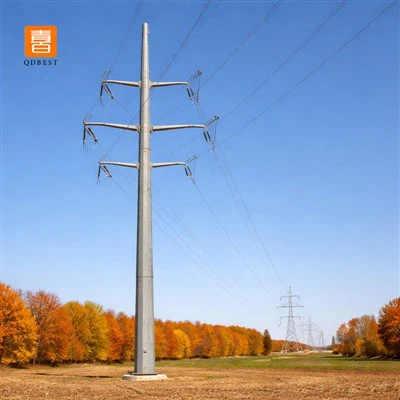
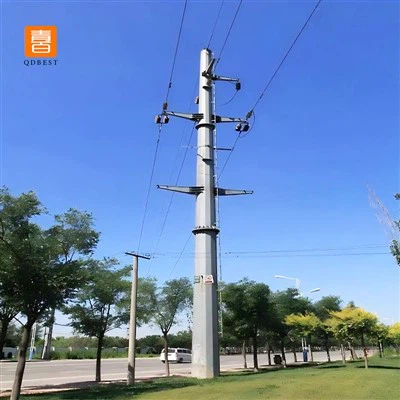
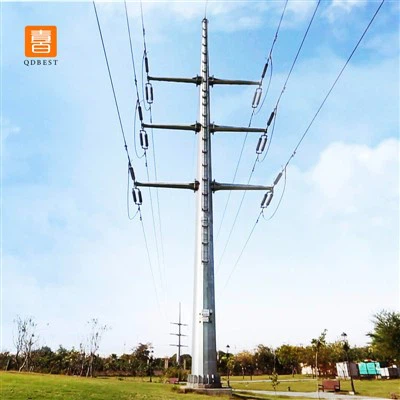
Transmission towers typically employ a tapered round steel structure. This design optimizes the cross-sectional shape to enhance wind resistance while reducing material usage and overall weight. The main body is made of high-strength round steel, treated with hot-dip galvanizing to form a dense zinc layer, effectively resisting the moisture, acid, and alkali corrosion of the forest environment and extending its service life. Bolted connections replace traditional welding, facilitating on-site assembly and avoiding the potential impact of welding stress on structural strength.
Technical Parameters and Environmental Adaptability:
The transmission tower has a tensile strength of 115 MPa, capable of withstanding conductor tension and additional loads under extreme weather conditions. A 2-meter foundation opening ensures the tower's stability in soft soil foundations, meeting a seismic intensity standard of 20°, and adapting to potential geological activity in forest areas. The applicable temperature range of 20℃ covers most climatic conditions, and can be used in extreme environments.
Safety and Environmental Performance Analysis:
In terms of safety, the tower structure has optimized stress distribution through finite element analysis, and key nodes are thickened to prevent deformation due to localized overload. Regarding environmental protection, the hot-dip galvanizing process produces no heavy metal pollution, and the zinc layer can naturally degrade into zinc ions, having minimal impact on the soil ecosystem. The exterior features a minimalist design, reducing visual obtrusion in forests and lowering the wind resistance coefficient.