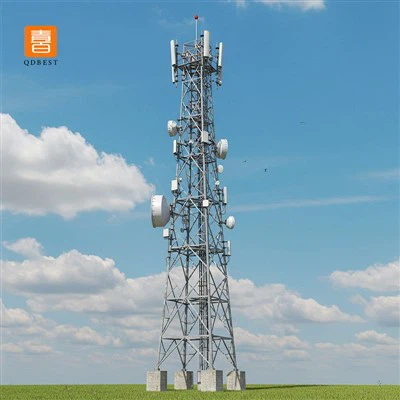
Many customers have enquired about the noise generated by steel tube communication towers. This blog post will elaborate on this issue in detail.


First off, let's talk about what a steel tubular communication tower is. These towers are used to support communication equipment, like antennas and transmitters, for various purposes such as mobile phone networks, radio and TV broadcasting, and more. They're made of steel tubes, which are strong and durable, and can be designed to fit different heights and configurations.
Now, when it comes to the acoustic impacts of these towers, there are a few things to consider. One of the main concerns is the noise generated by the wind blowing around the tower. As the wind passes over the tower's surface, it creates turbulence, which can produce a whistling or humming sound. This noise can be more noticeable in areas with high wind speeds or when the tower is located near residential areas.
Another factor to consider is the vibration of the tower itself. When the wind blows, it can cause the tower to vibrate, which can also generate noise. This vibration can be transmitted through the ground and into nearby buildings, potentially causing annoyance to residents.
So, how can we minimize the acoustic impacts of steel tubular communication towers? One approach is to design the tower in a way that reduces wind resistance. This can be done by using aerodynamic shapes and smooth surfaces, which can help to reduce the turbulence and noise generated by the wind. Additionally, adding damping materials to the tower can help to absorb the vibration and reduce the noise.
Another option is to locate the tower in an area where the acoustic impacts will be minimized. For example, placing the tower away from residential areas or in a location where there are natural barriers, such as trees or hills, can help to reduce the noise reaching nearby homes.
It's also important to note that the acoustic impacts of a steel tubular communication tower can vary depending on a number of factors, such as the height and design of the tower, the wind speed and direction, and the surrounding environment. Therefore, it's important to conduct a thorough acoustic assessment before installing a tower to determine the potential impacts and develop appropriate mitigation measures.
In addition to the wind-generated noise, there are also other sources of noise associated with steel tubular communication towers. For example, the equipment installed on the tower, such as generators and air conditioners, can also produce noise. To minimize the impact of this noise, it's important to choose equipment that is designed to be quiet and to install it in a way that reduces the noise transmission.
Another consideration is the electromagnetic radiation emitted by the communication equipment on the tower. While this is not strictly an acoustic impact, it can also be a concern for some people. To address this issue, it's important to ensure that the tower is designed and installed in accordance with relevant safety standards and regulations.
Overall, the acoustic impacts of a steel tubular communication tower can be managed through careful design, location, and mitigation measures. As a supplier, we work closely with our clients to ensure that their towers are designed and installed in a way that minimizes the impact on the surrounding environment and meets all relevant safety and regulatory requirements.
If you're interested in learning more about our Steel Tubular Communication Tower or Monopole Steel Pipe Tower products, or if you have any questions about the acoustic impacts of these structures, please don't hesitate to contact us. We'd be happy to discuss your needs and provide you with more information.