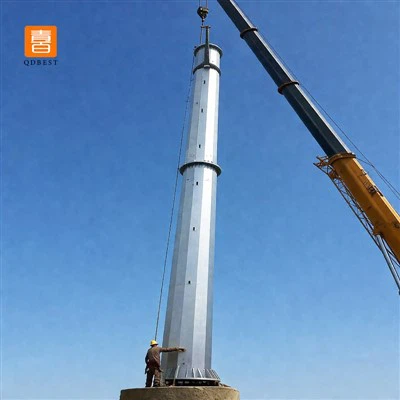
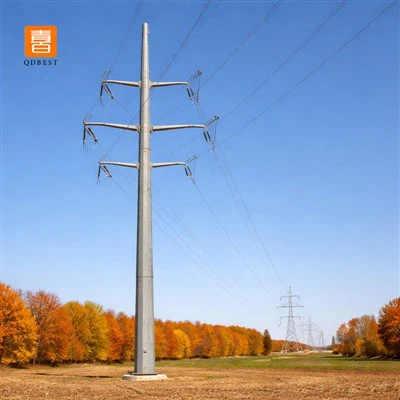
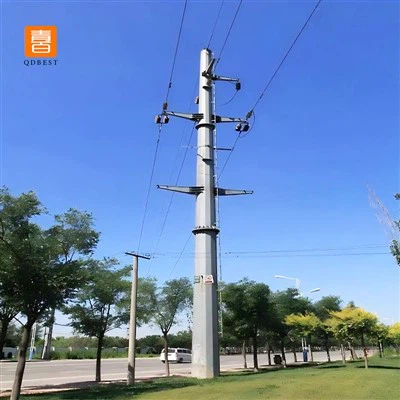
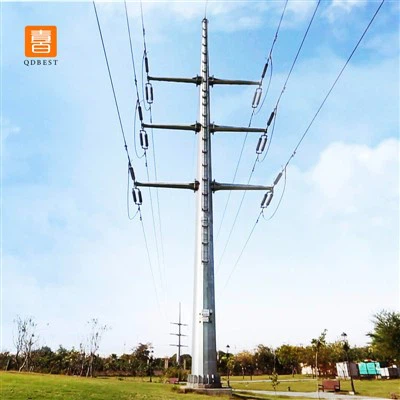
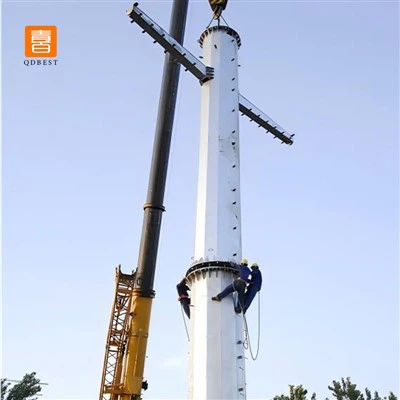
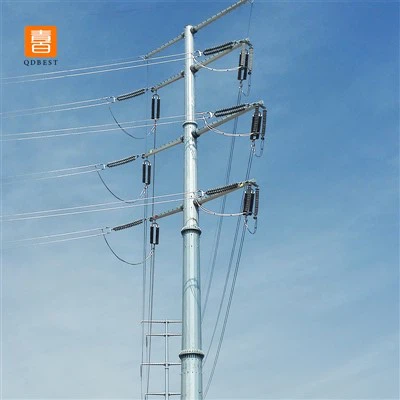
To address the corrosion challenges of transmission towers caused by heavy salt spray and high humidity in coastal regions, Qingdao Best Steel Structure Co., Ltd. has completed iterative upgrades to its full-process hot-dip galvanizing technology. Centered on three core improvements-zinc coating thickness control, pre-treatment procedures and alloy layer formation-the optimization greatly enhances the long-term anti-corrosion performance of transmission towers, monopole towers and communication towers. Components treated with the upgraded hot-dip galvanizing process are fully adaptable to marine corrosive environments and have become the mainstream anti-corrosion standard for tower structures in domestic coastal power grids and overseas coastal power projects, effectively cutting the full-life-cycle maintenance costs of power lines.
Recently, the intelligent transformation project of the galvanizing workshop at Qingdao Best Steel Structure Co., Ltd. has been fully completed, marking a systematic upgrade to the company's hot-dip galvanizing technology. Manufactured under the brand-new anti-corrosion production system, transmission towers, tubular towers, angle steel towers and other products deliver markedly stronger corrosion resistance. Hot-dip galvanizing has officially become the standard specification for coastal infrastructure, providing solid technical support for the long-term safe operation of power transmission and transformation facilities in coastal areas.
Coastal zones are constantly subjected to combined erosion from sea salt spray, diurnal temperature fluctuations and moisture. The steel bodies, cross arms and connecting bolts of transmission towers are highly susceptible to oxidative corrosion, which at minimum shortens the service life of towers and may trigger serious hidden dangers to power lines in severe cases. The upgraded galvanizing process covers all working procedures: degreasing, pickling, fluxing, high-temperature zinc dipping, air knife zinc leveling and chromium-free passivation. The enterprise optimized the intelligently temperature-controlled zinc pot system to accurately maintain molten zinc at a constant temperature range of 430℃ to 460℃ and extend the zinc dipping reaction time for transmission tower components, facilitating the formation of dense, uniform zinc-iron alloy protective layers on steel surfaces. Meanwhile, a multi-stage automated pre-treatment production line was renovated to thoroughly remove mill scale and impurities from weld seams, edges and bolt holes of tower components, eliminating coating peeling and missing plating at the source.
This galvanizing process upgrade delivers multiple breakthrough advantages. First, the standardized thickened hot-dip galvanizing system eliminates the need for additional multi-layer anti-corrosion topcoats, simplifying construction procedures for coastal towers. Second, long-lasting corrosion resistance extends the stable outdoor service life of transmission towers and drastically reduces later maintenance expenses including rust removal, repainting and tower replacement. Third, the fully automated closed-loop galvanizing production line adopts eco-friendly pickling chemicals, complying with domestic environmental regulations and EU manufacturing standards to balance superior anti-corrosion performance and green production.
At present, thickened hot-dip galvanized transmission towers have been designated the primary design option for domestic coastal power grid renovation projects and power transmission lines supporting island wind and photovoltaic power bases. In overseas coastal power infrastructure orders, customer demands specifying towers treated with the upgraded galvanizing process keep rising. Powered by this technological innovation, Qingdao Best Steel Structure has built differentiated core competitiveness in anti-corrosion technology, capable of supplying one-stop customized solutions for hot-dip galvanized transmission towers and communication towers to clients worldwide.