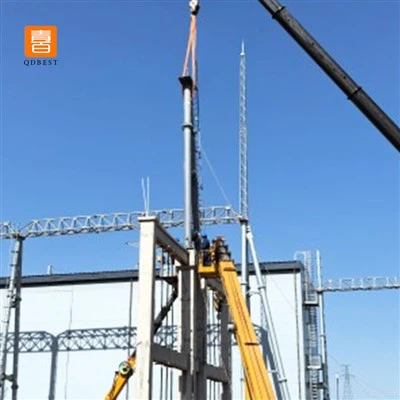
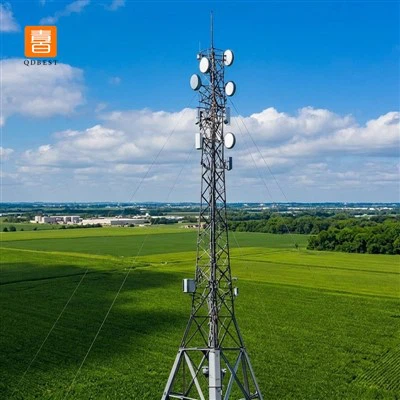
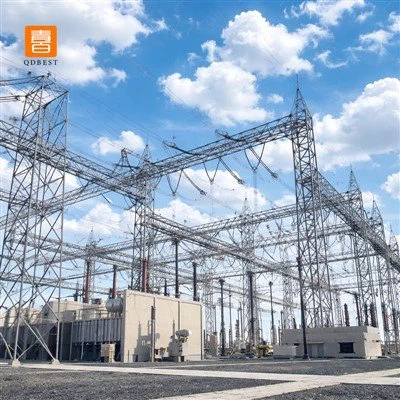
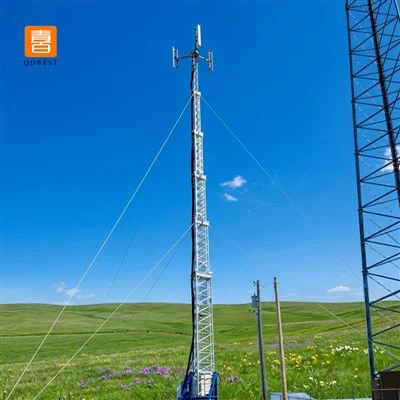
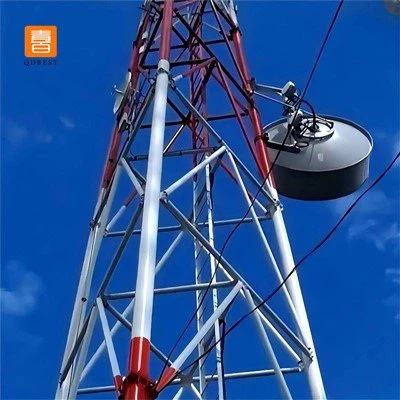
Common structural types include angle steel towers (quadrilateral and trilateral), single-tube towers, three-tube towers, guyed towers, rooftop towers/elevation frames, support poles, and scaffolding. Different types of towers have their own characteristics in terms of height, wind resistance, aesthetics, construction cost, and applicable scenarios. For example, single-tube towers are generally 15-50 meters high, with advantages such as simplicity, aesthetics, small footprint, and fast construction and installation. Disadvantages include poor wind resistance due to the long cantilever structure, relatively high cost, and difficult installation and maintenance. Quadrilateral angle steel towers are suitable for various heights, with advantages such as wide application, easy quality assurance, high safety, and low construction cost. Disadvantages include larger size, less aesthetically pleasing appearance, and longer construction period. Trilateral angle steel towers are similar to quadrilateral towers, but their overall structural torsional resistance is poor, making them unsuitable for high wind pressure areas, unable to be installed on top of machine rooms, and requiring a large footprint.
Compared to angle steel towers, three-tube towers have fewer components, better economic performance, smaller footprint, simpler structure, and are easier to transport and install. However, they have weaker rigidity, their height should not exceed 55 meters, they have no aesthetic function, and relocation and reuse are difficult. Guyed towers use less steel, are easy to process and construct, and have low foundation requirements, but require a large space for guy wires, require frequent maintenance, and have lower safety. Support poles are easy to install, quick to construct, and inexpensive, but have poor aesthetics and limited sharing capabilities. Pole mounts are easy to install, quick to construct, and inexpensive, but have poor aesthetics and limited height. Raised antenna mounts can accommodate a large number of antennas and are easy to use, but have poor aesthetics and limited height.