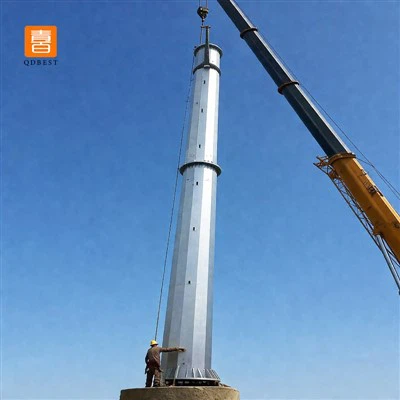
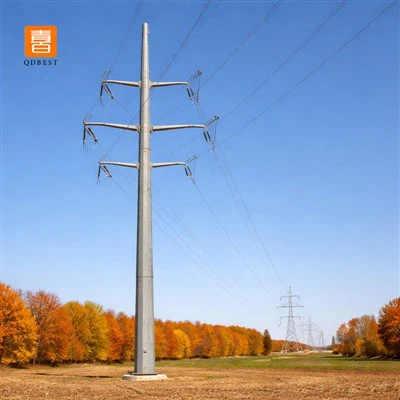
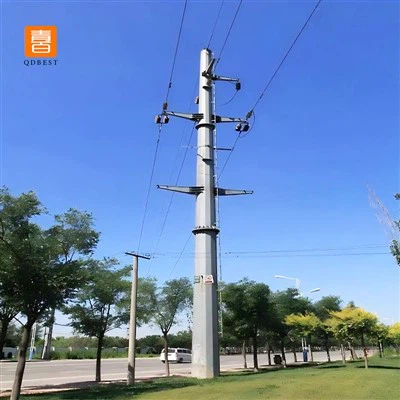
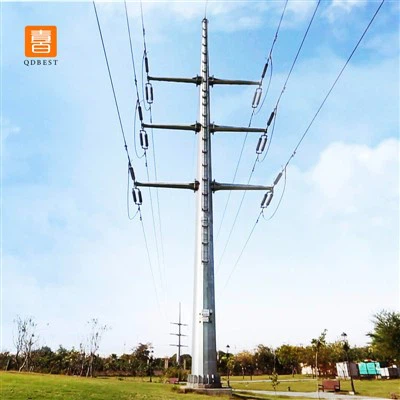
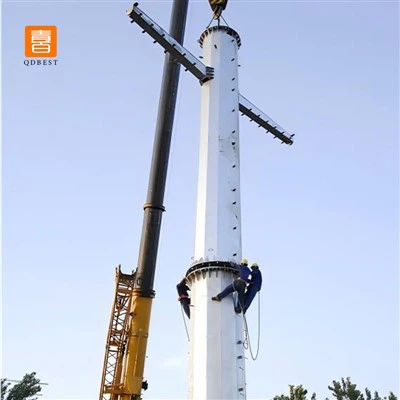
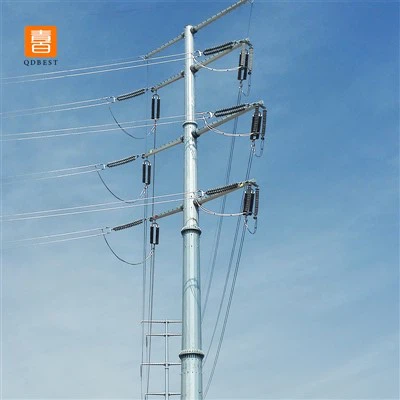
Substation frames serve several crucial functions. First, they provide support, supporting various electrical equipment such as transformers, circuit breakers, and disconnectors. These devices are heavy, requiring stable support from the substation frame to ensure secure installation and prevent swaying or tilting that could disrupt normal operation. Second, they provide isolation, separating electrical equipment of different voltage levels to create safe electrical distances and prevent short circuits and other faults. They also isolate energized equipment from personnel areas, ensuring worker safety. Third, they provide connectivity, offering pathways and support points for connections between electrical equipment. Power transmission and distribution are achieved through busbars, cables, and other connecting components on the frame.
The connections between different electrical devices must be accurate, and the substation frame ensures the stability and reliability of these connections, guaranteeing smooth power transmission. Furthermore, substation frames offer protection against external environmental factors such as wind, rain, and dust. Some substation frames are also equipped with lightning protection devices to effectively prevent damage from lightning strikes. During the operation of a substation, the substation structure also serves as an identification feature, facilitating the identification and operation of equipment by staff.