Can four-legged lattice towers be used for water tank support? This blog post will delve deep into this topic.
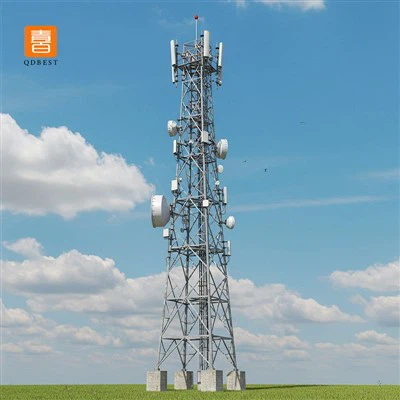
First off, let's talk about what a four - legged lattice tower is. It's a structure made up of a framework of steel members arranged in a lattice pattern. These towers are known for their strength, stability, and cost - effectiveness. They're commonly used in various applications, like Telecom Angle Steel Tower for telecommunications, Angle Steel Telecommunication Tower, and Telecom Lattice Tower. But when it comes to water tank support, there are several factors to consider.
Structural Strength
One of the most important aspects is whether the tower can handle the weight of the water tank. Water is heavy, and a full water tank can put a significant load on the supporting structure. Four - legged lattice towers are designed to distribute loads evenly across their legs. The lattice design helps in spreading the weight, reducing the stress on individual members.
Typically, the strength of a lattice tower depends on the type and size of the steel used, as well as the design of the lattice pattern. When considering using a four - legged lattice tower for water tank support, engineers need to calculate the maximum load the tower can bear. This calculation takes into account the weight of the empty tank, the weight of the water when the tank is full, and any additional loads such as wind, snow, or seismic forces.
If the tower is properly designed and constructed, it should be able to support the weight of the water tank. However, it's crucial to ensure that the design is based on accurate data and engineering principles. Overestimating the tower's capacity can lead to catastrophic failures, while underestimating it may result in unnecessary costs for an over - engineered structure.


Stability
Stability is another key factor. A water tank supported by a tower is exposed to various external forces. Wind, for example, can exert significant lateral forces on the tank and the tower. If the tower isn't stable, it may sway or even topple over.
Four - legged lattice towers offer good stability due to their four - point base. This base configuration provides a wide footprint, which helps to resist lateral forces. Additionally, the lattice structure adds to the overall stiffness of the tower. But to ensure maximum stability, proper foundation design is essential. The foundation must be strong enough to anchor the tower firmly to the ground and resist any uplift or sliding forces.
In areas with high wind speeds or seismic activity, additional stability measures may be required. This could include adding guy wires to the tower or using a more robust foundation design. For instance, in coastal regions where strong winds are common, guy wires can be attached to the tower at strategic points to provide extra support.
Installation and Maintenance
The ease of installation and maintenance also plays a role in determining if a four - legged lattice tower is suitable for water tank support. Installing a lattice tower is generally more straightforward compared to some other types of supporting structures. The modular nature of the lattice design allows for easy assembly on - site.
When it comes to maintenance, lattice towers are relatively easy to inspect. The open - grid design provides access to all the members, making it easier to check for signs of corrosion, damage, or wear. Regular maintenance is crucial to ensure the long - term integrity of the tower. This includes painting to prevent corrosion, tightening bolts, and replacing any damaged members.
However, when a water tank is installed on the tower, accessing the tank for maintenance can be a challenge. Specialized equipment may be required to reach the tank safely. Also, the presence of water in the tank can increase the risk of corrosion in the tower members, so additional corrosion - prevention measures may be needed.
Cost - Effectiveness
Cost is always a consideration in any project. Four - legged lattice towers are often a cost - effective option for water tank support. The materials used in lattice towers are relatively inexpensive compared to some other structural materials. The simple design also reduces manufacturing and installation costs.
In addition, the long - service life of lattice towers means that the overall cost of ownership over the years is relatively low. While there are initial costs for design, manufacturing, and installation, the reduced maintenance and replacement costs make them an attractive option in the long run.
Comparison with Other Support Structures
There are other types of structures that can be used for water tank support, such as monopoles and concrete pedestals. Monopoles are single - pole structures that offer a more compact design. They're often used in areas where space is limited. However, monopoles may not be as strong as four - legged lattice towers when it comes to handling large - scale water tanks.
Concrete pedestals are also a popular option. They provide a very stable base and are resistant to corrosion. But concrete pedestals can be more expensive to construct, especially for larger water tanks. Additionally, they may not be as flexible in terms of design and installation as four - legged lattice towers.
Case Studies
There have been several successful projects where four - legged lattice towers have been used for water tank support. In some rural areas, these towers have been used to support small - to - medium - sized water tanks. The towers were able to withstand the weight of the water tanks and the environmental conditions in those areas.
In one case, a four - legged lattice tower was installed in a coastal town to support a large water tank. The tower was designed with additional stability features to withstand the strong winds in the area. After several years of operation, the tower and the water tank are still in good condition, demonstrating the viability of using four - legged lattice towers for water tank support.
Conclusion
So, can a four - legged lattice tower be used for water tank support? The answer is yes, but with proper design, construction, and maintenance. These towers offer a combination of strength, stability, and cost - effectiveness. However, each project is unique, and it's essential to conduct a detailed engineering analysis to ensure that the tower can meet the specific requirements of the water tank and the site conditions.
If you're considering using a four - legged lattice tower for your water tank support project, I'd love to have a chat with you. We can discuss your needs in detail and come up with the best solution for your project. Don't hesitate to reach out, and let's start this exciting journey together.