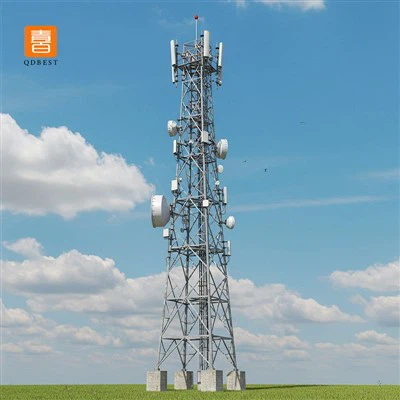
Lattice telecommunication towers are essential for delivering reliable communication services, but they face various hurdles that need to be carefully addressed.
Environmental Challenges
One of the most significant challenges in operating lattice telecommunication towers is dealing with environmental factors. These towers are often installed in diverse geographical locations, from coastal areas to mountainous regions, each presenting unique environmental threats.
Harsh Weather Conditions
Extreme weather events such as hurricanes, typhoons, and heavy snowfall can pose a serious risk to the structural integrity of lattice towers. High - speed winds can exert tremendous force on the tower's lattice structure, potentially causing it to sway or even collapse. To address this, we design our Lattice Telecommunication Tower with advanced engineering techniques. We conduct detailed wind tunnel tests to simulate different wind speeds and directions, ensuring that the tower can withstand the maximum expected wind loads in its intended location. Additionally, we use high - strength steel materials and reinforce critical joints to enhance the tower's overall stability.
Corrosion
In coastal areas or regions with high humidity, corrosion is a major concern. The metal components of the lattice tower are exposed to saltwater and moisture, which can gradually eat away at the steel. To combat corrosion, our towers are treated with a multi - layer coating process. First, the steel is hot - dip galvanized, creating a protective zinc layer that acts as a barrier against rust. Then, a topcoat of anti - corrosive paint is applied for additional protection. This combination significantly extends the lifespan of the tower and reduces the need for frequent maintenance.
Structural Integrity and Maintenance
Ensuring the long - term structural integrity of lattice telecommunication towers is crucial to their safe and efficient operation.
Regular Inspections
We establish a comprehensive inspection schedule for all our installed towers. Trained technicians conduct visual inspections on a regular basis to check for signs of damage, such as cracks in the steel members, loose bolts, or signs of corrosion. For more in - depth analysis, we also use non - destructive testing techniques like ultrasonic testing and magnetic particle inspection. These methods can detect internal flaws in the steel that may not be visible to the naked eye.
Maintenance and Repairs
If any issues are detected during the inspections, immediate maintenance and repair work is carried out. For minor damages, such as loose bolts, technicians can quickly tighten them on - site. In cases of more severe damage, like a cracked steel member, we have a stock of replacement parts readily available. Our technicians are trained to perform complex repairs, ensuring that the tower is restored to its original structural integrity as soon as possible. This proactive approach helps prevent small problems from escalating into major failures.
Electromagnetic Interference (EMI)
Lattice telecommunication towers are equipped with various electrical and electronic components, which can generate electromagnetic interference. EMI can disrupt the normal operation of nearby electronic devices and communication systems, as well as cause interference within the tower itself.
Shielding and Grounding
To minimize EMI, we incorporate shielding techniques in the design of our towers. We use conductive materials to create shielding enclosures around sensitive electronic components, preventing the leakage of electromagnetic waves. Additionally, proper grounding systems are installed to divert any unwanted electrical currents safely into the ground. This not only reduces EMI but also enhances the safety of the tower by protecting against lightning strikes.


Frequency Management
We also work closely with telecommunication operators to manage the frequencies used by the equipment on the tower. By carefully selecting and coordinating the operating frequencies, we can reduce the potential for interference between different communication systems. This requires a deep understanding of electromagnetic theory and the use of advanced frequency planning tools.
Safety and Security
Safety and security are of utmost importance in the operation of lattice telecommunication towers.
Physical Security
Our towers are often located in remote or semi - remote areas, making them vulnerable to unauthorized access. To enhance physical security, we install fencing around the base of the tower and use access control systems, such as key cards or biometric scanners. We also implement surveillance cameras to monitor the tower 24/7. These cameras are connected to a central monitoring station, allowing for immediate response in case of any suspicious activity.
Safety Standards Compliance
We adhere to strict safety standards in the design, construction, and operation of our lattice telecommunication towers. Our technicians are trained to follow all safety protocols when working on the towers, including the use of personal protective equipment (PPE) such as safety harnesses and helmets. We also ensure that all electrical systems on the tower are installed and maintained in accordance with relevant electrical safety codes.
Connecting with Customers
If you are in need of reliable telecommunication tower solutions, we are here to help. Our Angle Steel Telecommunication Tower, 60M Angle Steel Gsm Microwave Telecom Tower, 35M Telecom 4 - Legged Galvanized Angular Steel Towers, and Communication Angle Steel Tower are designed to meet the highest industry standards and address the challenges mentioned above. Contact us to discuss your specific requirements and let's start a procurement - related conversation.