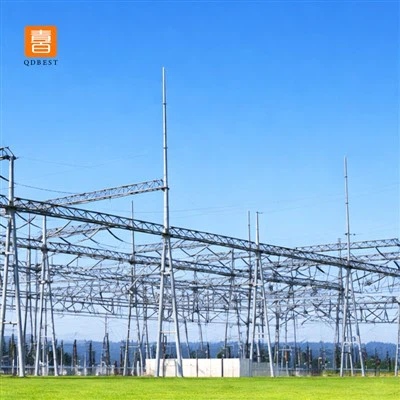
This blog explains how rooftop communication towers support 4G network technology.
First off, let's talk about what 4G technology actually is. 4G, or the fourth generation of wireless communication technology, offers significantly faster data speeds and better network capacity compared to its predecessors. It allows for seamless streaming, quick downloads, and smooth video calls. But for all these benefits to reach our devices, we need a reliable infrastructure, and that's where roof-top telecommunication towers come in.
Roof-top telecommunication towers are like the unsung heroes of the 4G world. They're strategically placed on rooftops to ensure maximum coverage and signal strength. These towers act as a bridge between the mobile network operators and our devices, transmitting and receiving signals to keep us connected.
One of the key components of a roof-top telecommunication tower is the antenna. Antennas are designed to send and receive radio waves, which carry the data for 4G services. They come in various shapes and sizes, depending on the specific requirements of the network. For example, some antennas are designed to cover a wide area, while others are more focused on providing high - speed data in a specific location.
The tower itself also plays a crucial role. It needs to be sturdy and stable to support the antennas and other equipment. We offer different types of towers, such as the Four-legged Lattice Tower. This type of tower is known for its strength and durability. It can withstand harsh weather conditions, which is essential for maintaining a reliable 4G network.
Another great option is the 25M Galvanized Angle Steel Microwave Communication Tower. The galvanized coating on the angle steel makes it resistant to corrosion, ensuring a long lifespan. This tower is suitable for areas where a medium - height tower is needed to provide 4G coverage.
If you need a taller tower for better coverage, our 60M Angle Steel Gsm Microwave Telecom Tower is a great choice. It can reach higher altitudes, allowing for a wider coverage area. This is especially useful in urban areas or large campuses where a strong 4G signal is required across a large space.
Now, let's get into the technical details of how these towers support 4G technology. The antennas on the tower are connected to a base station. The base station is like the control center of the 4G network. It processes the data that comes in from the antennas and sends it to the core network. The core network then routes the data to its destination, whether it's a website, a streaming service, or another mobile device.
The tower also needs to be properly configured to support 4G frequencies. 4G operates on specific frequency bands, and the antennas and base station need to be tuned to these frequencies to ensure optimal performance. This involves a lot of technical work, but we have a team of experts who can handle all the configuration and installation.

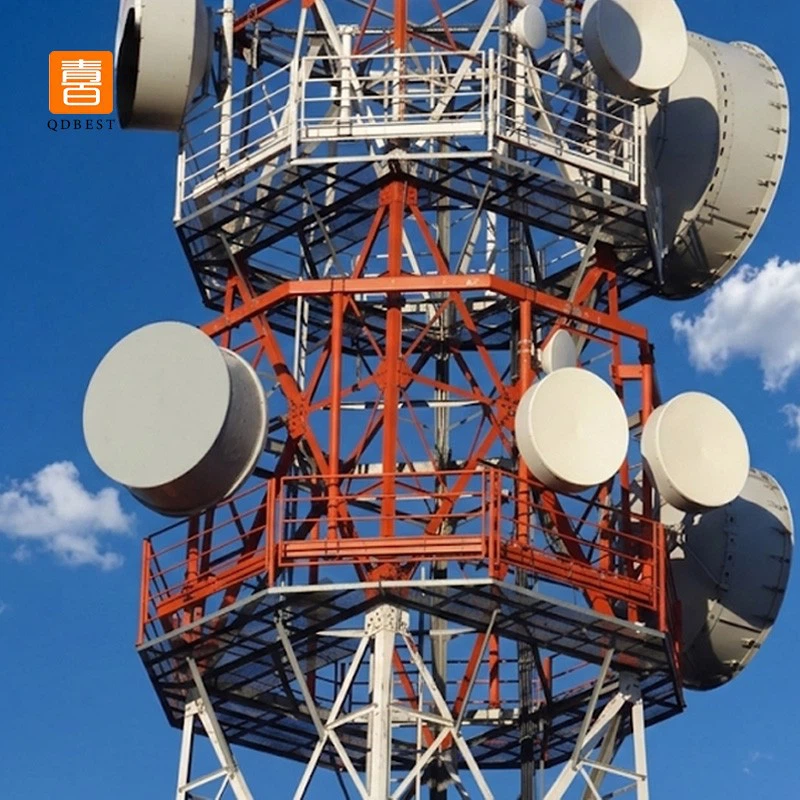
In addition to the antennas and base station, the tower also has other equipment such as amplifiers and filters. Amplifiers boost the signal strength, ensuring that the 4G signal can reach our devices even in areas with weak reception. Filters, on the other hand, help to remove any interference or noise from the signal, providing a clear and stable connection.
One of the challenges in supporting 4G technology is dealing with the increasing demand for data. As more and more people use 4G services, the network needs to be able to handle the traffic. That's why we're constantly working on improving our towers and equipment. We're investing in new technologies and materials to make our towers more efficient and capable of supporting the growing data needs.
Another important aspect is the location of the tower. Rooftops are a great choice because they offer a high vantage point. This allows the antennas to have a clear line of sight to the surrounding area, reducing the chances of signal blockage. However, we also need to consider factors such as the building's structure, zoning regulations, and the proximity to other towers.
If you're in the market for a roof - top telecommunication tower to support your 4G network, we're here to help. Our towers are designed to meet the highest standards of quality and performance. We offer a range of options to suit different needs and budgets. Whether you need a small tower for a local area or a large tower for a wide - scale network, we've got you covered.
If you're interested in learning more about our products or have any questions, feel free to reach out. We'd love to have a chat and see how we can help you set up a reliable 4G network.