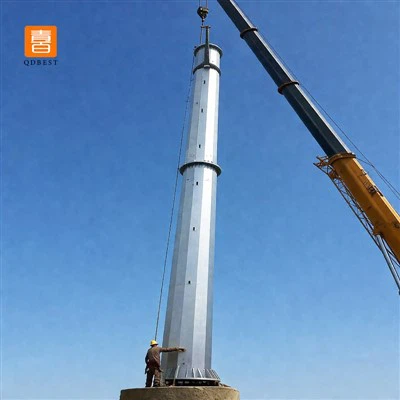
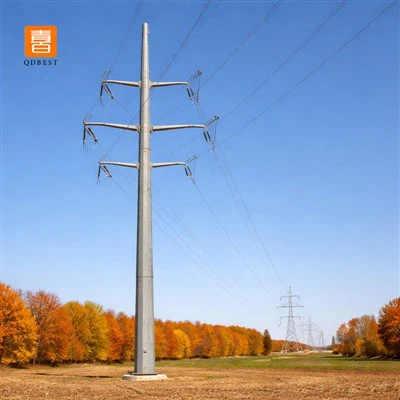
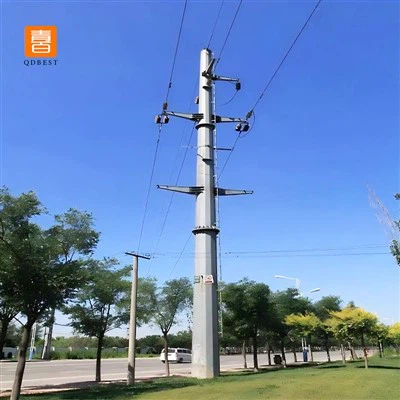
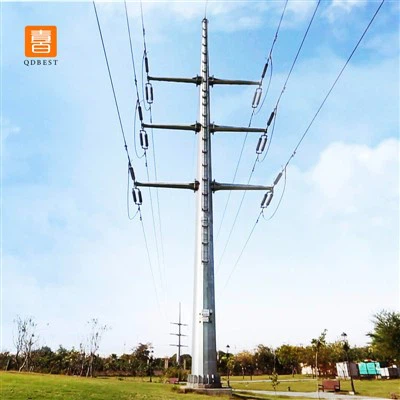
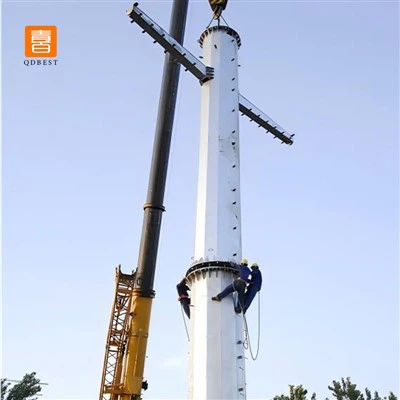
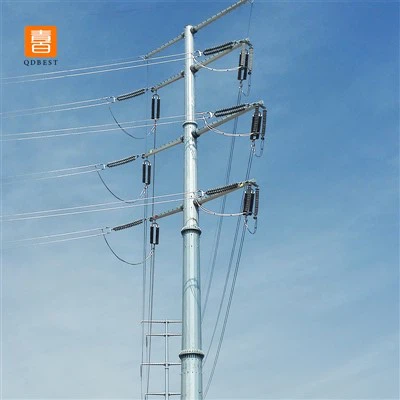
Suspension Towers: Suspension towers bear the weight of conductors and overhead ground wires, as well as wind forces acting upon them, but do not bear tension on the lines during construction and normal operation. The conductors and overhead ground wires are not broken at the suspension towers used in high-voltage overhead power line design and maintenance, and are positioned within a straight segment where the conductors and overhead ground wires are aligned. The suspension tower serves only as a supporting structure for suspending the conductors and overhead ground wires in the line, maintaining the conductor-to-ground distance (the tower located between two tension towers).
Tension Towers: Tension towers, in addition to supporting the weight and wind forces of conductors and overhead ground wires, also bear the tension on these lines. The conductors and overhead ground wires are broken at the tension towers and positioned within a straight (or angled) segment where the conductors and overhead ground wires are aligned. This reduces the length of continuous spans along the longitudinal direction of the line, facilitating line construction and maintenance, and controlling the potential for tower collapses along the longitudinal direction. Tension towers are classified into tension straight towers, tension angle towers, and terminal towers.