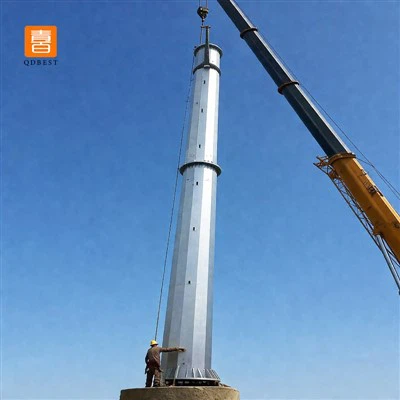
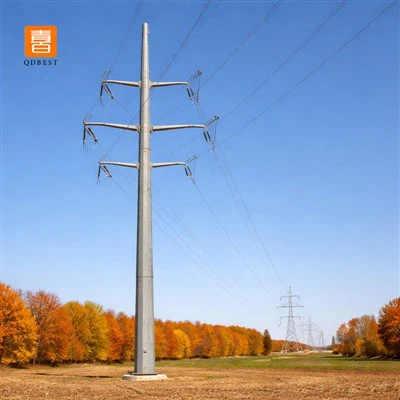
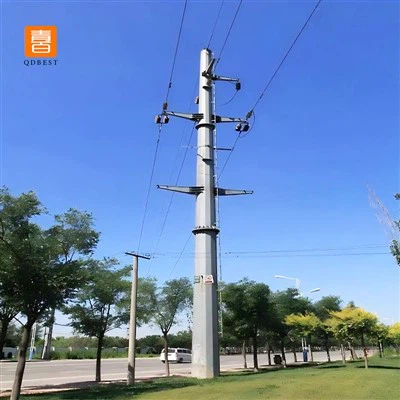
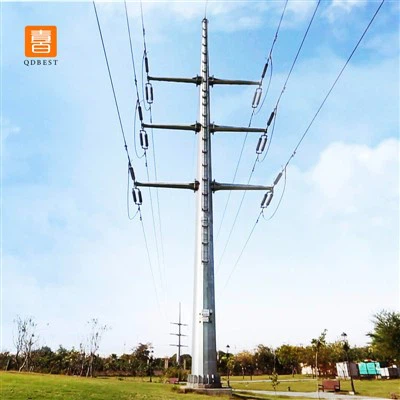
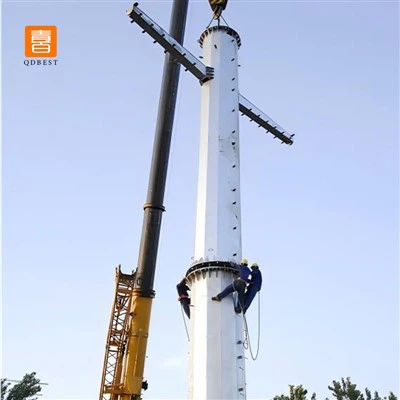
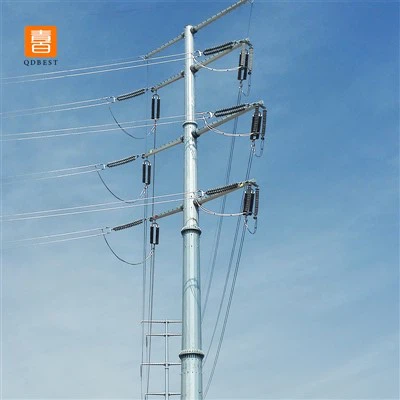
The main components of a power transmission tower include conductors, overhead ground wires (lightning protection wires), insulators, and hardware (clamps, etc.).
As the element that conducts current and transmits electrical energy, the conductor is one of the most important components of a transmission tower. Transmission lines generally use overhead bare conductors, and the number of conductors in each phase is related to the transmission voltage. Internationally, transmission voltages of 35-220kV are considered high voltage, 330-1000kV are ultra-high voltage, and above 1000kV are extra-high voltage. For lines with voltages of 220kV and above, due to the large transmission capacity, the skin effect in electromagnetics causes the current to mainly flow through the outer layer of the conductor. To reduce energy loss and corona interference, each phase of the transmission line uses two or more conductors, thereby saving on conductor material costs and reducing the load on the transmission tower. Generally, the higher the voltage level, the more split conductors are required, ranging from two to ten splits.