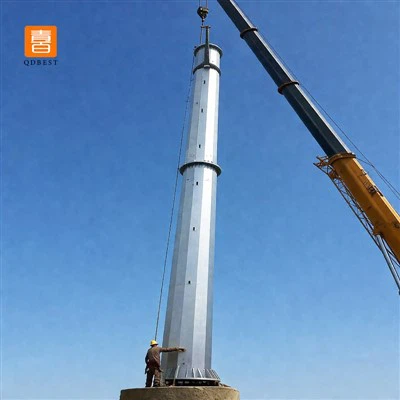
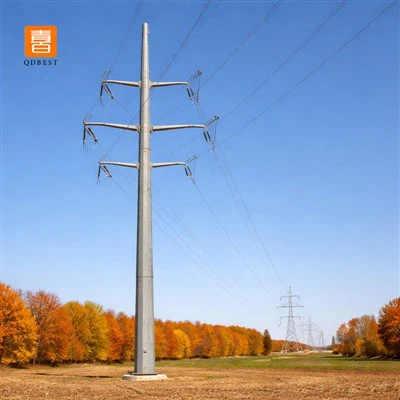
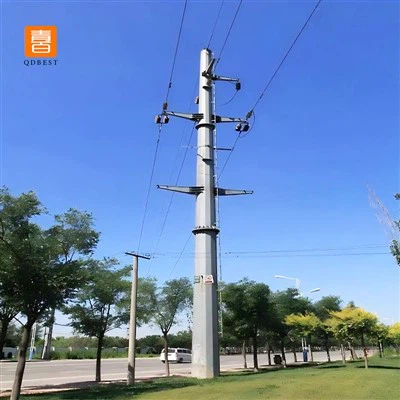
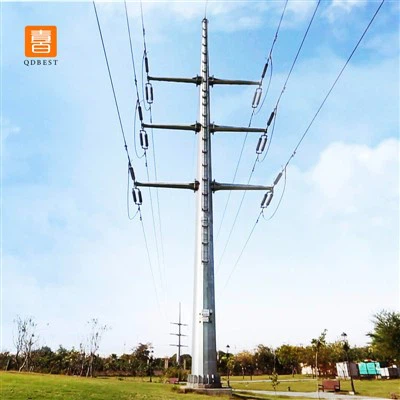
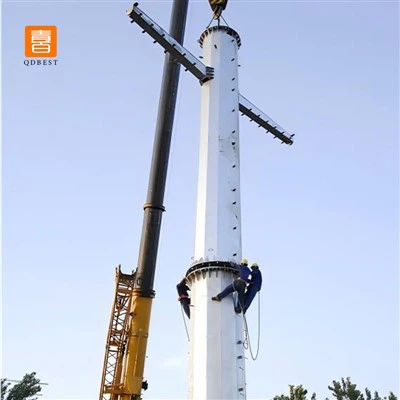
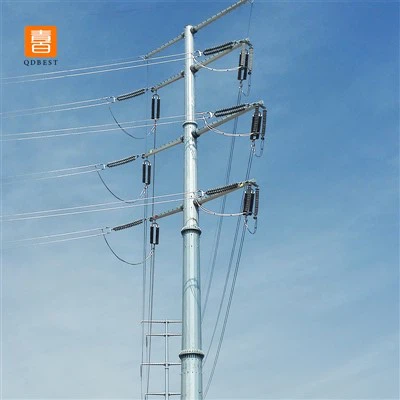
Transmission towers are steel frame structures made of shaped steel, offering advantages such as high strength and ease of manufacture. Most domestic and international transmission towers are made of hot-rolled equilateral angle steel, bolted together to form a space truss structure. The main materials used in manufacturing transmission towers include equilateral angle steel, steel pipes, and composite materials. Steel pipe towers have better aerodynamic performance, and their cross-sectional mechanical properties and load-bearing capacity are superior to angle steel towers, but their manufacturing process is more complex, resulting in higher costs. Composite towers are further divided into three types: composite tower bodies (with fluorocarbon paint coating), composite crossarms (with umbrella skirts on the composite material surface), and those made entirely of composite materials.
Transmission towers are tower-shaped power transmission and distribution facilities built with steel frame structures, typically 25-40 meters high. They primarily serve to support and protect overhead transmission lines and are usually constructed near power plants and substations in the field. As an important type of transmission tower, it is suitable for lines with voltage levels of 110kV and above. According to the stress characteristics, it can be divided into suspension type and tension type towers. The structure includes core components such as conductors, insulators, and overhead ground wires.