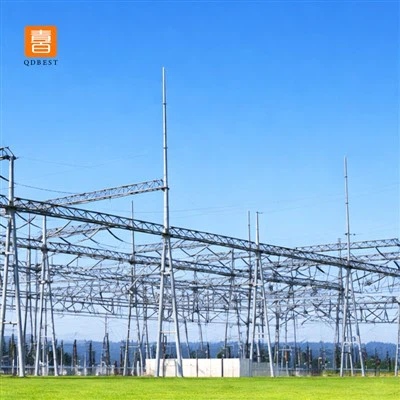
Safety management during angle‑steel tower construction is not only critical to safeguarding the life and health of construction personnel, but also bears on the long‑term reliability and service performance of the supplied structures. This blog shares several key steps for establishing an effective safety management system for angle‑steel tower construction.
1. Pre - construction Safety Planning
Before any construction work begins, a comprehensive safety plan must be developed. This involves conducting a detailed risk assessment of the construction site. Factors such as the terrain, weather conditions, and proximity to other structures need to be considered. For example, if the construction site is located in an area prone to high winds, additional safety measures for tower stability during construction must be put in place.
The safety plan should also define clear safety goals and objectives. These could include targets such as zero accidents during the construction period or a certain percentage reduction in safety incidents compared to previous projects. Additionally, roles and responsibilities for safety management should be clearly defined among all stakeholders, including project managers, supervisors, and workers.
Furthermore, we need to ensure that all workers are properly trained. Training should cover topics such as the correct use of safety equipment, emergency response procedures, and specific construction techniques related to angle steel towers. Our 35M Telecom 4 - Legged Galvanized Angular Steel Towers and other products require specialized handling and installation knowledge, so adequate training is essential.
2. Safety Equipment and Supplies
Providing the right safety equipment is fundamental to a successful safety management system. Workers should be equipped with personal protective equipment (PPE) such as hard hats, safety glasses, safety harnesses, and steel - toed boots. Each piece of PPE should be regularly inspected and maintained to ensure its effectiveness.
In addition to PPE, the construction site should be equipped with safety supplies such as fire extinguishers, first - aid kits, and safety barriers. For our Four - legged Lattice Tower construction, safety barriers can be used to mark off restricted areas and prevent unauthorized access.
Regular audits of safety equipment and supplies should be conducted. This ensures that everything is in good working condition and that there are no shortages. Any damaged or expired equipment should be immediately replaced to avoid compromising safety.


3. On - site Safety Supervision
On - site safety supervision is a key component of the safety management system. A dedicated safety supervisor should be present at the construction site at all times. The supervisor's role is to monitor work activities, enforce safety rules, and take immediate action in case of any safety violations.
The supervisor should conduct regular safety inspections. These inspections can include checking the installation of angle steel components, the stability of scaffolding (if applicable), and the proper use of tools. For example, when constructing a 25M Galvanized Angle Steel Microwave Communication Tower, the supervisor needs to ensure that the angle steel is properly bolted and aligned.
In addition to scheduled inspections, the supervisor should also be available for impromptu safety checks. This helps to catch any emerging safety issues before they turn into serious accidents. If any safety hazards are identified, immediate corrective actions should be taken, and workers should be informed about the changes to prevent future occurrences.
4. Communication and Training Refreshers
Effective communication is essential for maintaining a safe construction environment. Regular safety meetings should be held to discuss ongoing safety issues, share best practices, and address any concerns from workers. These meetings can be daily, weekly, or monthly, depending on the project's complexity and duration.
Training refreshers should also be provided periodically. As new construction techniques are developed or safety regulations change, workers need to be updated. For example, if there are new standards for the installation of Telecom Angle Steel Tower, workers should receive training on these requirements.
Moreover, communication channels should be established for workers to report safety concerns anonymously. This encourages workers to speak up without fear of retaliation, which can help in identifying and resolving safety issues more quickly.
5. Emergency Response Planning
Despite all preventive measures, emergencies can still occur. Therefore, a well - defined emergency response plan is necessary. The plan should cover various scenarios such as fires, earthquakes, or worker injuries.
Evacuation routes should be clearly marked on the construction site, and regular evacuation drills should be conducted to ensure that all workers know what to do in case of an emergency. The emergency response plan should also include procedures for contacting emergency services, such as ambulances and fire departments.
First - aid stations should be set up at convenient locations on the site, and workers should be trained in basic first - aid techniques. In the event of a minor injury, immediate first - aid can prevent the situation from worsening.
6. Documentation and Record - keeping
Proper documentation is crucial for safety management. Records should be kept of all safety training sessions, equipment inspections, safety incidents, and corrective actions taken. These records can be used for future reference, to demonstrate compliance with safety regulations, and to analyze trends in safety performance.
For example, if a particular type of accident occurs multiple times, the records can be used to identify the root cause and implement preventive measures. Documentation also helps in legal compliance, as many regulatory authorities require construction companies to maintain detailed safety records.
7. Continuous Improvement
Safety management is an ongoing process that requires continuous improvement. After each project, a post - project review should be conducted to evaluate the effectiveness of the safety management system. Lessons learned from the project can be used to improve future safety plans and procedures.
Feedback from workers, supervisors, and other stakeholders should be collected and analyzed. They may have valuable insights into what worked well and what could be improved. By implementing these suggestions, we can enhance the safety of our Communication Angle Steel Tower construction projects and other angle steel tower installations.
In conclusion, implementing a safety management system for angle steel tower construction requires a comprehensive approach that covers pre - construction planning, safety equipment provision, on - site supervision, communication, emergency response, documentation, and continuous improvement. As a reliable angle steel tower supplier, we are committed to providing high - quality products and ensuring the safety of all construction projects. If you are interested in our angle steel tower products and would like to discuss procurement, please feel free to reach out to us. We look forward to working with you to meet your tower construction needs.