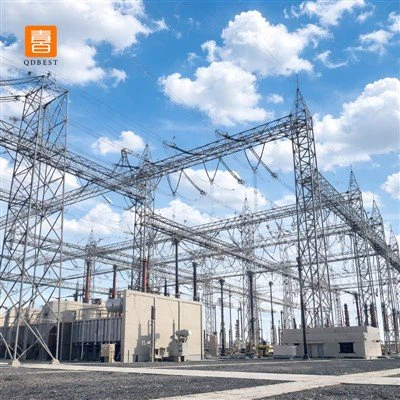
Many customers upon seeing those large, sharply angled steel supports holding transformers, insulators and busbars, may wonder: how long can these facilities last? Substation infrastructure represents a major capital investment for utilities, manufacturing plants and energy service providers. Understanding the reliable service life of steel structures helps cut costs, avoid unexpected failures and ensure stable grid operation. This blog post outlines the key factors that determine the service life of such steel structures, the triggers that shorten their lifespan, and practices to extend their service cycle over the long term.
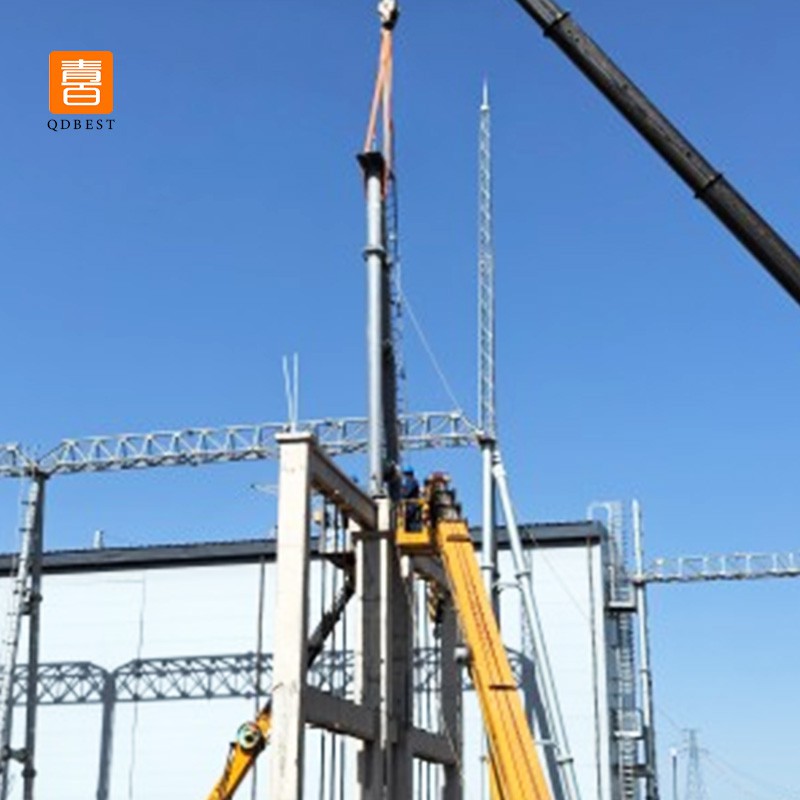
First off, let's get clear on what we're even talking about here. Substation steel structures aren't just generic steel beams-they're specialized builds tailored to hold high-voltage equipment, support heavy loads, and withstand extreme weather. There's a range of types too: think the big gantries that hold buswork, the frames for transformers and switchgear, electrical structure supports for insulators and circuit breakers, and all the smaller framing that ties it all together. If you want to check out the different types and how they're designed, you can take a look at our Substation Steel Structure page for a full breakdown of specs and configurations.
Now, the baseline service life for most properly installed substation steel structures is usually between 30 and 50 years. But that's just an average-lots of factors push this number up or down, sometimes by decades. Let's start with the biggest one: material and finish. Most substation steel is hot-dip galvanized, right? It's the gold standard for corrosion resistance, which is make-or-break for structures that live outside 24/7 in every kind of weather. Galvanizing works by bonding a zinc layer to the steel, which acts as a barrier against moisture, salt, chemicals, and other stuff that causes rust. Our Galvanized Substation Steel Structures are engineered to last through years of rain, snow, humidity, and even salt air if you're located near a coast. Without galvanizing, you'd be looking at way less-like 10 to 15 years before rust starts eating through the steel, especially in areas with harsh climates or industrial pollution.
Wait, climate is a huge second factor, and it varies a ton depending on where your substation is. If you're in a mild, dry place like the Southwest US or parts of Europe, a galvanized structure could easily hit 50 years or more with minimal upkeep. But if you're in a place with constant moisture-like the Pacific Northwest, tropical regions, or coastal areas-corrosion moves way faster. Salt from ocean spray is especially brutal; it breaks down the zinc layer on galvanized steel much quicker than rain alone. I've seen coastal substation structures start showing signs of rust in as little as 20 years if they weren't properly coated or maintained. Extreme temperatures matter too-if you're dealing with regular freeze-thaw cycles, steel expands and contracts, which can crack the galvanized coating over time and let moisture get in. Severe wind or seismic activity? If the structure isn't engineered to handle those, it can get damaged prematurely, cutting its service life short even if the steel itself is in good shape.
Then there's design and installation quality. This is where a lot of people cut corners and end up paying for it later. A well-designed substation steel structure isn't just strong enough to hold its equipment-it's designed to account for the specific loads it will face, like wind, ice, the weight of heavy transformers, and even the tension on overhead lines. Cheap, flimsy designs might not handle those loads, leading to stress fractures or bending long before the steel wears out. Installation matters too: if the steel isn't properly aligned, if bolts are torqued incorrectly, or if the foundation is poorly laid (like not set deep enough to resist shifting soil), that puts constant stress on the structure. We've seen clients go with cheaper installers and end up needing major repairs on their Power Distribution Substation structures after just 15 years because of bad installation-something we always emphasize with our clients, because even the best structure won't last if it's put together wrong.
Upkeep and maintenance are the game-changer that most people overlook. Even the most durable galvanized steel isn't invincible, and small issues can turn into big ones if you ignore them. What kind of maintenance are we talking about? Regular inspections every 1 to 2 years, checking for chipped or scratched galvanized coating-even a small scratch can expose steel to moisture, and rust will spread fast if it's not fixed. You can touch up those spots with zinc-rich paint, which helps preserve the coating. Also, clearing away debris that traps moisture against the steel-like leaves, dirt, or standing water-around the base of the structure. Removing vegetation that's growing too close, because roots can damage foundations and branches can scratch the coating during storms. For structures in industrial areas, sometimes there's chemical fallout from nearby factories or power plants-those can eat through the galvanized layer, so extra inspections and touch-ups a few times a year are a good idea. I've worked with a substation in the Midwest that does annual checks, and their structures are hitting 40 years with almost no rust, while a nearby one that only gets checked every 5 years is already at 25 years and has major corrosion on parts of its gantry.
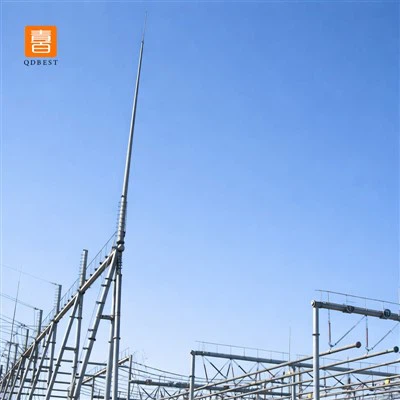
Wait, let's talk about specific structure types, too, because service life can vary a bit depending on what kind of steel structure it is. Substation Gantry Structure supports, for example, are often taller and exposed to more wind than smaller equipment frames, so they might need a bit more frequent inspection-they tend to show stress or corrosion on the upper parts first, which are hit harder by wind and rain. Smaller electrical structure components, like the frames for insulators or small circuit breakers, might have less load, so if they're well-maintained, they can hit the 40 to 50 year mark too, maybe even longer if they're in a mild climate. The big transformer foundations, on the other hand, are usually buried, so corrosion is less of an issue there-those often last 50+ years if the steel is coated and the foundation is solid.
Another thing to consider: evolving regulations and equipment needs. A lot of substation structures are replaced early not because they've rusted out, but because utilities need to upgrade their equipment. If you're replacing an old transformer with a bigger, heavier one, your existing structure might not support the new load, even if the steel is still in good shape. Or if new safety codes come out that require more load capacity or different mounting, you might have to modify or replace the structure long before its physical service life is over. That's why it's smart to build a little extra flexibility into your structure design, which we help our clients do when they order custom substation steel structures.
What about things that can shorten service life unexpectedly? Let's say you don't use galvanized steel-some suppliers might offer painted steel to cut costs, but paint chips over time, and without the zinc barrier, rust sets in almost immediately, dropping service life to 10 to 20 years max. Or if you have poor drainage around the structure's base-water pooling there for months will accelerate corrosion way faster than normal rain. Even something like not cleaning salt off coastal structures after storms-salt left on the steel eats through galvanizing in a matter of years, not decades. I had a client in Florida a few years ago who skipped washing their gantries after hurricane season, and within 3 years, they had rust spots all over because of the salt spray buildup-something we fixed with touch-up paint, but it easily pushed their maintenance schedule forward by a few years.
Now, if you want to maximize the service life of your substation steel structures, here's a quick playbook: first, invest in high-quality, galvanized structures from a reputable supplier, like the ones we offer on our Galvanized Substation Steel Structures page. Make sure the design is tailored to your climate, location, and equipment loads-don't go for a one-size-fits-all structure if you're in a coastal or seismic zone. Hire experienced installers who know how to properly torque bolts, align structures, and set solid foundations. Then, stick to a regular maintenance schedule: annual visual inspections, touch up any coating damage right away, clear debris around bases, and clean coastal structures regularly to remove salt.
I've seen it all in this industry: a well-built, maintained substation steel structure hitting 60 years with barely any issues, and a cheap, poorly installed one needing major repairs after 10. The key is understanding that service life isn't just a number-it's a combination of materials, design, installation, and ongoing care. It's not something you can set and forget; you have to stay on top of small issues before they become big, costly problems.
If you're in the market for new substation steel structures, whether you're building a new power distribution substation, replacing old gantries, or upgrading your electrical structure supports, we're here to help. We work closely with utilities and industrial energy providers to design structures that fit your needs, last as long as possible, and keep your grid reliable. If you have questions about service life, want to see our product specs, or need help choosing the right structure for your project, reach out to our team to start the conversation.