This blog post addresses a frequently raised question from customers using angle steel communication towers: what communication equipment can actually be mounted on such towers? To briefly introduce, the angle steel tower is one of the most commonly selected options for communication infrastructure, with outstanding advantages: robust and durable, cost-effective, and suitable for a wide range of scenarios.


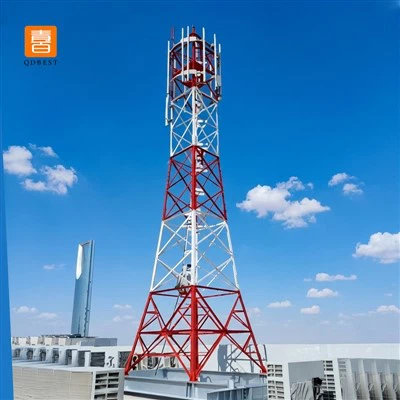
First off, I should set the scene: angle steel towers are built in all sorts of sizes, from compact roof-top setups to huge 60m units, which means the equipment you can install changes a lot. If you go for a smaller A Roof-top Telecommunication Tower, you're not going to fit the same gear as a massive 60M Angle Steel Gsm Microwave Telecom Tower. That's why matching the tower size to your gear needs is non-negotiable, but let's get into the actual equipment types, one by one.
Starting with the big one: cellular base station antennas. These are the workhorses of mobile networks, right? Every time you make a call or send a text, it's bouncing off these antennas. For angle steel towers, you'll typically see panel antennas mounted-they're flat, directional, and designed to broadcast signals in a specific area (like a neighborhood or a highway stretch). On smaller roof-top towers, you might only have 2-3 panels for 4G, while larger Telecom Angle Steel Tower setups can have 6+ panels for 5G, covering multiple sectors. A lot of folks don't realize that these antennas need to be tilted a little (electrically or mechanically) to avoid signal overlap, and angle steel towers have those perfect mounting brackets that make tilting easy-no weird DIY stuff.
Next up, microwave antennas. If you've ever seen a big, round or flat dish on a tower, that's a microwave antenna. These are used for long-distance, line-of-sight communication-like linking two cell towers that are too far for fiber optic cable. I remember a project last year where we installed microwave antennas on a 40m angle steel tower to connect a small town's main cell site to a regional hub 20 miles away. The key here is that microwave antennas need to be high up and unobstructed, which is exactly what taller angle steel towers (like our 35M Telecom 4-Legged Galvanized Angular Steel Towers) provide. The galvanized coating on these towers also protects the microwave gear from rain, snow, and sun-super important because microwave components are sensitive to weather damage.
Then there's the equipment that actually makes the signals work, not just broadcast: radio units (also called RUs or BBU/RRH systems). Wait, let's keep that simple-remote radio heads (RRHs) are mounted right near the antennas on the tower, while the baseband unit (BBU) usually lives in a shelter at the base. The RRH connects to the panel antenna via a fiber cable, and it converts the digital signal from the BBU into a radio signal that the antenna can send out. For angle steel towers, the RRHs are mounted on cross-arms close to the antennas to keep cable runs short (which reduces signal loss). On smaller roof-top towers, this might be one small RRH, but on a 60m GSM/microwave tower, you could have 5-6 RRHs clustered together. I always tell clients that angle steel towers have enough space for these units, plus they have dedicated mounting points to keep them secured even in high winds-no one wants a radio unit blowing off a tower during a storm.
Another type I see a lot, especially in urban areas, is small cell gear. Small cells are those compact, low-power antennas that fill in dead zones where big cellular signals don't reach-like inside office buildings, shopping malls, or crowded downtown streets. Since they're small, they fit perfectly on the brackets of roof-top angle steel towers, or even on lower cross-arms of larger towers. A lot of cities are rolling out 5G small cells, and angle steel towers are a go-to because they're easy to install and don't require a ton of space. I did a project in Chicago last year where we mounted 8 small cell units on a set of 25m angle steel towers along a busy riverwalk, and it worked like a charm-no complaints about signal drops from local businesses.
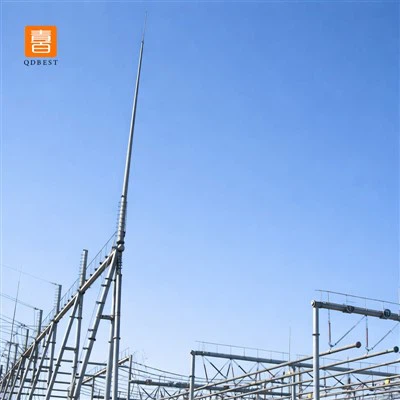
Wait, can't forget about weather monitoring and lightning protection gear, because even though the angle steel tower is strong, you need to protect the communication equipment. Lightning rods are mounted at the very top of the tower to strike lightning first, and then a grounding system (connected to the tower's steel structure) carries the current down to the earth. We also supply weather sensors that measure wind speed, temperature, and humidity-super important for maintenance teams to know when it's safe to work on the tower, or if extreme weather is coming that could damage the gear. I always recommend adding these to any angle steel tower project, because the last thing you want is to lose $10k worth of microwave antennas to a lightning strike that wasn't properly grounded.
There's also specialized gear, like broadcast antennas for radio or TV, or satellite communication (satcom) dishes for remote areas where there's no cellular coverage. For example, if you have an angle steel tower in a rural part of Wyoming with no cell service, you might mount a satcom dish to connect to a satellite, so local farmers can get internet or emergency communication. We've even done projects where small ham radio operators use angle steel towers to mount their antennas, because the tower height gives them better range. The key here is that angle steel towers are customizable-you can add extra cross-arms or mounting brackets for these specialized antennas, no matter how specific your needs are.
Now, let's talk about what you shouldn't do, because I've seen a few mistakes over the years. First, don't overload the tower. Each angle steel tower has a specific weight capacity, so cramming 10 antennas and 20 radio units on a small roof-top tower is a bad idea. That's why we always do a load calculation before supplying a tower-we let clients know exactly how much equipment they can mount, and we design the cross-arms and brackets to handle that weight. Second, don't ignore clearance. Microwave antennas need to have a clear line of sight to their target tower, so mounting them on the wrong side of the tower (next to a big cell antenna) can block the signal. Third, make sure the equipment is compatible with the tower's galvanized steel. Wait, no-actually, most modern gear is coated to resist corrosion, but it's still good to check that the mounting hardware isn't going to react with the tower's steel, which could cause rust over time.
A lot of people ask me, "Why angle steel instead of, say, a monopole tower?" And honestly, it comes down to flexibility. Monopoles are sleek, but they're less versatile when you need to add multiple types of equipment. Angle steel towers have those open cross-arms and multiple mounting points, so you can mix and match cellular antennas, microwave dishes, small cells, and weather gear all in one spot. Plus, if you ever need to upgrade your equipment later (like switching from 4G to 5G), you can add new brackets to the tower without having to replace the whole structure. That's a huge win for long-term projects-our clients tell us this saves them thousands of dollars over 10+ years.
I should also mention that the size of the tower dictates the equipment you can use, which ties back to the links I threw in earlier. If you're working on a small business roof, a A Roof-top Telecommunication Tower will only fit a couple of small cell antennas and a basic cellular panel. For a suburban cell site, a Telecom Angle Steel Tower (around 30-40m) can handle 4 panels, 2 microwave antennas, and all the necessary radio units. For a regional hub that needs GSM and microwave, our 60M Angle Steel Gsm Microwave Telecom Tower or 35M Telecom 4-Legged Galvanized Angular Steel Towers are perfect-they have the height and space for all the heavy-duty equipment you need.
Now, if you're in the market for an angle steel telecom tower, or you're planning a project and want to know exactly what gear you can mount, I'm here to help. Every project is different-whether you're a carrier building a 5G network, a city adding small cells, or a remote area needing satcom, we can tailor the tower and the mounting setup to fit your communication equipment needs. Just reach out to our team to chat through your requirements, and we'll make sure you get a tower that's durable, flexible, and built to handle all the gear you need to install. Don't forget that proper planning upfront saves you headaches (and money) down the line-we've seen clients skip the load calculation and end up having to remove equipment a year later, which is a waste.