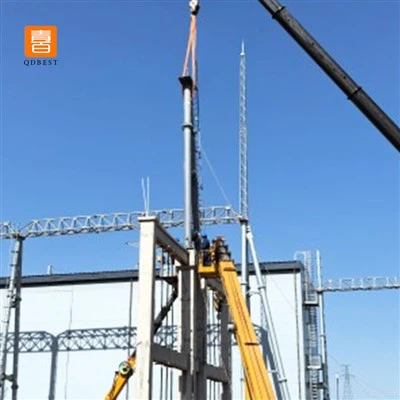
Angle steel communication towers are essential for constructing stable and dependable communication networks. This paper elaborates on the core technical essentials of angle steel communication towers.
Structural Design
The structural design of an Angle Steel Telecommunication Tower is the cornerstone of its performance. The tower must be able to withstand various environmental forces, such as wind, snow, and seismic activities. The angle steel used in the tower is typically made of high - strength steel, which provides excellent load - bearing capacity.
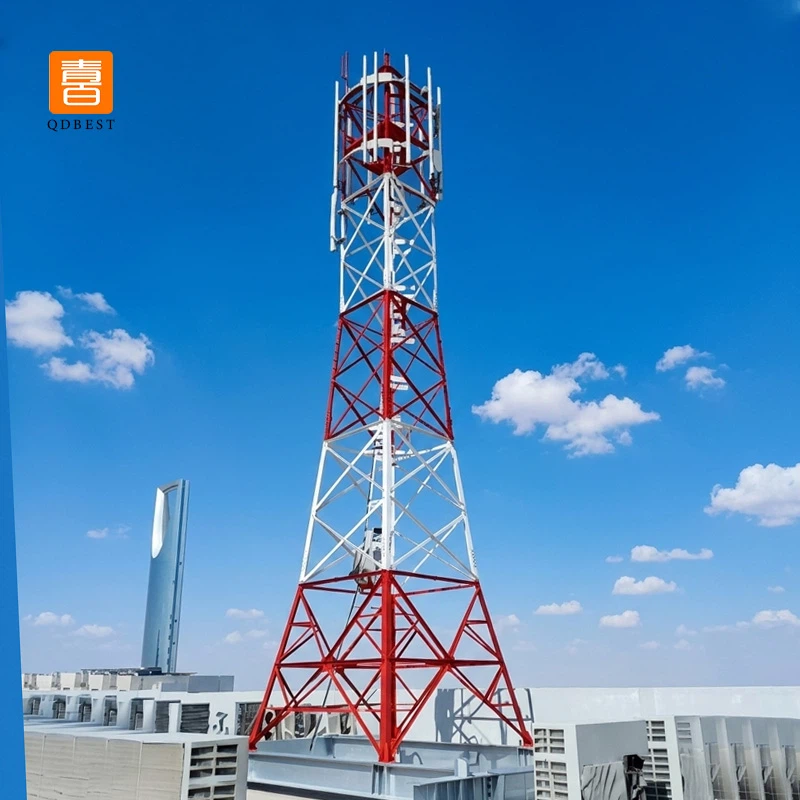
The tower's shape and configuration are carefully designed to optimize its stability. For example, lattice - type angle steel towers are commonly used due to their light weight and high strength - to - weight ratio. These towers are composed of a series of interconnected angle steel members, forming a lattice structure that can efficiently distribute the loads.
The height of the tower is also a critical factor. Different applications require different tower heights. For instance, a 25M Galvanized Angle Steel Microwave Communication Tower is suitable for medium - range microwave communication, providing a stable platform for the installation of microwave antennas. The height is designed to ensure proper line - of - sight communication and to avoid interference from surrounding obstacles.
Material Specifications
The quality of the angle steel used in the tower is of utmost importance. The steel should have high tensile strength, good ductility, and corrosion resistance. Galvanized angle steel is a popular choice because the zinc coating provides a protective layer that prevents rusting and extends the lifespan of the tower.
The thickness of the angle steel is determined based on the tower's height, wind load requirements, and other factors. Thicker angle steel is used in areas with high wind speeds or where the tower needs to support heavy equipment. The angle steel is also required to meet certain dimensional tolerances to ensure accurate assembly and proper fit of the tower components.
Foundation Design
A solid foundation is essential for the stability of an Angle Steel Telecommunication Tower. The foundation design depends on the soil conditions at the installation site. For soft soil, deep foundations such as piles may be required to transfer the tower's loads to a more stable soil layer.
The foundation must be able to resist the overturning moment caused by wind and other lateral forces. The size and shape of the foundation are calculated based on the tower's height, weight, and the expected loads. Reinforced concrete is commonly used for the foundation due to its high strength and durability.

Wind Load Resistance
Wind is one of the most significant environmental forces that an Angle Steel Telecommunication Tower needs to withstand. The tower's design must take into account the wind speed and direction at the installation site. Wind load calculations are based on local building codes and standards.
The tower's shape and structure are designed to reduce the wind resistance. For example, the lattice structure of the tower allows the wind to pass through, reducing the overall wind pressure on the tower. In addition, aerodynamic features such as streamlined cross - sections can be incorporated into the design to further improve the wind load resistance.
Antenna Mounting and Equipment Support
Angle Steel Telecommunication Towers are designed to support various types of antennas and communication equipment. The tower should have sufficient space and mounting points for the installation of antennas, transmitters, and other devices.
The mounting points must be strong enough to support the weight of the equipment and withstand the vibrations and forces caused by wind and other environmental factors. The tower's design also needs to consider the electrical grounding requirements to ensure the safety of the equipment and personnel.
Maintenance and Inspection
Regular maintenance and inspection are crucial for the long - term performance of an Angle Steel Telecommunication Tower. The tower should be inspected for signs of corrosion, structural damage, and loose connections. Any damaged or worn - out components should be replaced in a timely manner.
The maintenance schedule should be based on the tower's usage, environmental conditions, and the manufacturer's recommendations. Proper maintenance can extend the lifespan of the tower and ensure its reliable operation.
Safety Considerations
Safety is a top priority in the design, installation, and operation of Angle Steel Telecommunication Towers. The tower should be equipped with safety features such as lightning protection systems, fall - arrest devices, and warning signs.
The installation process should be carried out by trained and experienced personnel following strict safety procedures. Workers should wear appropriate personal protective equipment (PPE) to prevent accidents.
Customization
As a supplier, we understand that different customers have different requirements. We offer customized Angle Steel Telecommunication Towers to meet the specific needs of our clients. Whether it is a A Roof - top Telecommunication Tower for a small - scale installation or a large - scale tower for a major telecommunication network, we can design and manufacture the tower according to the customer's specifications.
Quality Assurance
We are committed to providing high - quality Angle Steel Telecommunication Towers. Our products are manufactured in accordance with international standards and undergo strict quality control procedures. We use advanced manufacturing techniques and high - quality materials to ensure the reliability and durability of our towers.
Contact for Procurement
If you are in the market for an Angle Steel Telecommunication Tower, we invite you to contact us for further discussion. Our team of experts is ready to assist you in choosing the right tower for your specific needs. Whether you need a standard tower or a customized solution, we can provide you with the best products and services. Visit our Angle Steel Telecommunication Tower page to learn more about our offerings.