


Substation steel structures occupy a pivotal position in the power industry. They can support various power equipment and ensure the safe and efficient operation of substations. This blog post elaborates on the production and manufacturing process of substation steel structures.
Material Selection
The first step in manufacturing substation steel structures is selecting the right materials. We usually go for high - strength steel, which offers excellent durability and can withstand harsh environmental conditions. The steel needs to meet specific standards and specifications to ensure the structural integrity of the substation. For example, we often use ASTM A36 or ASTM A572 steel, which are widely recognized for their quality and performance. These steels are readily available in the market, and we source them from reliable suppliers to guarantee the best results.
Cutting and Shaping
Once we have the right steel, it's time to cut and shape it according to the design requirements. We use advanced cutting technologies like plasma cutting and laser cutting. Plasma cutting is great for thick steel plates as it can cut through them quickly and accurately. Laser cutting, on the other hand, is more precise and is used for intricate designs and thinner materials. After cutting, we use bending and rolling machines to shape the steel into the desired forms, such as beams, columns, and braces. This process requires skilled operators who can ensure that the dimensions and angles are exactly as per the design.
Welding
Welding is a critical process in the manufacturing of substation steel structures. It joins the different parts of the steel together to form a single, strong structure. We use various welding techniques, including shielded metal arc welding (SMAW), gas metal arc welding (GMAW), and flux - cored arc welding (FCAW). Each technique has its own advantages, and we choose the most appropriate one based on the type of steel, the thickness of the parts, and the specific requirements of the project. For example, SMAW is often used for outdoor welding as it is less affected by wind and other environmental factors. Welders need to be highly skilled and certified to ensure that the welds are of high quality and meet the relevant standards.
Assembly
After welding, the individual components are assembled to form the complete substation steel structure. This involves aligning the parts accurately and using bolts or other fasteners to hold them together. We follow detailed assembly drawings to ensure that the structure is assembled correctly. During the assembly process, we also conduct quality checks to make sure that all the parts fit together properly and that there are no defects. This step is crucial as any misalignment or defect can affect the performance and safety of the substation.
Surface Treatment
To protect the steel structure from corrosion and extend its lifespan, we apply a surface treatment. One of the most common surface treatments is galvanizing. Galvanized substation steel structures Galvanized Substation Steel Structures are highly resistant to rust and can withstand long - term exposure to the elements. The galvanizing process involves dipping the steel structure into a bath of molten zinc, which creates a protective layer on the surface. This layer not only prevents corrosion but also gives the structure a nice, shiny appearance.
Quality Control
Throughout the manufacturing process, we have a strict quality control system in place. We conduct various tests, such as non - destructive testing (NDT), to detect any internal defects in the steel. NDT methods include ultrasonic testing, magnetic particle testing, and radiographic testing. We also perform dimensional checks to ensure that the structure meets the design specifications. Any part that fails to meet the quality standards is either reworked or discarded. This ensures that only high - quality substation steel structures are delivered to our customers.
Types of Substation Steel Structures
There are different types of substation steel structures, each with its own unique design and function.

Power Substation Structures
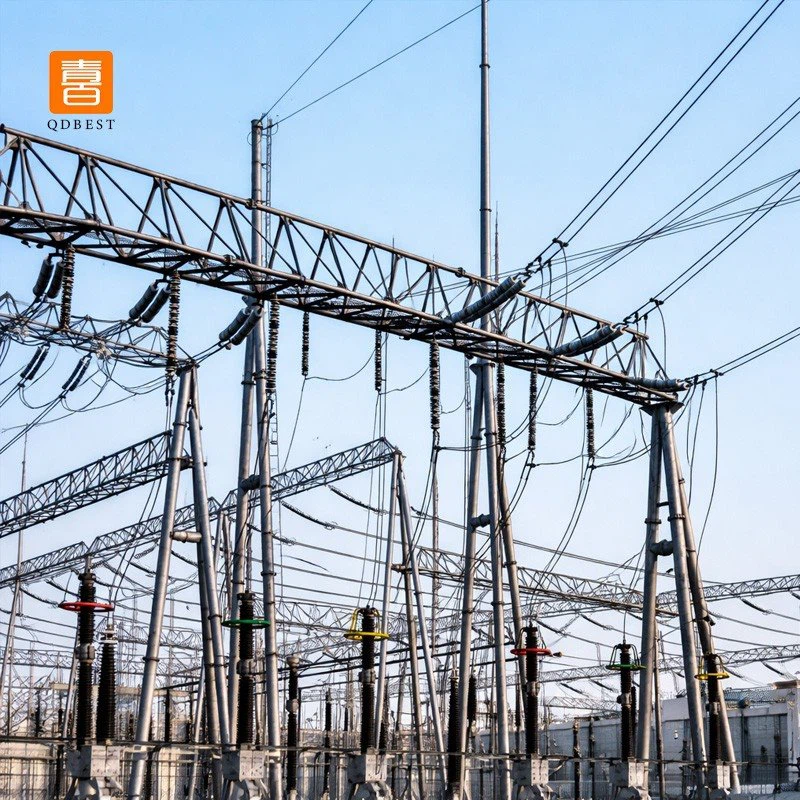
Power substation structures Power Substation Structures are the backbone of the power grid. They support transformers, circuit breakers, and other electrical equipment. These structures need to be strong and stable to ensure the safe operation of the substation. They are often designed to withstand high winds, earthquakes, and other natural disasters.
Gantry Structures for Electrical Substations
Gantry structures for electrical substations Gantry Structures for Electrical Substations are used to support overhead power lines and other equipment. They are typically tall and have a large span, which requires careful design and engineering. Gantry structures need to be able to withstand the weight of the equipment and the forces exerted by the power lines.
Why Choose Our Substation Steel Structures
As a supplier, we take pride in offering high - quality substation steel structures. Our manufacturing processes are designed to ensure that each structure meets the highest standards of quality and safety. We have a team of experienced engineers and technicians who are dedicated to producing the best products. We also use the latest technologies and equipment to improve the efficiency and accuracy of our manufacturing processes.
If you're in the market for substation steel structures, we'd love to have a chat with you. Whether you're working on a small - scale project or a large - scale power substation, we can provide you with the right solutions. Our team can work with you to understand your specific requirements and design a structure that meets your needs. So, don't hesitate to reach out and start a conversation about your project. We're here to help you get the best substation steel structures for your power needs.


