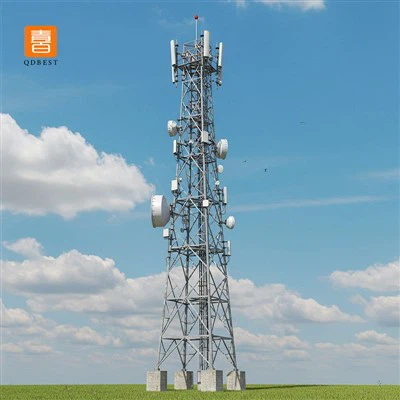
This blog post will share the applicable standards for electromagnetic radiation of lattice communication towers.
First off, it's super important to understand that electromagnetic radiation from telecommunication towers, including lattice ones, is a bit of a hot - button topic. People are understandably worried about the potential health impacts. That's why there are a bunch of standards and regulations out there to keep things in check.
Different countries have their own sets of rules, but many of them are based on international guidelines. The International Commission on Non - Ionizing Radiation Protection (ICNIRP) is a big player here. They've put forward limits on the exposure to electromagnetic fields (EMFs) from radiofrequency sources, which include lattice communication towers.
ICNIRP's guidelines are all about protecting human health. They've done a ton of research to figure out the levels of electromagnetic radiation that are considered safe for people. For example, they've set limits for both the general public and for workers who might be in close proximity to these towers. The limits take into account different frequencies of radiation because different frequencies can have different effects on the body.
Let's talk about the frequencies that lattice telecommunication towers usually operate on. These towers are used for various communication services like mobile phones, Wi - Fi, and radio. They can emit radiation in the radiofrequency range, typically from a few megahertz (MHz) to several gigahertz (GHz). The higher the frequency, the more energy the radiation has, but also, generally speaking, the shorter its range.
In the United States, the Federal Communications Commission (FCC) has its own rules regarding electromagnetic radiation from communication towers. They've adopted standards that are largely in line with ICNIRP's. The FCC requires tower owners to conduct regular environmental assessments to make sure that the radiation levels around the towers comply with the set limits. If a tower is found to be exceeding the limits, the owner has to take corrective actions, like adjusting the antenna parameters or reducing the power output.
Over in the European Union, the Council Recommendation 1999/519/EC sets the basic restrictions for public exposure to EMFs. It's very similar to what ICNIRP recommends, and EU member states are supposed to implement these limits at a national level. This means that if you're thinking about installing a lattice telecommunication tower in an EU country, you've got to play by these rules.
Now, let's get back to our lattice towers specifically. Four - legged Lattice Tower designs are quite popular. They're sturdy and can support a variety of antennas for different communication needs. The way these towers are built and the way the antennas are installed on them can actually affect the electromagnetic radiation patterns.
Antenna design and placement are crucial factors. If an antenna is poorly placed or has a faulty design, it can cause uneven distribution of radiation. This might result in some areas around the tower having higher radiation levels than necessary. That's why it's so important to work with experienced engineers when setting up these towers. They know how to position the antennas to ensure that the radiation spreads out in a more controlled and safer way.


There are also some practical steps that tower operators can take to reduce the potential risk of excessive electromagnetic radiation. For example, they can use shielded cables to connect the antennas to the transmitters. This helps to contain the radiation within the cables and reduces the amount that leaks out into the environment.
Another aspect is the height of the tower. A taller 35M Telecom 4 - Legged Galvanized Angular Steel Towers can help to spread the radiation over a wider area, which in turn reduces the intensity of the radiation at ground level. This is especially important in areas where there are a lot of people, like residential neighborhoods or commercial areas.
When it comes to the materials used in the construction of lattice telecommunication towers, Telecom Angle Steel Tower is a common choice. Angle steel is strong and durable, but it can also have an impact on the electromagnetic field. Some types of metal can reflect or absorb the radiation, which can change the radiation pattern. So, engineers need to take this into account when designing the tower.
Let's also touch on the 25M Galvanized Angle Steel Microwave Communication Tower. Microwave communication uses higher frequencies, and the standards for these frequencies are different. The energy from microwave radiation can be absorbed by the body more readily, so it's even more important to keep the radiation levels within the safe limits. Tower operators need to be extra careful when using these types of towers.
As a supplier, I've seen how strict the regulations are. It's not just about installing a tower and hoping for the best. You have to do environmental impact assessments, get the necessary permits, and follow all the safety standards. This might seem like a hassle, but it's for the greater good. It ensures that the public is safe and that the communication services provided by these towers are reliable.
If you're in the market for a lattice telecommunication tower, you need to make sure that the supplier you choose is aware of all these standards. A good supplier will be able to provide you with all the necessary documentation to prove that the tower meets the regulatory requirements. They'll also be able to offer advice on how to install and operate the tower in a way that minimizes the risk of excessive electromagnetic radiation.
In conclusion, there are well - established standards for the electromagnetic radiation of lattice telecommunication towers. These standards are based on scientific research and are designed to protect human health. Whether you're in the United States, the European Union, or anywhere else in the world, you need to follow these rules. And if you're looking for a tower, I'm here to help. I've got the expertise and the experience to provide you with a high - quality lattice telecommunication tower that meets all the necessary standards. If you're interested in learning more or starting a procurement discussion, just let me know.