If you've ever driven through a vast desert-endless sand dunes, zero visible roads, and the kind of quiet that makes you feel like you're the only person within hundreds of miles-you might not realize all the work that goes into putting up the towers that keep cell service, internet, and emergency communications up out there. Installing a monopole in the middle of the desert isn't just "piling concrete and sticking a metal pole in the ground." There are a ton of hidden difficulties that pop up when you're working in an environment that hates machinery, tools, and humans alike.
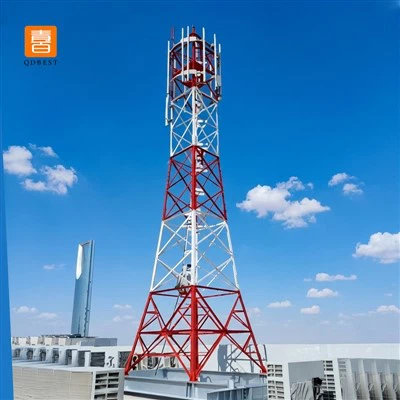
First off, let's get clear on what we're talking about here. A monopole steel pipe tower is that sleek, single metal pole you see popping up in small towns, suburbs, and even remote areas-they're more unobtrusive than the old lattice towers, which is why they're perfect for places where you don't want an eyesore. We make a range of these, from the ones for 5G and Wi-Fi to GSM communication, and even galvanized outdoor steel wifi towers that hold up against harsh weather. If you want a closer look at the exact specs for our stuff, you can check out our pages for the 5G Wifi Signal Monopole Tower, GSM Communication Monopole Tower, Monopole Steel Pipe Tower, 3 Leg Steel Tube Pipe Tower, or Galvanized Outdoor Steel Wifi Tower anytime. But back to the desert-this is where the real headaches start.
The biggest first hurdle? Site prep. Deserts aren't like a flat suburban lot where you can roll in a bulldozer and clear a spot in an hour. Most desert sites are remote, which means there's no existing roads, no power, no water, and no way to just park a truck wherever you want. I've been to sites where the nearest paved road is 60 miles away, and the only way to get heavy equipment there is to carve a temporary dirt path through sand, rocks, and occasional sharp shrubs that pop up when it rains (which doesn't happen often, but when it does, it turns the sand into something that feels like wet cement and sinks every tire within 10 minutes).
Wait, and let's not forget about soil conditions. A monopole tower relies on a deep concrete foundation to hold it up-especially in the desert, where high winds (yes, even out in the middle of nowhere, winds can hit 60 or 70 mph) can tear through the area without warning. But desert soil isn't consistent. Some areas have soft, loose sand that shifts when you dig it, and if you put the foundation in that, the tower will lean over time. Other spots have hard, compacted caliche-this stuff is like rock, but it's layer under the topsoil, and digging through it with a regular excavator takes forever. I once had a project in Arizona where we spent three days just digging the foundation hole because every time we hit caliche, the excavator's bucket would bounce off like it was hitting concrete. And when you're miles from the nearest parts yard, if your bucket breaks, you're stuck waiting a week for a replacement-no exaggeration.


Next up, transportation of the tower components. Monopole steel pipe towers are long, right? A 100-foot tower isn't going to fit on a standard flatbed truck. So you have to get special extended trailers, but those can't navigate the temporary dirt roads we carved out earlier. I've had to coordinate with local contractors who have heavy haulers with wide tires that can handle soft sand, but even then, getting a 120-foot monopole through a narrow sand path is a tight squeeze. One wrong move, and you'll get stuck in the sand, and with no tow trucks nearby (the nearest one is 80 miles away), you're looking at a $2,000 tow fee plus a full day of delay. It sounds silly, but when you're working in the desert, every tiny delay adds up to big costs and lost time.
Then there's the weather. I know I mentioned wind earlier, but desert weather swings are brutal. One day it's 115 degrees Fahrenheit, and the next, the temperature drops to 40 at night. That might not sound like a big deal, but it messes with every part of the installation. Let's start with the heat: working outside in 115 degrees isn't just uncomfortable-it's dangerous. Crews can't work for more than 2 hours straight without taking a break in an air-conditioned truck, and you have to bring enough water for everyone (I mean way more than you think-like 5 gallons per person per day) plus electrolytes to avoid heat exhaustion. I've seen a guy pass out mid-foundation pour because he skipped drinking water, and we had to call an ambulance that took 45 minutes to get there on the bumpy dirt road. Not fun.
But what about when it's too cold? Wait, no-actually, the big weather enemy besides heat is dust and sandstorms. Deserts are famous for those sudden haboobs, where the sky turns black with sand and wind speeds hit 50 mph. If you're in the middle of installing the tower when one hits, you have to stop everything immediately, tie down all the tools and equipment, and get to cover. Sand gets into everything: excavator engines, truck brakes, even your phone (good luck checking your work emails when your screen is covered in grit). One time, we had a sandstorm that lasted 8 hours, and by the time it passed, we had to take apart the generator and clean every part because sand had gotten into the fuel line. That set us back two whole days.
Power is another huge issue. You need power to run the excavator, the cement mixers, the tools for assembling the tower, and even to run temporary lighting if you're working late. But there's no grid out in the middle of the desert. So you have to bring generators, but generators need fuel, and fuel has to be transported in those same heavy haulers that can barely get down the dirt roads. And generators don't like extreme heat either-they overheat easily, and if they do, you have to get them to a mechanic, which is another long drive. I once had a generator die because the air filter got clogged with dust, and we didn't have a spare on hand. We ended up borrowing a small portable generator from a nearby ranch, but it was only powerful enough to run the cement mixer, so half the tools were useless for a day.
Wait, let's not forget about logistics for the crew. Most installation crews live in hotels when they work in populated areas, but in the desert, there's no hotels. So you have to set up a temporary camp-think tents, portable toilets, and another generator for the camp's power. That means bringing all that camping and camp stuff out on the same haulers as the tower parts and generators. And since desert days are long (you might start at 5 a.m. to avoid the worst heat and work until 8 p.m.), the crew needs a place to sleep that's not just a tent in the middle of nowhere. I've had projects where we had to rent a couple of used RVs to park near the site, and even then, the dust would get into the RV's air filters and make the inside gritty. It's not like working in the suburbs where you can go home at the end of the day-you're stuck there, and any issue with camp means the crew isn't working, which costs money.
Then there's tower assembly itself, once you get all the parts there. Monopole steel pipe towers are pre-fabricated at our factory, but you still have to put the sections together on site, right? That means using a crane to lift each section, bolt them together, and make sure every joint is tight. But cranes can't handle soft sand-if you set a crane down on loose sand, it will sink, and you risk it tipping over. So you have to put down heavy mats (steel plates or wooden pads) under the crane's outriggers, but those mats are heavy, too, and getting them to the site is another haul. Once, we tried using sand ladders (strips of metal that spread the crane's weight) instead of mats, but they slid around on the compacted caliche, and we had to reposition them three times before the crane was stable.
And let's not overlook local regulations and environment rules. Deserts aren't just empty land-they're home to endangered plants and animals, like the desert tortoise, which is protected in a lot of places. Before you can even start site prep, you have to get permits from federal, state, and local agencies, which can take months. I once had a project in Nevada where the agency made us delay work for two weeks because they found a desert tortoise burrow near the site, and we had to wait for a biologist to come move it to a safe area. Also, any digging you do can disturb historical sites-Native American artifacts are all over desert areas, and if you dig up something unmarked, you have to stop work immediately and call the historical preservation office, which can shut down the project for weeks. That's not just a delay, it can cost you thousands in lost time and fees.
Wait, as a supplier, what do we do to help with all this? Because we're not just selling a tower-we're selling a complete solution for installation, especially in tough environments like deserts. We design our Monopole Steel Pipe Tower to be easy to transport, with sections that fit on standard trailers when possible, but we also offer extended sections if needed, coordinated with heavy haulers that know desert routes. Our Galvanized Outdoor Steel Wifi Tower is coated with a powder that resists sand and corrosion, so the joints don't wear down from all that dust. And for foundation design, we use software that maps soil conditions, so we can tell you exactly what kind of concrete you need for a specific site-whether it's soft sand or hard caliche-instead of just guessing.
If you're planning an installation in the desert, you need a partner that knows these difficulties inside and out. We've worked on dozens of desert projects, from small rural sites to big 5G deployments, and we know how to navigate the site prep, transportation, weather, and regulatory hurdles that pop up. We don't just send a tower and leave you to figure out the rest-we work with your team every step of the way, from site assessment to post-installation checks.
Want to learn more about how we can help with your next desert monopole project? Or take a closer look at our specific tower lines, like the 5G Wifi Signal Monopole Tower for your next high-speed deployment, or the GSM Communication Monopole Tower for remote rural areas? Reach out to our team to start the conversation about procurement and installation support. We're here to make the desert installation process as smooth as possible, even when the environment is working against you.