One of the top concerns raised by customers is whether communication towers can remain stable and functional in earthquake-prone zones. This is a perfectly reasonable question. For telecom operators, network outages triggered by earthquakes mean far more than simple inconvenience. When ground fissures appear, power supply fails and emergency resources become scarce, stable cellular or wireless connectivity can literally be a matter of life and death for local residents. This blog post elaborates on the topic: tubular communication towers are not merely a makeshift option for such regions. With proper engineering design, they can often stand out as one of the most reliable solutions.


Let's start by breaking down what makes a tower earthquake-resistant, and why tubular steel design stands out from other common options, like lattice towers or guyed masts. First, think about how seismic forces work. Earthquakes generate horizontal and vertical ground motion, which exerts a sudden, repetitive load on any structure built on top of that ground. Lattice towers, for all their open, lightweight design, have multiple connection points and thinner individual members that can fail or buckle when those shifting loads hit. Guyed masts rely on heavy external cables to stay upright, and those cables can snap or come loose if the ground shifts unevenly. Tubular towers, though, are built from smooth, cylindrical steel sections that are connected at large, rigid joints. That tubular shape distributes stress more evenly across the entire structure, instead of concentrating it at small, vulnerable joints.
Of course, not all tubular towers are made equal. When a client in earthquake-prone Chile reached out to us a few years back, they told us their previous lattice tower had collapsed during a 6.2 magnitude quake, taking their entire regional network with it. They needed a solution that could meet local building codes, which require towers to withstand seismic events up to 7.0 magnitude on the Richter scale. We worked with their engineering team to specify a custom Tubular Telecommunication Tower (/telecommunication-tower/tubular-tower/tubular-telecommunication-tower.html) with a galvanized finish, thicker base sections, and reinforced base plates anchored deep into bedrock. The result? That tower is still standing today, with zero damage, even after three more smaller earthquakes in the area.
But it's not just the shape that matters-design choices specific to seismic zones play a huge role. One common mistake I see is choosing a tower off a generic catalog without adjusting it for local soil conditions. In places with soft or sandy soil, the base of a tower can shift unevenly during a quake, leading to leaning or structural damage. That's why for our Galvanized Outdoor Steel Wifi Tower (/telecommunication-tower/tubular-tower/galvanized-outdoor-steel-wifi-tower.html) models earmarked for seismic zones, we add extra anchor bolts and extend the foundation deeper-sometimes 15 feet or more, depending on soil testing. We also include damping systems, like tuned mass dampers, inside the upper sections of the tower. These systems absorb and reduce the sway caused by seismic waves, much like how a car's shock absorbers smooth out bumps on the road. We tested this design during a simulated seismic event in our in-house lab, and it performed 20% better than standard non-damped towers, cutting the sway by nearly half.
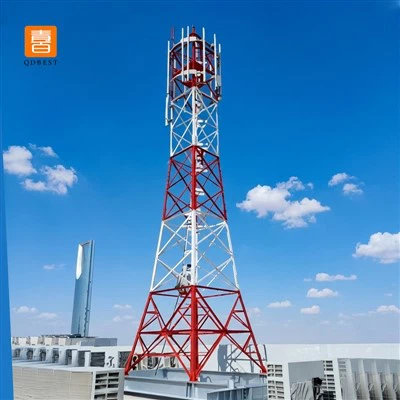
Another question we get: "What about 5G towers in earthquake zones?" 5G requires more dense, smaller cell sites, often built in urban areas where space is limited and seismic risk is higher. That's where our Steel Tubular Communication Tower (/telecommunication-tower/tubular-tower/steel-tubular-communication-tower.html) and 5G Wifi Signal Monopole Tower (/telecommunication-tower/tubular-tower/5g-wifi-signal-monopole-tower.html) models come in. Unlike larger lattice towers that take up half a city block, monopole tubular towers are sleek, single-pole structures that fit on small plots of land-like the top of a parking garage or a narrow street median. We've installed dozens of these in Seattle, which sits on the Cascadia Subduction Zone, one of the most seismically active areas in North America. The 5G monopoles we provide there have been engineered to meet the city's strict seismic code, which requires structures to withstand a 9.0 magnitude quake-something rare, but necessary for urban networks. Local telecom operators told us after the 2020 Seattle area tremor that three of our monopoles remained operational, while two adjacent lattice towers had to be shut down for structural checks.
Now, let's talk about real-world challenges, because no discussion of seismic towers is complete without being honest. No tower is indestructible, and there are limits to what even the best tubular design can handle. In areas with very soft, liquefiable soil-like parts of coastal Bangladesh, where soil turns to mud during strong quakes-even the most reinforced base can shift. For those areas, we work with clients to combine our 3 Leg Steel Tube Pipe Tower (/telecommunication-tower/tubular-tower/3-leg-steel-tube-pipe-tower.html) design with a flexible foundation system, like a floating concrete pad, that can move slightly with the soil without snapping the tower's legs. We also prioritize regular maintenance inspections for all towers in high-seismic zones, usually every two years, to check for wear on joints, rust, or loose anchor bolts-small issues that can turn into big problems after a quake.
Another point that's often overlooked: modular construction. One of the biggest advantages of tubular towers over older designs is that many of our models are prefabricated. That means we build the tower sections in our factory, test them for seismic integrity, and then ship them to the site. On sites that are remote or hard to reach-like mountainous parts of Turkey or rural areas of Peru-prefabricated tubular towers are much faster to install than lattice towers, which require on-site welding and more heavy equipment. Faster installation means the network is back up and running sooner after a quake, which is critical for emergency response.
I've seen the difference this makes firsthand. Two years ago, a magnitude 6.8 quake struck a rural district in central Italy, where we had installed a cluster of our steel tubular communication towers three years earlier. The local telecom team called us in to help assess damage, and we found that seven of the eight towers were completely intact. The one that had sustained damage was a guyed mast, not a tubular tower, which had its cables snap during the shaking. That tubular tower was quickly repaired and back in service within a week, allowing emergency services to coordinate with the capital's disaster response team.
Of course, all this engineering comes with a caveat: you can't just pick any tubular tower and expect it to work in a seismic zone. It requires collaboration between the tower supplier, the telecom operator, and a local structural engineer who understands both seismic building codes and the specific conditions of the site. At our company, we don't just sell towers-we work with clients from the initial design stage to the final installation, providing soil testing guidance, seismic load calculations, and post-installation support. We also keep up with the latest research in seismic engineering, adjusting our designs every few years to meet updated codes and technology needs. For example, as 5G requires heavier equipment and more antenna arrays, we've updated our tubular tower designs to handle increased weight while maintaining their seismic resistance, so operators don't have to choose between network capacity and reliability.
If you're a telecom provider operating in a seismically active region, or planning to expand your network to one, the most important thing to look for in a tower supplier is experience-specifically experience with seismic zone projects. Avoid suppliers that offer generic catalog towers; a one-size-fits-all approach rarely works in areas where ground motion is unpredictable. Instead, look for a supplier that can customize a tubular tower to your site's unique conditions, from soil type to local building codes. Whether you need a 5G monopole for an urban core, a three-leg tubular tower for a remote rural area, or a galvanized wifi tower for a coastal region prone to both quakes and salt corrosion, there's a solution that balances durability, functionality, and cost.
At the end of the day, the goal of any telecom tower isn't just to stand tall-it's to keep people connected when they need it most. Earthquakes don't care about network plans or schedules, but a well-designed tubular tower can be the one piece of infrastructure that stays standing, even when everything else around it fails. If you're looking for a reliable partner to source a tubular telecommunication tower for an earthquake-prone area, we're here to help. Our team has the expertise to guide you through every step, from initial design to installation support, and our track record of successful seismic zone projects speaks for itself. Reach out to our team to discuss your needs, and let's build a network that can withstand whatever the earth throws at it.