Customers frequently inquire about the cost‑performance of hot‑dip galvanized steel communication towers. This blog post delves into various dimensions of their cost‑performance, analyzes both upfront and long‑term costs, and outlines the advantages offered by such towers.


Initial Investment and Upfront Costs
The upfront cost of a Galvanized Steel Telecom Tower can vary significantly depending on several factors, including the height, design, and location of the tower. When compared to other materials, galvanized steel initially may seem to have a higher price tag. However, it is essential to evaluate the long - term value.
One of the primary advantages of galvanized steel is its durability. The galvanization process, which involves coating the steel with a layer of zinc, provides excellent protection against corrosion. This means that the tower can withstand harsh environmental conditions, such as rain, snow, and high humidity, without significant degradation. In contrast, other materials may require more frequent maintenance and replacement, leading to additional costs over time.
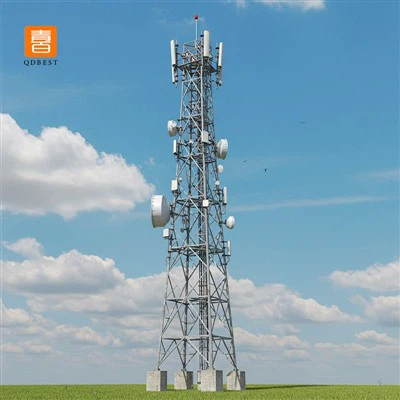
The design of the tower also impacts the upfront cost. For example, a Guyed Wire Steel Tower for Telecom may have a different cost structure compared to a 4 Leg Telecommunication Microwave Tower. Guyed wire towers typically use less steel due to the support provided by the guy wires, which can potentially reduce the material cost. On the other hand, the installation of guy wires requires additional labor and equipment, which may increase the overall upfront installation cost.
Long - Term Maintenance Costs
One of the most significant advantages of galvanized steel telecom towers is their low long - term maintenance requirements. The protective zinc coating on the steel acts as a barrier against corrosion. This means that the tower can maintain its structural integrity for an extended period without the need for frequent painting or other anti - corrosion treatments.
Regular inspections are still necessary, but these are generally less costly and time - consuming compared to the maintenance required for non - galvanized towers. For instance, a non - galvanized steel tower may need to be repainted every few years to prevent rust, which not only costs money for paint and labor but also causes downtime for the telecommunication services during the maintenance process.
In addition to corrosion protection, galvanized steel is also resistant to abrasion and impact. This makes the tower more robust in harsh environments, reducing the likelihood of damage that would require costly repairs. Over the lifespan of the tower, the savings in maintenance costs can be substantial.
Performance and Efficiency
Galvanized steel telecom towers offer excellent performance in terms of signal transmission. The high - strength steel provides a stable platform for mounting antennas and other telecommunication equipment. This stability is crucial for ensuring consistent and reliable signal transmission.
The design of the tower can also be optimized for better signal performance. For example, a 45M Guyed Wire Tower for Telecommunication can be carefully engineered to minimize interference and maximize the range of the signals. This results in improved network coverage and quality, which can lead to increased customer satisfaction and potentially higher revenues for telecommunication service providers.
Furthermore, the modular design of many galvanized steel telecom towers allows for easy expansion and upgrades. As the demand for telecommunication services grows, additional equipment can be easily installed on the tower without significant structural modifications. This flexibility reduces the need for costly new tower construction in the future.
Environmental Considerations
In today's world, environmental sustainability is an important factor in cost - effectiveness. Galvanized steel is a highly recyclable material. When the tower reaches the end of its useful life, a significant portion of the steel can be recycled and reused in other applications. This not only reduces the environmental impact but also provides a potential source of revenue through the recycling process.
The long lifespan of galvanized steel telecom towers also contributes to environmental sustainability. By reducing the frequency of tower replacement, the overall energy consumption and material waste associated with tower construction are minimized.
Comparison with Other Materials
When compared to other materials such as concrete or aluminum, galvanized steel offers a unique combination of strength, durability, and cost - effectiveness. Concrete towers, for example, are heavy and require more extensive foundation work, which can increase the upfront cost. They are also more difficult to modify or relocate in the future.
Aluminum towers, on the other hand, are lightweight but may be more susceptible to damage from impact and have a higher cost per unit of strength compared to galvanized steel. The corrosion resistance of aluminum is also not as effective as that of galvanized steel in some harsh environments.
Conclusion and Call to Action
In conclusion, the cost - effectiveness of a Galvanized Steel Telecom Tower is evident when considering both the upfront and long - term costs, as well as the performance and environmental benefits. The initial investment in a galvanized steel tower may be higher in some cases, but the savings in maintenance, the improved performance, and the environmental advantages make it a wise choice for telecommunication service providers.
If you are in the market for a reliable and cost - effective telecom tower solution, I encourage you to explore our range of Galvanized Steel Telecom Towers and Guyed Wire Galvanized Tubular Steel Telecommunication Tower. We are committed to providing high - quality products that meet your specific requirements. Contact us to discuss your project, and let's explore how our galvanized steel telecom towers can offer the best value for your investment.