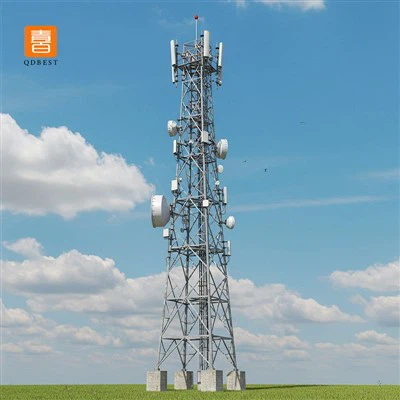
Angle‑steel communication towers play a pivotal role in modern communication systems. Optimizing their design is not merely about enhancing aesthetic appeal; more importantly, it aims to improve communication performance. This blog post shares insights into how such optimization can be achieved.
Understanding the Basics of Communication Angle Steel Towers
Before diving into the optimization strategies, it's essential to understand the basic functions and components of a communication angle steel tower. These towers are primarily used to support communication antennas and other electronic devices. They are constructed using angle steel, which provides a high strength - to - weight ratio, making them durable and cost - effective. The design of the tower must withstand various environmental factors, such as wind, snow, and seismic activities, while also ensuring that the communication equipment can function efficiently.
Site Selection and Environmental Considerations
The first step in optimizing the design of a communication angle steel tower is proper site selection. The location of the tower has a profound impact on its communication performance. For example, the tower should be placed in an area with minimal interference. Natural barriers like mountains and large buildings can block or distort the signals. Therefore, a clear line - of - sight between the tower and the target communication areas is crucial.
Moreover, environmental factors such as wind speed and direction must be carefully considered. High - wind areas require a more robust tower design. Engineers can use computer - aided design (CAD) and simulation software to analyze the wind loads on the tower at different angles and speeds. By doing so, they can adjust the tower's height, shape, and the arrangement of its structural elements to minimize the impact of wind on the communication equipment.
Tower Height Optimization
The height of the communication angle steel tower is a key factor in determining its communication performance. A taller tower generally provides a wider coverage area. However, increasing the height also means higher costs and more significant structural challenges. To optimize the height, it's necessary to conduct a detailed analysis of the communication requirements.
For example, in a densely populated urban area, a lower - height tower might be sufficient if the communication signals are mainly used for short - range communication within the neighborhood. On the other hand, in rural or sparsely populated areas, a taller tower is needed to cover a larger area. As a supplier, we offer a variety of tower heights to meet different needs. You can check out our 60M Angle Steel Gsm Microwave Telecom Tower, 35M Telecom 4 - Legged Galvanized Angular Steel Towers, and 25M Galvanized Angle Steel Microwave Communication Tower for different height options.
Structural Design for Signal Integrity
The structural design of the communication angle steel tower can also affect the signal integrity. The tower should be designed to minimize electromagnetic interference. For instance, the arrangement of the angle steel members should be carefully planned to avoid creating metal structures that can reflect or absorb the communication signals.
In addition, the tower should be properly grounded. A good grounding system helps to protect the communication equipment from lightning strikes and also reduces electromagnetic interference. The grounding electrodes should be buried deep enough in the soil to ensure a low - resistance connection.
Antenna Placement and Mounting
The placement and mounting of the antennas on the communication angle steel tower are crucial for optimal communication performance. The antennas should be installed at the appropriate height and angle to achieve the best signal coverage. For example, directional antennas can be used to focus the signals in a specific direction, while omnidirectional antennas are suitable for providing 360 - degree coverage.
The mounting system should be stable and adjustable. This allows for easy installation, maintenance, and adjustment of the antennas. At our company, we provide a variety of tower designs that are specifically engineered to accommodate different types of antennas. Our Telecom Lattice Tower and A Roof - top Telecommunication Tower are designed with flexible antenna mounting options.
Material Selection and Quality Control
The choice of materials for the communication angle steel tower is another important aspect of optimization. High - quality angle steel with good corrosion resistance is essential, especially in areas with harsh environmental conditions. Galvanized steel is a popular choice as it provides a protective coating that prevents rust and corrosion.
During the manufacturing process, strict quality control measures should be implemented. This includes checking the dimensions, strength, and surface finish of the angle steel. Non - destructive testing methods, such as ultrasonic testing and magnetic particle testing, can be used to detect any internal defects in the steel.
Maintenance and Upgrades
To ensure long - term optimal communication performance, regular maintenance and upgrades of the communication angle steel tower are necessary. Maintenance activities may include inspecting the structural integrity, checking the antenna connections, and cleaning the equipment.
Upgrades may be required as the communication technology evolves. For example, new and more advanced antennas may need to be installed to support higher - speed data transmission. As a supplier, we can provide maintenance and upgrade services to our customers, ensuring that their communication towers remain in top - notch condition.
Conclusion
Optimizing the design of a communication angle steel tower for better communication performance involves a comprehensive approach. From site selection and environmental considerations to tower height optimization, structural design, antenna placement, material selection, and maintenance, every step plays a vital role.
As a reliable Communication Angle Steel Tower supplier, we are committed to providing high - quality towers that are designed to meet the specific communication needs of our customers. Our diverse range of tower products, including 60M Angle Steel Gsm Microwave Telecom Tower, Telecom Lattice Tower, A Roof - top Telecommunication Tower, 35M Telecom 4 - Legged Galvanized Angular Steel Towers, and 25M Galvanized Angle Steel Microwave Communication Tower, can be tailored to your requirements.
If you are interested in purchasing communication angle steel towers for your projects or need more information about our products and services, please feel free to contact us. We look forward to discussing your needs and providing you with the best solutions for your communication infrastructure.