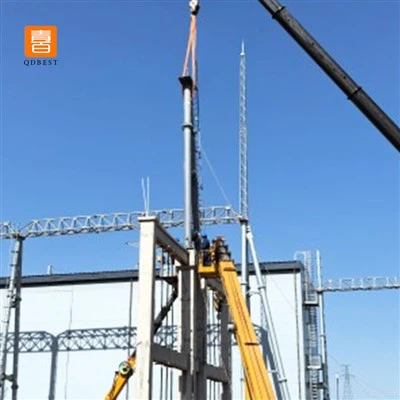
What is the history of electrical transmission towers?
The story of electrical transmission towers begins in the late 19th century when the world was on the cusp of a technological revolution. With the invention of the electric light bulb by Thomas Edison in 1879, the demand for electricity skyrocketed. However, the challenge was how to transmit this electricity over long distances efficiently.
The first electrical transmission systems were based on direct current (DC), which had limitations in terms of distance and efficiency. In 1882, the world's first commercial electrical power station, the Pearl Street Station in New York City, was powered by DC. But as the demand for electricity grew, it became clear that a more efficient way of transmitting power was needed.
This led to the development of alternating current (AC) transmission systems. In 1891, the world's first long - distance AC transmission line was built between Lauffen am Neckar and Frankfurt in Germany. This 175 - kilometer line used a voltage of 15,000 volts and was a significant milestone in the history of electrical transmission.
To support these early AC transmission lines, simple wooden poles were initially used. These poles were relatively inexpensive and easy to install, but they had limitations in terms of strength and durability. As the voltage levels increased and the need for more reliable transmission grew, the design of transmission structures evolved.
In the early 20th century, steel lattice towers started to replace wooden poles. These lattice towers were stronger and could support higher voltage lines over longer distances. The lattice design, with its open framework of steel members, provided excellent strength - to - weight ratio, making it ideal for large - scale electrical transmission.
One of the key advantages of steel lattice towers is their ability to withstand harsh weather conditions, such as strong winds, ice, and snow. They are also more resistant to corrosion compared to wooden poles, which means they have a longer lifespan.


Over the years, the design of electrical transmission towers has continued to improve. Engineers have developed new materials and construction techniques to make the towers more efficient, reliable, and cost - effective. For example, advanced alloys have been used to reduce the weight of the towers without sacrificing strength.
Today, electrical transmission towers come in a variety of shapes and sizes, depending on the voltage level, terrain, and other factors. Some common types of transmission towers include suspension towers, tension towers, and dead - end towers.
Suspension towers are used to support the weight of the transmission lines between two points. They are designed to allow the lines to sag slightly, which helps to reduce the stress on the towers and the lines. Tension towers, on the other hand, are used to change the direction of the transmission lines or to provide additional support at critical points. Dead - end towers are used at the end of a transmission line or at a point where the line terminates.
As a supplier of electrical transmission towers, we offer a wide range of products to meet the needs of our customers. For example, we have the 110kV - 750kV Transmission Line Tower, which is suitable for high - voltage transmission over long distances. Our 330kV Electric Transmission Line Tower is also a popular choice for medium - voltage applications. And if you're looking for a high - tension solution, our High Tension Wire Tower is designed to handle the toughest conditions.
The future of electrical transmission towers looks bright. With the increasing demand for renewable energy sources such as wind and solar power, the need for efficient and reliable transmission infrastructure will only grow. New technologies, such as high - voltage direct current (HVDC) transmission, are also emerging, which will require new types of transmission towers.
In addition, there is a growing focus on making transmission towers more environmentally friendly. For example, some companies are exploring the use of recycled materials in tower construction, and others are looking at ways to reduce the visual impact of the towers on the landscape.
If you're in the market for electrical transmission towers, whether it's for a new project or to replace existing structures, we're here to help. Our team of experts can work with you to understand your specific requirements and provide you with the best solution. We pride ourselves on our high - quality products, competitive prices, and excellent customer service.
So, if you're interested in learning more about our electrical transmission towers or would like to discuss a potential project, don't hesitate to reach out. We're eager to start a conversation and see how we can meet your needs.