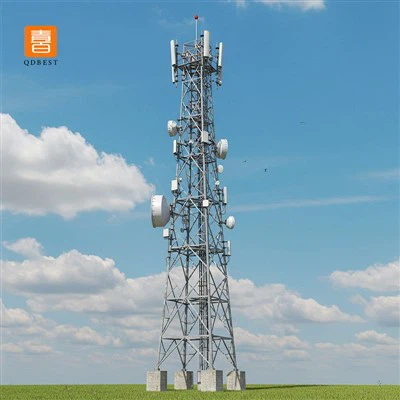
The telecommunication tower is like a silent hero standing quietly on top of buildings, ensuring smooth voice calls. It is not just a simple structure, but also a complex technology that plays a crucial role in daily communication.
The Structure of a Roof-top Telecommunication Tower
First off, let's talk about the tower itself. Our A Roof-top Telecommunication Tower is built with high - quality materials to ensure stability and durability. It's usually made of angle steel, which gives it the strength to withstand various weather conditions. You can check out our Communication Angle Steel Tower for more details on the materials and construction.
The tower has different components that work together. At the top, there are antennas. These antennas are the key to sending and receiving signals. They're designed to pick up the radio waves that carry our voice data. The tower also has a base that is firmly attached to the roof. This base provides support and stability, preventing the tower from toppling over during strong winds or other harsh weather.

How Voice Calls are Supported
When you make a voice call, your phone converts your voice into an electrical signal. This signal is then transformed into radio waves. These radio waves are sent out from your phone and travel through the air.
Our roof - top telecommunication tower's antennas are constantly scanning the air for these radio waves. Once they detect the waves, they capture them and send the signal down through cables to the base station equipment. The base station is like the control center. It processes the signal, makes sure it's clear, and then routes it to the appropriate destination.
If you're calling someone in the same area, the base station can directly connect your call to the other person's phone. But if the person is far away, the base station will send the signal to other towers or communication networks until it reaches the recipient's phone.
The Role of Telecom Lattice Tower
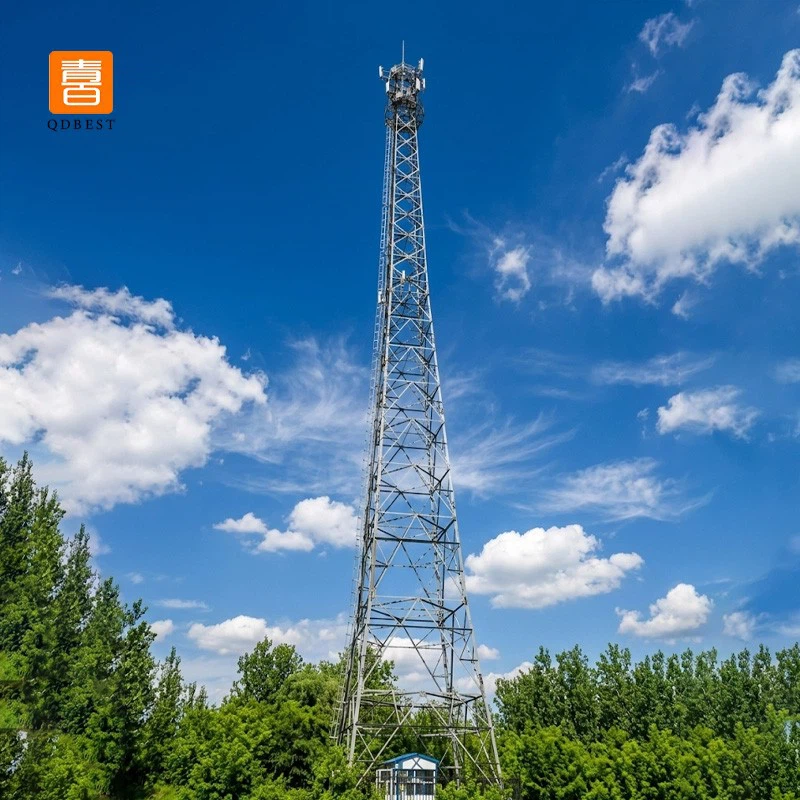
In some cases, we also use Telecom Lattice Tower in conjunction with the roof - top towers. These lattice towers are larger and can cover a wider area. They act as relay points, helping to extend the reach of the communication network.
For example, if a roof - top tower has a limited range, the lattice tower can pick up the signal from the roof - top tower and send it further. This way, even in areas where there are many obstacles, like tall buildings or mountains, voice calls can still be supported.
Advantages of Our Roof - top Telecommunication Tower
One of the biggest advantages of our A Roof - top Telecommunication Tower is its flexibility. It can be installed on various types of buildings, from small shops to large office complexes. This means that we can bring communication services to a wide range of locations.
Another advantage is its cost - effectiveness. Compared to building large, stand - alone towers, installing a roof - top tower is much cheaper. It also requires less space, which is a big plus in urban areas where space is limited.
Quality and Maintenance
We take quality very seriously. Our towers are built to meet strict industry standards. We use the best materials and the latest manufacturing techniques to ensure that our towers are reliable and long - lasting.
Maintenance is also crucial. We have a team of experts who regularly check and maintain the towers. They make sure that the antennas are working properly, the cables are in good condition, and the base is stable. This helps to prevent any disruptions in voice calls.
Future of Roof - top Telecommunication Towers
As technology continues to evolve, the role of roof - top telecommunication towers will only become more important. With the rise of 5G and other advanced communication technologies, these towers will need to be upgraded to support higher data speeds and better call quality.
We're constantly researching and developing new technologies to make our towers even better. We're looking at ways to improve the efficiency of the antennas, reduce power consumption, and increase the range of the towers.
Contact Us for Purchase
If you're interested in purchasing our A Roof - top Telecommunication Tower, we'd love to hear from you. Whether you're a small business looking to improve your communication services or a large corporation in need of a reliable tower solution, we can help. Just reach out to us, and we'll be happy to discuss your requirements and provide you with a quote.