Determining the height of a guyed tower is a complex yet crucial task. The height of a guyed tower cannot be arbitrarily selected; instead, it is derived from precise calculations combining multiple factors. This blog post will delve into the key elements for determining the appropriate height of a guyed tower.
1. Purpose of the Tower
The primary purpose of the guyed wire tower plays a significant role in height determination. For instance, if the tower is intended for telecommunication purposes, the height needs to be sufficient to ensure a clear line - of - sight between the tower and the receiving or transmitting points. A higher tower can cover a larger area, which is essential for providing broad - scale telecommunication services.
Telecommunication towers are used to support antennas that transmit and receive signals. The higher the tower, the greater the range of the signals. For example, in a rural area where there are fewer obstacles, a relatively lower tower might be sufficient to cover a large area. However, in a densely populated urban area with tall buildings, a taller tower is required to overcome the blockage and ensure reliable signal transmission.
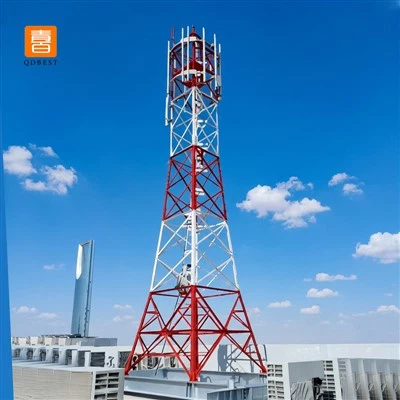
We offer a range of guyed wire towers for telecommunication, such as the Self - supporting Telecommunication Guyed Wire Steel Lattice Tower. This type of tower is designed to meet the specific needs of telecommunication providers, and its height can be adjusted according to the coverage requirements.
2. Terrain and Surroundings
The terrain and surroundings of the tower location have a major impact on the height. In hilly or mountainous regions, the natural elevation can be utilized to reduce the required height of the tower. For example, if a tower is placed on top of a hill, it can achieve the same coverage as a much taller tower on flat ground.
On the other hand, in flat areas with no natural elevation, the tower needs to be taller to achieve the desired coverage. Additionally, the presence of nearby buildings, trees, or other structures can also affect the height. If there are tall buildings in the vicinity, the tower may need to be taller to ensure that the antennas are above the obstructions.
Our Guyed Wire Galvanized Tubular Steel Telecommunication Tower is suitable for various terrains. Its design allows for flexibility in height adjustment to adapt to different geographical conditions.


3. Wind and Weather Conditions
Wind and weather conditions are critical factors in determining the height of a guyed wire tower. Higher towers are more exposed to strong winds, and they need to be designed to withstand the wind forces. The wind load on a tower increases with height, and engineers need to calculate the maximum wind speed at the tower location and design the tower accordingly.
In areas with high - wind speeds, the tower may need to be shorter to reduce the wind load. However, if the purpose of the tower requires a certain height, additional guy wires or a stronger structural design may be necessary. For example, in coastal areas where strong winds are common, the tower design needs to be more robust.
We also provide Guyed Wire Steel Tower for Telecom, which is engineered to withstand different wind and weather conditions. The design of these towers takes into account the wind load at different heights to ensure their stability and safety.
4. Antenna Requirements
The type and number of antennas that the tower will support also influence its height. Different antennas have different requirements for height and clearance. For example, some high - gain antennas need to be placed at a certain height above the ground to achieve optimal performance.
If a tower is supporting multiple antennas, the height needs to be sufficient to provide enough space between the antennas to avoid interference. Additionally, the orientation of the antennas may also require a specific height to ensure proper alignment.
Our 4 Leg Telecommunication Microwave Tower is designed to support various types of antennas. The height of this tower can be customized based on the specific antenna requirements of our clients.
5. Cost Considerations
Cost is an important factor in determining the height of a guyed wire tower. Generally, taller towers are more expensive to construct and maintain. The cost of materials, labor, and transportation increases with the height of the tower. Therefore, a balance needs to be struck between the desired height and the budget.
In some cases, a slightly lower tower may be a more cost - effective solution if it can still meet the basic requirements. However, if the performance requirements are high, investing in a taller tower may be necessary.
We understand the cost concerns of our clients, and we offer a range of tower options, including the 60M Antenna And Microwave Guyed Wire Tower, which provides a good balance between performance and cost.
The Process of Determining Tower Height
The process of determining the height of a guyed wire tower typically involves the following steps:
- Site Assessment: Engineers visit the proposed tower location to assess the terrain, surroundings, and wind conditions. They collect data on the elevation, nearby structures, and historical weather patterns.
- Purpose Definition: The client's requirements for the tower, such as the type of service (telecommunication, broadcasting, etc.) and the coverage area, are clearly defined.
- Antenna Analysis: The type and number of antennas to be installed on the tower are analyzed. The height and clearance requirements of the antennas are determined.
- Wind Load Calculation: Based on the site assessment data, the wind load at different heights is calculated. This helps in determining the maximum height that the tower can safely reach.
- Cost - Benefit Analysis: A cost - benefit analysis is conducted to evaluate different height options. The cost of construction, maintenance, and operation is compared with the expected performance and benefits.
- Design and Approval: Once the appropriate height is determined, the tower is designed. The design is then submitted for approval by relevant authorities.
Conclusion
Determining the height of a guyed wire tower is a multi - faceted process that requires careful consideration of various factors. As a guyed wire tower supplier, we have the expertise and experience to help our clients make the right decisions. Whether it's a telecommunication tower for a large - scale network or a small - scale antenna tower, we can provide customized solutions based on the specific requirements.
If you are in need of a guyed wire tower and want to discuss the height and other specifications, please feel free to contact us. We are committed to providing high - quality towers and excellent service to meet your needs.