Every detail of substation steel frameworks matters greatly, and one of the most critical components to pay close attention to is the internal communication system within the framework. This blog post elaborates on such communication systems and their vital significance.
The Basics of Communication in Power Substations
First off, communication in power substations is all about keeping everything running smoothly. It's like the nervous system of the substation, allowing different components to talk to each other and to the control center. Without proper communication, we'd have a real mess on our hands.
There are several types of communication systems in use. One of the most common is the SCADA (Supervisory Control and Data Acquisition) system. SCADA is like the eyes and ears of the substation. It collects data from various sensors and equipment, such as transformers, circuit breakers, and switches. This data includes things like voltage levels, current flow, and temperature. Then, it sends this information to the control center, where operators can monitor the substation's status in real - time. If there's a problem, like a sudden drop in voltage or an overheating transformer, the SCADA system can alert the operators immediately.
Another important communication system is the IEC 61850 standard. This is a global standard for communication in power substations. It's designed to make different devices from different manufacturers work together seamlessly. With IEC 61850, we can have a more integrated and efficient substation. For example, a relay from one company can communicate with a circuit breaker from another company without any issues. This standard also allows for more advanced features, like self - healing networks, where the substation can automatically reconfigure itself in case of a fault.
Wired vs. Wireless Communication
When it comes to communication in power substations, we have two main options: wired and wireless.
Wired communication has been around for a long time and is still widely used. It offers high reliability and security. For example, fiber - optic cables are commonly used in power substations. They can transmit large amounts of data at very high speeds, and they're immune to electromagnetic interference. This is crucial in a substation environment, where there are a lot of electrical and magnetic fields. Wired communication is also more secure because it's harder to intercept the data compared to wireless communication.


On the other hand, wireless communication is becoming more and more popular. It offers flexibility and cost - savings. For instance, wireless sensors can be easily installed in hard - to - reach places without the need for laying cables. This can reduce installation time and costs. However, wireless communication also has its challenges. It's more vulnerable to interference and security threats. For example, radio signals can be affected by weather conditions and other radio - frequency sources. And if not properly secured, wireless networks can be hacked, which could lead to serious problems in the substation.
The Role of Our Power Substation Structures
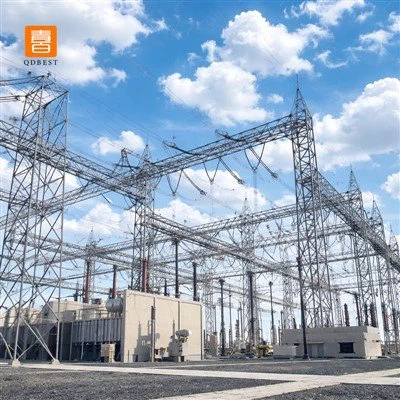
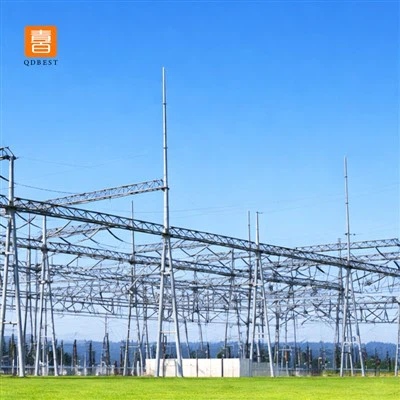
As a supplier of Power Substation Structures, we play a crucial role in supporting these communication systems. Our structures are designed to house and protect the communication equipment. For example, our Substation Steel Structure provides a stable and secure environment for the SCADA system and other communication devices. It can withstand harsh weather conditions and mechanical stresses, ensuring that the communication equipment inside is safe and operational.
We also offer Galvanized Substation Steel Structures, which are corrosion - resistant. This is important because the substation environment can be very corrosive, especially in coastal areas. By using galvanized steel, we can extend the lifespan of the structure and the communication equipment it houses.
Electrical Structure and Power Distribution Substation
Our Electrical Structure is another key component in the communication system. It provides the necessary support for the electrical components that are part of the communication network. For example, it holds the transformers, circuit breakers, and switches that are connected to the communication devices. A well - designed electrical structure ensures that the electrical components are properly installed and connected, which is essential for the smooth operation of the communication system.
In a Power Distribution Substation, communication is even more critical. The distribution substation is responsible for delivering electricity to the end - users. The communication system in the distribution substation helps in load management, fault detection, and restoration. For example, if there's a fault in a particular area, the communication system can quickly identify the location and isolate the affected section. This minimizes the impact on the other users and speeds up the restoration process.
The Future of Communication in Power Substations
The future of communication in power substations looks very promising. With the development of new technologies, we can expect more advanced and efficient communication systems. For example, the use of artificial intelligence (AI) and machine learning in communication systems can help in predicting faults and optimizing the operation of the substation. AI can analyze the large amount of data collected by the communication system and identify patterns that may indicate a potential problem.
Another trend is the integration of the power grid with the Internet of Things (IoT). This means that more and more devices in the substation will be connected to the internet, allowing for better monitoring and control. For example, smart meters can communicate directly with the substation, providing real - time information about the electricity consumption of the users.
Why You Should Choose Us
If you're in the market for power substation structures, we're the ones to go to. We have years of experience in the industry, and we know what it takes to build high - quality structures that support the communication systems. Our structures are designed to meet the highest standards of safety and reliability.
We also offer a wide range of products, from Electrical Structure to Galvanized Substation Steel Structures. We can customize our products to meet your specific needs. Whether you're building a small power distribution substation or a large - scale transmission substation, we have the right solution for you.
If you're interested in our products and want to discuss your requirements, feel free to reach out to us. We're always happy to have a chat and help you find the best power substation structures for your project.