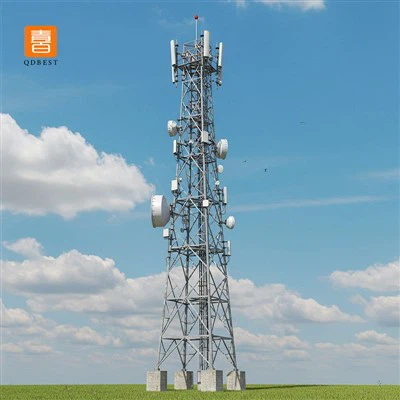
Angled‑steel communication towers interact with the surrounding environment. As critical infrastructure for modern communication systems, they provide stable support for antennas and other communication equipment. Nevertheless, various environmental factors exert significant impacts on their service performance, durability and overall service life. A thorough understanding of these factors is essential to guarantee the reliability of communication networks and the long‑term performance of the towers.
1. Wind
Wind is one of the most prominent environmental factors that impact angle steel telecommunication towers. Strong winds apply lateral forces on the tower, which can lead to structural stress. The magnitude of the wind force depends on several factors, including wind speed, the tower's height, shape, and surface area.
High - wind areas pose a greater risk to telecommunication towers. For example, in coastal regions or areas prone to hurricanes and typhoons, wind speeds can reach extremely high levels. When the wind blows against the tower, it creates pressure on the wind - facing side and suction on the leeward side. This pressure differential can cause the tower to bend or sway. If the wind force exceeds the tower's design capacity, it may even lead to structural failure.
To mitigate the effects of wind, angle steel telecommunication towers are designed with aerodynamic shapes. For example, lattice structures are commonly used because they have a relatively small wind resistance compared to solid structures. Additionally, engineers calculate the wind load during the design phase and ensure that the tower's materials and construction can withstand the maximum expected wind forces in the area where it will be installed. For our company, we offer a range of towers, such as the 35M Telecom 4 - Legged Galvanized Angular Steel Towers, which are designed to meet high - wind standards.
2. Temperature
Temperature variations can have a significant impact on angle steel telecommunication towers. Metals, including the angle steel used in tower construction, expand when heated and contract when cooled. This thermal expansion and contraction can cause stress on the tower's joints and connections.
In regions with large temperature differences between day and night or between seasons, the repeated expansion and contraction can lead to fatigue in the materials over time. For instance, in desert areas where the daytime temperature can be extremely high and the night - time temperature drops significantly, the angle steel may experience substantial dimensional changes. This can cause bolts to loosen, welds to crack, and the overall structure to become less stable.
To address the issue of temperature - related stress, proper material selection is crucial. High - quality angle steel with low thermal expansion coefficients can be used. Additionally, flexible joints and connections can be incorporated into the tower design to accommodate the thermal movement. Our 60M Angle Steel Gsm Microwave Telecom Tower is engineered with materials that can handle a wide range of temperature variations, ensuring long - term stability.
3. Humidity and Corrosion
Humidity is another important environmental factor. In areas with high humidity, moisture in the air can accelerate the corrosion process of the angle steel. Corrosion occurs when the metal reacts with oxygen and water, forming rust. Rust not only weakens the structural integrity of the tower but also affects its appearance.
Coastal areas are particularly prone to high humidity and salt - water spray, which can cause severe corrosion. The salt in the air acts as an electrolyte, speeding up the electrochemical reaction between the metal and the oxygen in the water. If left untreated, corrosion can lead to the thinning of the angle steel, reducing its load - bearing capacity and potentially causing the tower to collapse.
To prevent corrosion, galvanization is a common method used in the manufacturing of angle steel telecommunication towers. Galvanizing involves coating the steel with a layer of zinc, which acts as a sacrificial anode. The zinc corrodes preferentially to the steel, protecting the underlying metal. Our company offers galvanized towers, such as the 25M Galvanized Angle Steel Microwave Communication Tower, which have a high resistance to corrosion and are suitable for humid environments.
4. Seismic Activity
In areas prone to earthquakes, seismic activity is a major concern for angle steel telecommunication towers. Earthquakes generate ground vibrations that can cause the tower to shake violently. The seismic forces acting on the tower depend on factors such as the magnitude of the earthquake, the distance from the epicenter, and the soil conditions at the tower's location.
Soft soils can amplify the ground vibrations during an earthquake, increasing the stress on the tower. If the tower is not designed to withstand seismic forces, it may collapse or suffer significant damage. To ensure the seismic safety of the tower, engineers conduct detailed seismic analyses during the design phase. The tower's foundation is designed to be stable and able to resist the lateral forces generated by earthquakes. Reinforcement techniques, such as the use of additional bracing and stronger connections, can also be employed. Our Four - legged Lattice Tower and Telecom Lattice Tower are designed to meet seismic requirements in various regions.
5. Lightning
Lightning is a natural phenomenon that can pose a serious threat to angle steel telecommunication towers. Due to their height, towers are more likely to be struck by lightning. A lightning strike can cause electrical damage to the communication equipment installed on the tower, as well as structural damage to the tower itself.


The high - voltage electrical current from a lightning strike can melt or damage the angle steel, especially at the points where the lightning attaches. It can also cause fires or explosions in the communication equipment if proper protection measures are not in place.
To protect against lightning, lightning protection systems are installed on telecommunication towers. These systems typically include lightning rods, grounding wires, and surge protectors. The lightning rod captures the lightning strike and directs the electrical current safely to the ground through the grounding wire, minimizing the damage to the tower and the equipment.
6. Environmental Pollutants
Environmental pollutants can also affect angle steel telecommunication towers. Industrial areas or regions with high levels of air pollution may have pollutants such as sulfur dioxide, nitrogen oxides, and particulate matter in the air. These pollutants can react with the metal surface of the tower, accelerating the corrosion process.
Acid rain, which is formed when sulfur dioxide and nitrogen oxides react with water in the atmosphere, can be particularly damaging. Acid rain can dissolve the protective zinc coating on galvanized steel, exposing the underlying metal to further corrosion. To combat the effects of environmental pollutants, regular inspections and maintenance of the towers are necessary. In some cases, additional protective coatings may be applied to the tower to enhance its resistance to pollutants.
7. Installation Location Specifics
The specific location of tower installation also matters. For example, towers installed in mountainous areas may face unique challenges such as uneven terrain. Uneven ground can cause uneven loading on the tower's foundation, leading to settlement or tilting over time. In such cases, special foundation designs, like pile foundations or stepped foundations, may be required to ensure the stability of the tower.
On the other hand, towers installed in urban areas may be subject to restrictions related to zoning and building codes. These restrictions can affect the tower's height, appearance, and location. Therefore, close coordination with local authorities is necessary during the installation process.
In conclusion, as a supplier of angle steel telecommunication towers, we understand the importance of considering these environmental factors in the design, manufacturing, and installation of our products. By taking these factors into account, we can provide our customers with reliable and long - lasting telecommunication towers.
If you are in need of high - quality angle steel telecommunication towers that are designed to withstand various environmental conditions, we invite you to contact us for procurement and further discussion. We are committed to providing you with the best solutions for your telecommunication infrastructure needs.