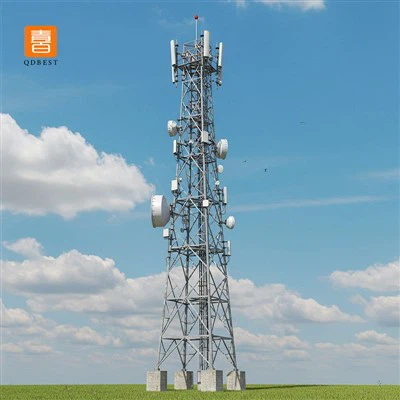
This blog post elaborates on the relevant standards for the load-bearing capacity of communication angle steel towers and their underlying significance.
First off, let's understand what load - bearing capacity means. Simply put, it's the maximum amount of weight or force that a tower can safely support. This includes the weight of the tower itself, any equipment attached to it like antennas, and external forces such as wind, snow, and seismic activity.
Self - weight of the Tower
The self - weight of a Telecom Angle Steel Tower is a significant factor in determining its load - bearing capacity. The materials used in the tower construction play a crucial role here. Our Angle Steel Telecommunication Tower is made of high - quality angle steel. The density and thickness of this steel affect how much the tower weighs. For example, a thicker steel angle will add more weight to the tower, but it also provides more strength.
When we design our towers, we calculate the self - weight based on the dimensions and the type of steel used. We make sure that the tower's structure can support this weight without any risk of collapse.
Equipment Load
Telecom towers are not just empty structures. They are loaded with various equipment. Antennas are one of the most common pieces of equipment on these towers. Different types of antennas have different weights. For instance, a large - scale 5G antenna can be quite heavy compared to a traditional 2G or 3G antenna.
We also need to consider other equipment like transmitters, receivers, and cables. All these add to the overall load on the tower. When a customer comes to us for a Telecom Lattice Tower, we ask about the type and quantity of equipment they plan to install. This helps us design a tower with the appropriate load - bearing capacity.
External Forces
Wind Load
Wind is one of the most significant external forces that a telecom tower has to withstand. The wind load on a tower depends on several factors, such as the tower's height, shape, and the local wind speed. In areas with high - speed winds, like coastal regions or mountainous areas, the wind load can be extremely high.
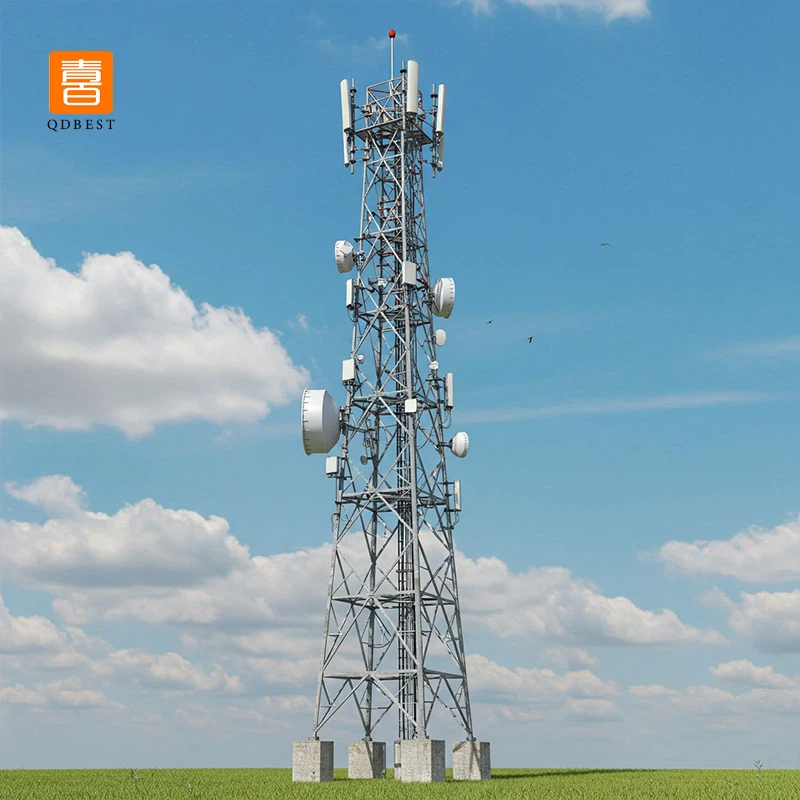
To calculate the wind load, we use industry - standard formulas. These formulas take into account the wind speed, the surface area of the tower exposed to the wind, and the shape factor. Our 35M Telecom 4 - Legged Galvanized Angular Steel Towers are designed to withstand strong winds. We reinforce the structure in areas where the wind load is expected to be the highest.

Snow Load
In regions with heavy snowfall, snow load becomes a critical factor. The weight of the snow on the tower can be substantial, especially if it accumulates over time. We need to consider the snow density and the area of the tower that will collect snow.
To ensure that our towers can handle snow load, we design them with a proper slope on the surfaces. This helps the snow slide off the tower more easily. We also use materials that can resist the corrosive effects of snow and ice.
Seismic Load
In earthquake - prone areas, seismic load is a major concern. The ground movement during an earthquake can exert significant forces on the tower. We use seismic design codes to calculate the seismic load on the tower. These codes take into account the local seismic activity level, the tower's height, and its structural characteristics.
We design our towers with flexible structures that can absorb the energy from an earthquake. This helps prevent the tower from collapsing during seismic events.
Importance of Meeting Load - Bearing Capacity Requirements
Meeting the load - bearing capacity requirements is not just a matter of safety; it's also crucial for the long - term performance of the tower. If a tower is overloaded, it can lead to structural damage, which may require costly repairs or even replacement.
Moreover, regulatory bodies often have strict requirements for the load - bearing capacity of telecom towers. Failure to meet these requirements can result in fines and legal issues. As a responsible supplier, we always ensure that our towers meet or exceed these requirements.
Our Design and Testing Process
At our company, we have a rigorous design and testing process. Our engineers use advanced software to simulate the load - bearing capacity of the tower under different conditions. They consider all the factors we've discussed, such as self - weight, equipment load, and external forces.
After the design is complete, we build a prototype of the tower. We then conduct a series of tests on the prototype to ensure that it can withstand the expected loads. These tests include stress tests, wind tunnel tests, and seismic simulations. Only after the tower passes all these tests do we start mass - producing it.
Contact Us for Your Telecom Tower Needs
If you're in the market for a Telecom Angle Steel Tower, we're here to help. We have a wide range of products, including the Telecom Lattice Tower, Angle Steel Telecommunication Tower, and 35M Telecom 4 - Legged Galvanized Angular Steel Towers. Our team of experts can work with you to determine the right load - bearing capacity for your specific needs.
Whether you're setting up a new telecom network or upgrading an existing one, we can provide you with a high - quality tower that meets all the load - bearing capacity requirements. Don't hesitate to get in touch with us to discuss your project and start the procurement process.