


Weight is a key indicator, which affects not only transportation and installation, but also the overall structural stability and equipment load-bearing capacity. This blog post elaborates on the various factors that determine the weight of angle steel communication towers.
Factors Affecting the Weight
Tower Height
One of the most significant factors is the height of the tower. Taller towers generally require more materials to maintain stability and support the equipment on top. For example, a 30 - meter tower will weigh significantly less than a 60 - meter one. As the height increases, the amount of steel needed for the framework also goes up, which directly impacts the weight. A higher tower needs stronger and more numerous steel members to resist wind forces and other environmental factors.
Design and Configuration
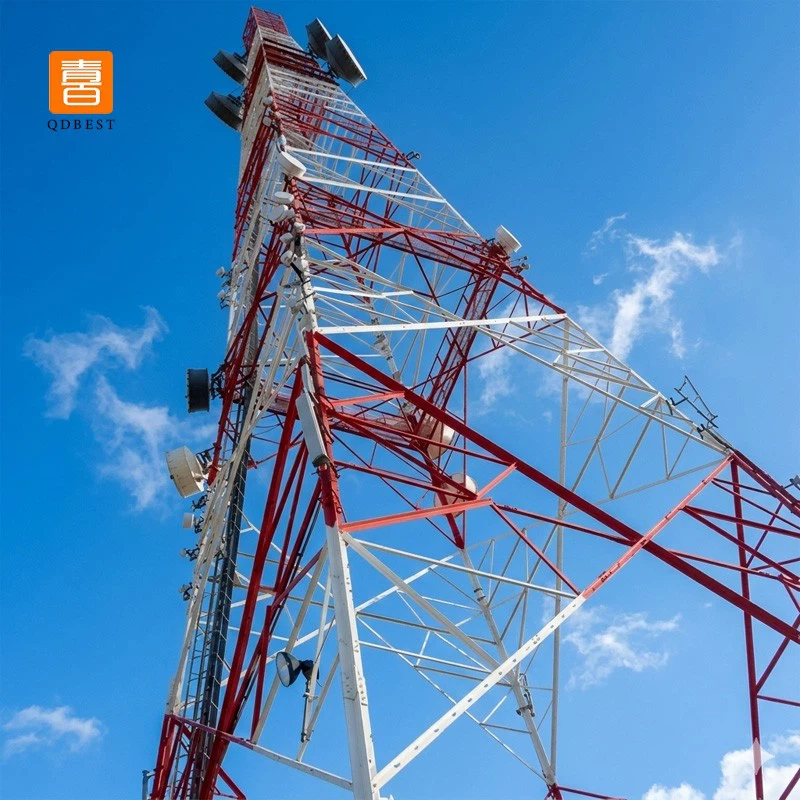
The design of the tower plays a huge role in its weight. There are different types of Communication Angle Steel Towers, such as the Angle Steel Telecommunication Tower and the Telecom Angle Steel Tower. Some towers have a more complex lattice design, which might use more steel but offer better strength - to - weight ratios. For instance, a four - legged lattice tower, like the Four - legged Lattice Tower, distributes the load more evenly compared to a single - pole tower. This type of design might require more steel pieces but can handle heavier loads and is more stable in high - wind areas.
Steel Grade
The grade of steel used in the tower construction is another important factor. Higher - grade steels are stronger and can support more weight with less material. For example, using high - strength steel can reduce the overall weight of the tower while still maintaining the necessary structural integrity. However, high - grade steels are often more expensive, so there's a balance between cost and weight reduction.
Equipment Load
The equipment that will be installed on the tower also adds to its weight. This includes antennas, transmitters, and other communication devices. The weight of these components can vary widely depending on their size and functionality. For example, a large - scale antenna array will weigh more than a single small antenna. When calculating the total weight of the tower, it's essential to factor in the weight of all the equipment that will be mounted on it.

Calculating the Weight
Calculating the weight of a Communication Angle Steel Tower isn't a one - size - fits - all formula. It involves a detailed analysis of the tower's design, materials, and the equipment it will carry. Engineers typically use computer - aided design (CAD) software to model the tower and calculate its weight accurately. They take into account all the factors mentioned above, including the dimensions of the steel members, the number of joints, and the load of the equipment.
Let's say we have a simple 30 - meter four - legged lattice tower. First, we calculate the volume of each steel member based on its cross - sectional area and length. Then, we multiply the volume by the density of the steel to get the weight of each member. After that, we sum up the weights of all the members to get the weight of the tower structure. Next, we add the weight of the equipment that will be installed on the tower. This gives us the total weight of the tower.
Importance of Knowing the Weight
Knowing the weight of a Communication Angle Steel Tower is crucial for several reasons. Firstly, it helps in transportation planning. If the tower is too heavy, it might require special transportation equipment or multiple trips. This can significantly increase the transportation cost. Secondly, the weight affects the installation process. A heavier tower might need more powerful cranes and a more robust foundation. Understanding the weight also helps in ensuring that the tower meets all the safety and regulatory requirements.
Our Role as a Supplier
As a supplier of Communication Angle Steel Towers, we understand the importance of providing accurate weight information to our customers. We work closely with our engineering team to ensure that all our towers are designed and built to meet the highest standards. We use the latest technology and materials to optimize the weight of our towers without compromising on strength and durability.
We also offer customization options for our customers. Whether you need a tower for a small - scale communication project or a large - scale network, we can design and build a tower that meets your specific requirements. Our team of experts can help you choose the right tower design, steel grade, and equipment to ensure that you get the most efficient and cost - effective solution.
Contact Us for Your Tower Needs
If you're in the market for a Communication Angle Steel Tower, we'd love to hear from you. Whether you have questions about the weight, design, or installation of our towers, our team is here to help. We can provide you with detailed information, quotes, and technical support to ensure that you make the right decision for your project.
Don't hesitate to reach out to us for a consultation. We're committed to providing high - quality products and excellent customer service. Let's work together to find the perfect Communication Angle Steel Tower for your needs.


