Hey everyone! I'm a supplier of Angle Steel Telecommunication Towers, and today I want to have a chat about the acoustic effects of these structures.
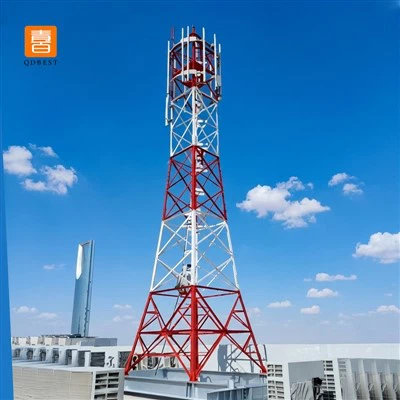
Let's start by explaining what an Angle Steel Telecommunication Tower is. It's a type of tower made from angle - steel, which is a metal with a 90 - degree angle cross - section. These towers are super common in the telecom industry because they're strong, durable, and cost - effective. We offer a variety of these towers, like the Four-legged Lattice Tower, the Telecom Angle Steel Tower, the 60M Angle Steel Gsm Microwave Telecom Tower, the 35M Telecom 4 - Legged Galvanized Angular Steel Towers, and the A Roof - top Telecommunication Tower.
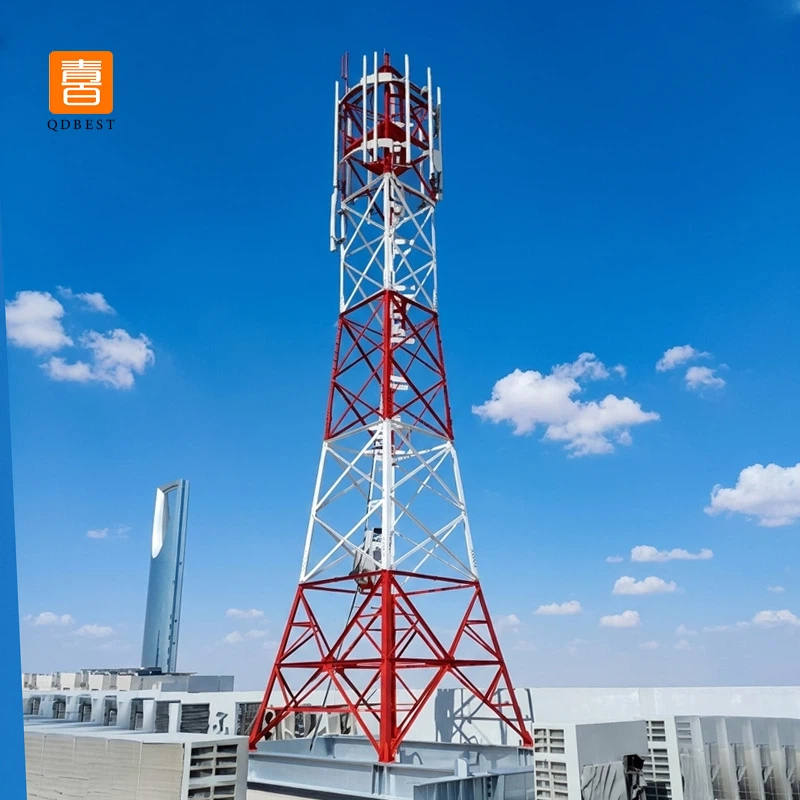

Now, onto the acoustic effects. Acoustic effects refer to how the tower interacts with sound waves in its environment. There are a few key aspects to consider here.
Wind - induced Noise
One of the most significant acoustic effects of an Angle Steel Telecommunication Tower is wind - induced noise. When the wind blows against the tower, it creates turbulence around the angle - steel members. This turbulence causes pressure fluctuations, which in turn generate sound waves.
The intensity of the wind - induced noise depends on several factors. First, the wind speed plays a huge role. Higher wind speeds generally result in louder noise. For example, during a strong storm, the noise from the tower can be quite noticeable. Second, the shape and size of the angle - steel sections matter. Different cross - sectional shapes and dimensions can affect how the wind flows around the tower and thus the noise level. A tower with larger, more irregularly shaped angle - steel members might produce more noise compared to one with smaller, more streamlined ones.
Another factor is the tower's height. Taller towers are more likely to experience stronger winds at higher altitudes, which can lead to increased wind - induced noise. Our 60M Angle Steel Gsm Microwave Telecom Tower, being quite tall, might be more prone to this kind of noise compared to a shorter tower.
Vibration and Resonance
Angle Steel Telecommunication Towers can also vibrate due to various forces acting on them. Wind is the most common cause, but other factors like seismic activity or the movement of equipment on the tower can also contribute. When the tower vibrates, it can generate sound.
Resonance is a particularly interesting phenomenon. Resonance occurs when the frequency of an external force (like wind or vibration) matches the natural frequency of the tower. When this happens, the amplitude of the vibration can increase significantly, leading to louder noise. It's like when you push a swing at just the right time to make it go higher.
To prevent resonance, engineers carefully design the towers to have natural frequencies that are far from the frequencies of common external forces. We work closely with our engineering teams to ensure that our towers, such as the Four - legged Lattice Tower, are designed to avoid resonance and keep the noise levels under control.
Impact on Surrounding Environment
The acoustic effects of Angle Steel Telecommunication Towers can have an impact on the surrounding environment. In urban areas, the noise from the tower can be a nuisance to nearby residents. It can interfere with their daily lives, causing sleep disturbances, reduced concentration, and general annoyance.
In industrial areas, the noise might not be as big of an issue, but it still needs to be considered. For example, if there are sensitive equipment nearby, the vibrations and noise from the tower could potentially affect their performance.
In natural areas, the noise can disrupt wildlife. Birds and other animals might be disturbed by the constant noise, which could affect their behavior, breeding patterns, and migration routes.
Mitigation Measures
As a supplier, we're aware of these acoustic issues and are committed to providing solutions. One way to reduce wind - induced noise is by using aerodynamic shapes for the angle - steel members. By streamlining the shape, we can reduce the turbulence created by the wind and thus lower the noise level.
Another approach is to add damping materials to the tower. Damping materials absorb the energy from vibrations, reducing the amplitude of the vibration and the associated noise. For instance, we can apply special coatings or install dampers at strategic points on the tower.
We also offer custom - designed towers that take into account the specific acoustic requirements of the installation site. Whether it's an urban area, an industrial zone, or a natural setting, we can work with our clients to design a tower that minimizes the acoustic impact.
Why Choose Our Angle Steel Telecommunication Towers
We've been in the business of supplying telecom towers for a long time, and we've gained a lot of experience in dealing with acoustic issues. Our towers are not only designed to be strong and reliable but also to minimize the acoustic impact on the surrounding environment.
We use high - quality materials in the construction of our towers, which ensures their durability and reduces the likelihood of excessive noise generation due to material degradation over time. Our engineering team is constantly researching and innovating to come up with better designs and solutions for acoustic problems.
Contact Us for Procurement
If you're in the market for Angle Steel Telecommunication Towers and are concerned about the acoustic effects, look no further. We have a wide range of products to meet your needs, and we're dedicated to providing you with the best - in - class solutions. Whether you need a Four - legged Lattice Tower for a rural area or a A Roof - top Telecommunication Tower for an urban building, we can help.
Don't hesitate to reach out to us to discuss your requirements. We're here to help you make the right decision and ensure that your telecom project is a success. Let's start the conversation and find the perfect Angle Steel Telecommunication Tower for you!