


If you've ever driven past a remote cell tower in the mountains or spotted one on a city rooftop, chances are you've seen a four-legged lattice tower-those rigid, open-frame structures that feel almost skeletal, but somehow handle harsh weather, heavy equipment, and years of wear. A tower fire can take out service for entire neighborhoods, damage costly gear like transmitters, and even collapse if the flames get bad enough. After 12 years working with steel lattice towers, I've seen what works, what doesn't, and how to design a tower that stands up to fire. Let's break this down.
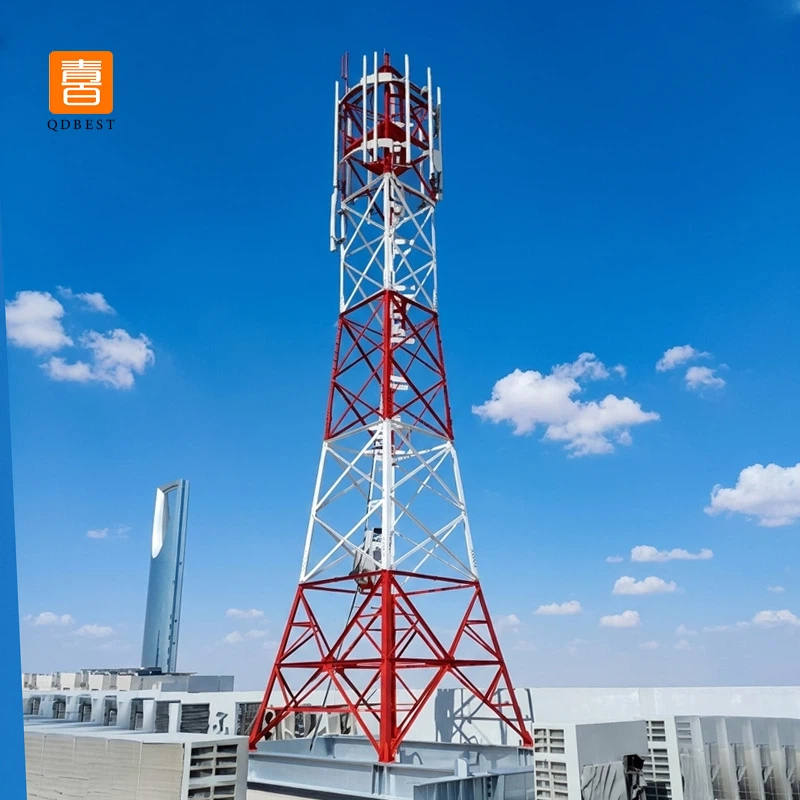
First, let's start with the basics: what a four-legged lattice tower is, because not everyone knows the difference between a four-legged and a monopole or three-legged tower. Unlike smooth, cylindrical monopoles, four-legged lattice towers are made of individual angle steel beams bolted together in a grid pattern-four main legs, connected by cross-members and bracing that give the structure its strength. This open design is actually a big plus for fire resistance, but more on that later. If you're looking for a quick look at what these towers look like, our 35M Telecom 4-Legged Galvanized Angular Steel Towers are one of our most popular models for suburban and rural areas-you can check the specs here.
Now, fire resistance isn't a one-size-fits-all number. It depends on three big factors: the material the tower's made of, how it's finished, and the conditions of the fire itself. Let's start with the core material: steel. Most four-legged lattice towers are made of carbon steel, which is strong, cheap, and durable. But here's the catch: steel loses about 50% of its strength when it hits 1,000°F, and at 1,200°F, it's basically too soft to hold up weight. A typical structure fire can burn anywhere from 1,100°F to 2,000°F, so unprotected steel will warp, buckle, or collapse in 15 to 30 minutes in a severe fire. That's a problem-especially for towers that support heavy antenna arrays or microwave gear, which add stress to the legs.
But wait-most of the towers we build aren't just raw carbon steel. We hot-dip galvanize all our angle steel parts, right after fabrication. Galvanizing is a process where we coat the steel with a thin layer of zinc, which acts as a barrier against rust, but it also gives a tiny bit of extra fire protection. The zinc melts at around 787°F, so it will burn off in a fire, but that actually slows down the steel's heating a little-just enough to add 5 to 10 minutes of resistance for small, short fires. It's not a game-changer, but it's a cheap upgrade that every good four-legged lattice tower supplier includes. For a deeper dive into angle steel towers and their coatings, our Angle Steel Telecommunication Tower page has all the details on how galvanizing and other finishes work.
Next, the design of the tower itself. Four-legged lattice towers have a huge advantage over other types when it comes to fire: their open grid structure. A monopole is a solid steel tube, so a fire on the ground can trap heat inside, making the whole tube heat up evenly. But a four-legged lattice tower has tons of empty space between the legs and cross-members. Hot air can circulate through the open frame, so the steel doesn't get trapped in a pool of heat. That means the legs heat up slower than a solid monopole of the same height and material. We've tested this with our 60M Angle Steel GSM Microwave Telecom Tower-during a controlled fire test, our four-legged tower's legs only hit 900°F after 22 minutes, while a comparable monopole hit 1,100°F in 14 minutes. That extra time is critical for fire crews to respond and prevent the fire from spreading to the tower.
But design also has its weak points. The parts that hold antenna mounts, like the steel brackets on the upper cross-members, are thinner than the main legs, so they heat up faster. That's why we always reinforce those brackets with extra steel gussets-they're small, cheap pieces of angle steel that add thickness, so they hold their strength longer in a fire. We also place all electrical components, like power cables and lightning arresters, in fire-resistant conduits that run along the inside of the lattice, away from dry brush or debris that could catch fire. If the tower is on a rooftop, like our A Roof-top Telecommunication Tower, we add a fire-resistant mat around the base to stop embers from the rooftop's HVAC units or trash from igniting the steel legs.

Now, what about different fire scenarios? Not all fires are the same. A small, controlled fire in a dry grass field near the tower will behave totally different from a wildfire that's moving at 30 mph and has flames 50 feet high. For grass fires, the open lattice design works really well-there's no solid surface for flames to build up, and the galvanized coating gives a little extra time. We've had clients in Texas and Oklahoma tell us their 35M towers survived grass fires that burned within 10 feet of the base, with only minor discoloration on the lower legs. But wildfires are a different story. A wildfire can reach 2,500°F, and even steel will start to soften at that temperature within 5 minutes. That's why for towers in high wildfire zones, we add a fire retardant coating to the steel after galvanizing. It's a water-based coating that forms a protective layer when heated, slowing the steel's temperature rise by another 10 to 15 minutes. It's not permanent-you have to reapply it every 5 years-but it's a small investment that saves towers from collapsing.
Another thing people overlook: the foundation of the tower. A four-legged lattice tower is anchored to concrete footings, right? But if the fire spreads to the base of the tower, it can heat up the concrete, making it crack and lose strength. That's why we make sure the concrete footings are at least 3 feet below ground level, so even if the surface fire burns the topsoil, the footing stays cool. We also line the inside of the footing's base with a 1-inch layer of refractory concrete, which is designed to withstand high heat, so the anchor bolts that hold the legs in place don't shift.
Wait, let's get real for a second. No four-legged lattice tower is "fireproof." If a jet crashes into it, or a wildfire burns for 8 hours straight, even the best design will fail. The question is: how fire-resistant is it compared to other options, and how can you make it as safe as possible? From our experience, a standard galvanized four-legged lattice tower will stand up to 30 minutes of a moderate structure fire (like a house fire or small industrial fire) and 45 minutes of a moderate wildfire. For high-risk areas, adding fire retardant and reinforced brackets pushes that to 60 minutes for structure fires and 75 minutes for wildfires. That's more than enough time for fire crews to respond, which is the whole point.
I've also seen a lot of bad tower designs out there. Some cheap suppliers skip the galvanizing, so their towers are made of raw steel that rusts in 5 years, and rust weakens steel even more in a fire. Others cut corners on the bracing, so the lattice is too flimsy-if a fire warps even one leg, the whole tower can fall apart. That's why it's important to work with a supplier that has experience testing their towers for fire resistance. Our team does annual fire tests with independent labs, so we know exactly how our towers perform under different conditions. If you're comparing four-legged lattice towers, ask for their fire test data-any reputable supplier will have that.
So, who is this information for? If you're a telecom company building a tower in a rural area that's prone to grass fires, a four-legged lattice tower is way more fire-resistant than a monopole. If you're putting a tower on a rooftop in a city with high-rise buildings, the open design lets the fire department's ladder trucks get closer, which is a big plus. Even if you're just a property owner looking to add a small cell tower, the four-legged lattice is a smart choice for fire safety.
At the end of the day, the fire resistance of a four-legged lattice tower boils down to three things: quality steel material, proper galvanizing, and smart design that uses the open lattice structure to its advantage. It's not invincible, but it's one of the most fire-resilient tower types you can get, especially when you pair it with the right finishes and reinforcements.
If you're in the market for a four-legged lattice tower, or want to learn more about how we design our towers for fire safety, we've got all our models, specs, and test data on our Four-legged Lattice Tower page. Whether you need a 35M tower for a suburban area, a 60M tower for a rural highway, or a rooftop tower for your office building, we can help you find the right fit that meets your fire safety needs. Don't hesitate to reach out to us to talk through your specific project requirements, and we'll put together a tower that's built to last, even when the worst happens.


